The Comeback of Xerox PARC @ Technology Review – [via]
Last month, a small Norwegian company called Thinfilm Electronics and PARC, the storied Silicon Valley research lab, jointly showed off a technological first—a plastic film that combined both printed transistors and printed digital memory.
Such flexible electronics could be an important component of future products, such as food packaging that senses and record temperatures, shock-sensing helmets, as well as smart toys. But the story of how PARC’s technology—the printed transistors—wound up paired with memory technology from an obscure Norwegian company also provides a window onto a 10-year struggle by Xerox to transform the way it commercializes R&D ideas.
For most of its 40-year history, PARC (for Palo Alto Research Center) was as famous for squandering new technologies as it was for inventing them. The mouse, the graphical user interface, and the drop-down menu were all born at PARC—but it was Apple and Microsoft that commercialized them and made them cornerstone inventions of the PC industry.
The Comeback of Xerox PARC - [Link]
IBM formally unveiled the sixth annual “IBM 5 in 5″ (#ibm5in5) – a list of innovations that have the potential to change the way people work, live and interact during the next five years:
- People power will come to life
- You will never need a password again
- Mind reading is no longer science fiction
- The digital divide will cease to exist
- Junk mail will become priority mail
The next IBM 5 in 5 is based on market and societal trends as well as emerging technologies from IBM’s research labs around the world that can make these transformations possible.
IBM claims to bridge the gap between science fiction and science fact on a daily basis. Here are how, IBM say, five technologies will define the future.. [via]
Five innovations that will change our lives within five years - [Link]
xbitlabs.com writes:
ARM and Globalfoundries on Wednesday demonstrated a special test chip based on two ARM Cortex-A9 general-purpose cores operating at whopping 2.50GHz, which is a record clock-speed for ARM. The system-on-chip was made using 28nm HPP [high-performance plus] fabrication process.
In a bid to verify high-performance system-on-chip designs and their elements, ARM and Globalfoundries developed special TQV (technology qualification vehicles) that use Artisan advanced physical IP which is widely used by many developers. Each TQV is designed to emulate a full specification SoC and aims to improve performance, lower power consumption and facilitate a faster path to market for foundry customers. The dual-core Cortex-A9 TQV SoC operating at 2.50GHz is an industry record and a clear demonstration of 28 HPP fabrication process’ capabilities.
Dual-Core ARM Chip Operating at 2.5GHz - [Link]
The $25 Computer @ WSJ… [via]
“Our dream is that the Raspberry Pi gets to a large number of schoolchildren and that a fraction of them learn how to program. They will become the next generation of innovators who will stimulate the economy,” he said.
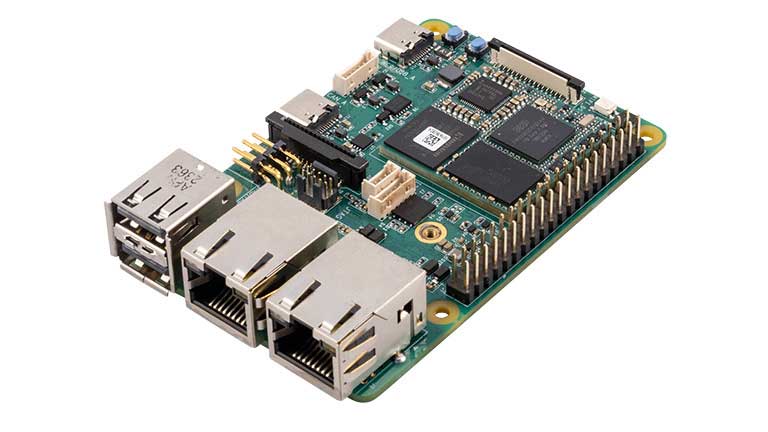
Although only the size of a credit card, Raspberry Pi has a 700Mhz Arm processor, up to 256MB of flash memory. It will run a version of the popular Linux operating system, although Mr. Mullins said the final software package has yet to be finalized.
Development on the Raspberry Pi started three years ago, he said, and they hoped to have a product for sale by mid 2012.
There is currently a waiting list of more than 10,000 people.
The $25 Computer - [Link]
Making silica aerogel at home. Ben writes – [via]
I followed instructions in the silica TMOS recipe from http://www.aerogel.org and successfully produced some small pieces of aerogel in my home shop.
The two main difficulties are: 1. Getting TMOS or TEOS (the key chemical ingredient), and 2. Building a supercritical drying chamber. The components for the chamber can be bought from http://www.mcmaster.com or another source of industrial pipe fittings. You’ll also need a supply of liquid carbon dioxide. I used a 20-lbs cylinder, which I bought from a local welding store. Most of the cost is in the cylinder itself, since a refill costs only $20 to $30. You may find a welding supply shop that will rent the cylinder.
Getting the TMOS is difficult since chemical suppliers are generally unwilling to sell to individuals…
Making silica aerogel at home - [Link]
Researchers at the École Polytechnique Fédérale du Lausanne (EPFL) have developed a technique for giving touchscreens tactile surfaces, so that users have the impression of touching a raised surface. Among the many potential applications, it could be used to make touchscreens more accessible for people with visual impairments.
The novel technique, developed by EPFL’s Integrated Actuators Laboratory in Neuchâtel, is targeted at smartphones, tablets, computers, and vending machines. [via]
Touchscreens go tactile - [Link]
Safety in traffic depends on a number of factors. One decisive aspect is how fit the driver is. A research team at the Munich Technical University (TUM), in collaboration with researchers at the BMW Group, managed to develop a sensor system integrated into the steering wheel that can monitor the driver’s state of health while driving. The driver can use his time behind the wheel for a minor health check. At the same time the device might be used recognize the onset fainting spells or heart attacks.
If you spend a lot of time driving, in addition to listening to the radio or making phone calls, in the future you will be able to undertake a small health check. Together with researchers from the BMW Group, scientists at the TU Muenchen Chair of Micro Technology and Medical Device Technology (MiMed) directed by Professor Tim C. Lueth have developed a system that monitors vital signs such as heart rate, skin conductance and oxygen saturation in the blood via simple sensors in the steering wheel. [via]
Health check as-u-drive - [Link]
The first of the bricks that built the IT world
On November 15, 1971, 40 years ago this Tuesday, an advertisment appeared in Electronic News for a new kind of chip – one that could perform different operations by obeying instructions given to it.
That first microprocessor was the Intel 4004, a 4-bit chip developed in 1970 by Intel engineers Federico Faggin, Ted Hoff, and Stanley Mazor in cooperation with the Japanese company Busicom (née the Nippon Calculating Machine Corporation) for that company’s adding machines.
Busicom held the rights to the 4004 in 1970, but released them to Intel in 1971. Intel then offered the world’s first processor for sale, and 40 years later that world is a very, very different place.
At the time, only the most far-thinking futurists could have imagined the 4004′s impact. For starters, the chip itself wasn’t all that impressive. It ran at 740KHz, had around 2,300 transistors that communicated with their surroundings through a grand total of 16 pins, and was built using a 10-micron process.
Happy 40th birthday, Intel 4004! - [Link]
Much as humans and other animals see via waves of visible light that bounce off objects and then strike our eyes’ retinas, radar “sees” by sending out radio waves that bounce off targets and return to the radar’s receivers. But just as light can’t pass through solid objects in quantities large enough for the eye to detect, it’s hard to build radar that can penetrate walls well enough to show what’s happening behind. Now, MIT Lincoln Lab researchers have built a system that can see through walls from some distance away, giving an instantaneous picture of the activity on the other side.
The researchers’ device is an unassuming array of antennas arranged into two rows — eight receiving elements on top, 13 transmitting ones below — and some computing equipment, all mounted onto a movable cart. But it has powerful implications for military operations, especially “urban combat situations,” says Gregory Charvat, technical staff at Lincoln Lab and the leader of the project. [via]
Radar can see through walls - [Link]