This is just a quick video showing that you can power an AVR project from a fried servo or an old emergency cell phone charger.
Arduino Project Alternative Power Sources - [Link]
grieg.gotdns.com writes:
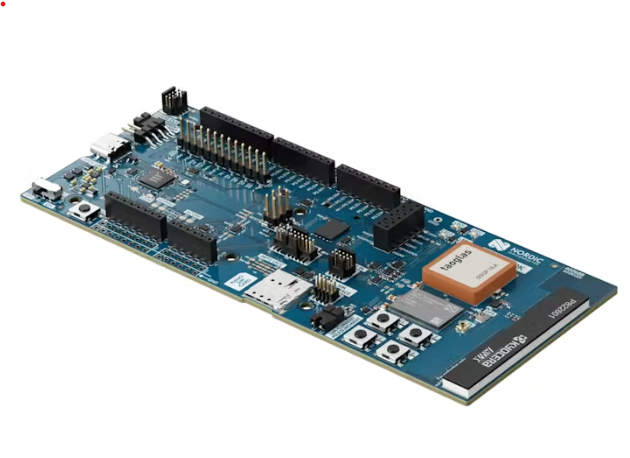
About two months ago, Atmel announced a smart new set of AVR development boards, the XPlained series. One of these boards (which I’ve just recently purchased for $30) boasts a shiny new AVR XMega microcontroller. What? An XMega you say? Why yes, haven’t you heard? Come now, they’ve been around for fully three years at this point. Well, don’t worry if this is fresh news, you’re not alone. For some reason, adoption of the powerful new XMega MCU has been slow amongst hobbyists.
Explaining the XMega XPlained (Dev. Board) - [Link]
ermicro.com writes:
Pulse Width Modulation (PWM) is a technique widely used in modern switching circuit to control the amount of power given to the electrical device. This method simply switches ON and OFF the power supplied to the electrical device rapidly. The average amount of energy received by the electrical device is corresponding to the ON and OFF period (duty cycle); therefore by varying the ON period i.e. longer or shorter, we could easily control the amount of energy received by the electrical device. The Light Emitting Diode (LED) will respond to this pulse by dimming or brighten its light while the electrical motor will respond to this pulse by turning its rotor slow or fast.
Working with Atmel AVR Microcontroller Basic Pulse Width Modulation (PWM) Peripheral – [Link]
ermicro.com writes:
The rapid penetration of the internet networks into many of today’s modern homes and personal gadgets (e.g. smart phone and smart pads) opening a tremendous useful and interesting embedded system application that could be integrated into our house or known as the intelligent house. For example by putting a small embedded system web server in our house, we could easily monitor such as alarm, temperature or even turn on/off the lamp or the garden’s water sprinkle; eventually from any remote location through the wireless personal gadget; Or perhaps you just want to impress your relative or friend with a very accurate digital clock which automatically synchronized the time through the Network Time Protocol (NTP) over the internet at your home or office.
Integrating Wiznet W5100, WIZ811MJ network module with Atmel AVR Microcontroller – [Link]
ermicro.com writes:
Sometimes we need to extend or add more I/O ports to our microcontroller based project. Because usually we only have a limited I/O port left than the logical choice is to use the serial data transfer method; which usually only requires from one up to four ports for doing the data transfer. Currently there are few types of modern embedded system serial data transfer interface widely supported by most of the chip’s manufactures such as I2C (read as I square C), SPI (Serial Peripheral Interface), 1-Wire (One Wire), Controller Area Network (CAN), USB (Universal Serial Bus) and the RS-232 families (RS-423, RS-422 and RS-485). The last three interface types is used for long connection between the microcontroller and the devices, up to 1200 meters for the RS-485 specification, while the first three is used for short range connection.
Using Serial Peripheral Interface (SPI) Master and Slave with Atmel AVR Microcontroller – [Link]
ermicro.com writes:
I2C (read as I Squared C) bus first introduced by Philips in 1980, because of its simplicity and flexibility the I2C bus has become one of the most important microcontroller bus system used for interfacing various IC-devices with the microcontroller. The I2C bus use only 2 bidirectional data lines for communicating with the microcontroller and the I2C protocol specification can support up to 128 devices attached to the same bus. Today many I2C IC-devices available on the market such as Serial EEPROM, I/O Expander, Real-Time Clock, Digital to Analog Converter, Analog to Digital Converter, Temperature Sensor and many more.
How to use I2C-bus on the Atmel AVR Microcontroller – [Link]
ermicro.com writes:
Would be interesting if we could make our microcontroller to sing for us not just beeping or blinking; this project is all about using the powerful AVR ATmega168 16-bit PWM feature to produce accurate musical notes such as playing the child’s favorite Twinkle-Twinkle Little Star song or we could say beeping with style. The principal we learned here could be applied to other AVR microcontroller families that support 16-bit PWM.
AVR Twinkle Twinkle Using PWM Project – [Link]
ermicro.com writes:
Sometimes we need our microcontroller to interact with more human readable information. It will be better for us if we could make it display the words not just blinking the LED. Today most modern gadget such as mobile phone and PDA, use LCD (Liquid Crystal Display) for interacting with us. In this project we will learn how to use the 2×16 LCD for displaying the room’s temperature.
Actually driving the LCD hardware directly is a complex task, but luckily we don’t have to do that; in the market they have already put it together in one package the LCD display hardware and the microcontroller that control it, so our task will be easier now as we only talk to the build in microcontroller inside. The most famous on the market is the 2×16 LCD with LED backlight using Hitachi HD44780U or the equivalent microcontroller, this 80 pins microcontroller is a special dot matrix LCD driver controller with low power consumption and able to use 4-bit data or 8-bit data interface; my suggestion is to have this HD44780U datasheet near you as we walk through this project.
AVR LCD Thermometer Using ADC and PWM Project – [Link]
ermicro.com writes:
It’s interesting to explore what we can do with this tiny 8 pins; 8-bit microcontroller. The ATtiny13 is the smallest and cheapest Atmel AVR 8-bit microcontroller families but yet, it’s loaded with sophisticated peripherals such as two 8-bit PWM channels and 4 channels 10-bit ADC. Although the memory is quite small; 1 K flash, 64 SRAM and 64 EEPROM but this more the adequate for most PWM and ADC application, if you need more memory, bellow is the list of other Atmel AVR 8 pins microcontrollers which have compatible pins with ATtiny13 microcontroller.
Controlling DC motor with AVR ATtiny13 PWM and ADC Project – [Link]
ermicro.com writes:
PWM is used in many industrial mostly for controlling the motor speed. The PWM is used because it’s the most efficient method comparing to the analog one. That’s why most of the modern microcontrollers today have this features build in. How does this PWM works will be described on the following circuits:
Introduction to AVR Microcontroller Pulse Width Modulation (PWM) – [Link]