Lead-Acid BATTERY-Negative tab rotten& Chapped. Whyy ???

Jame Do

Aug 18, 2013
5
Joined
Aug 18, 2013
Messages
5
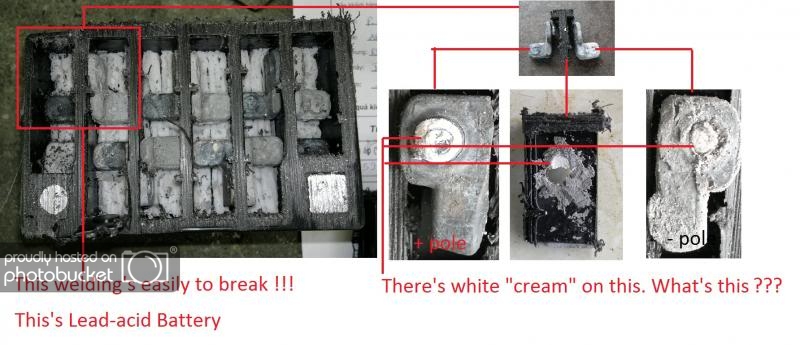
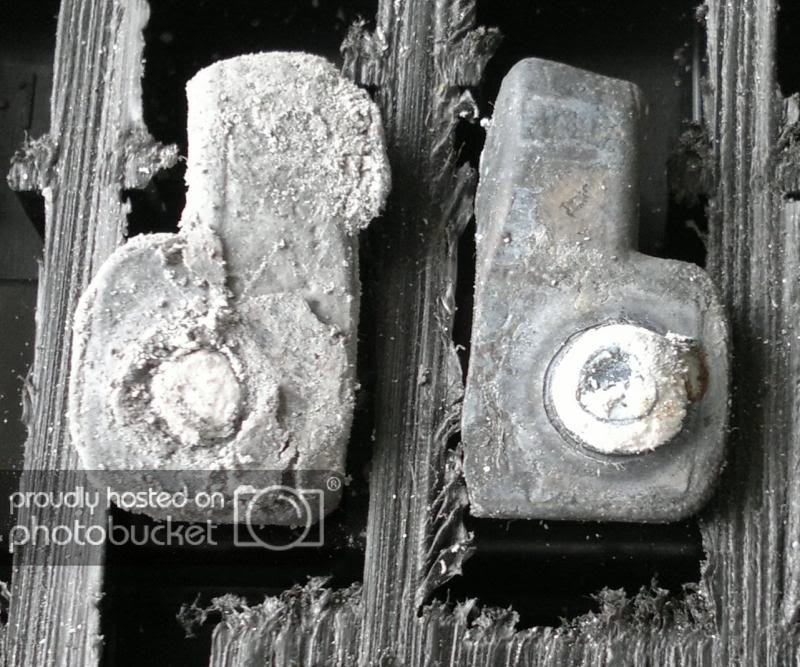
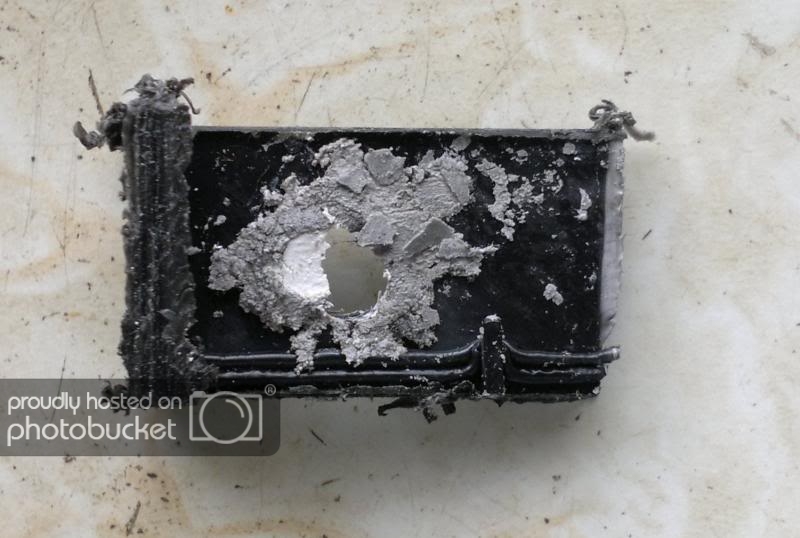
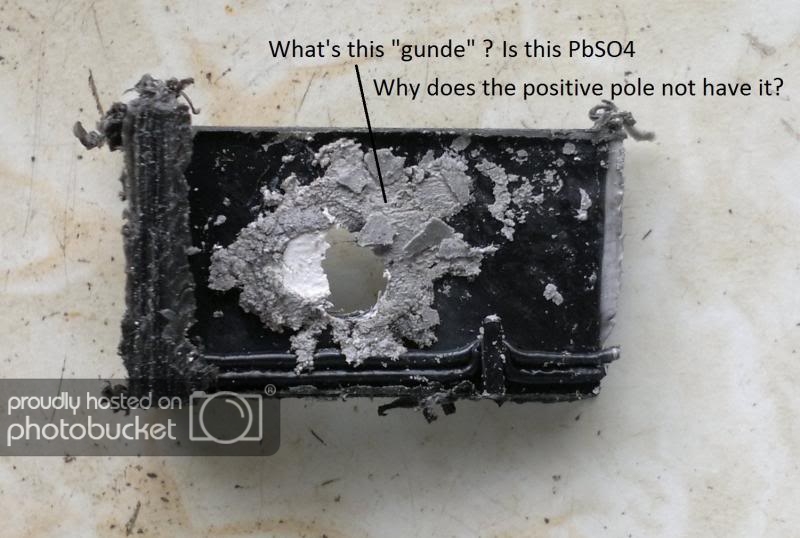
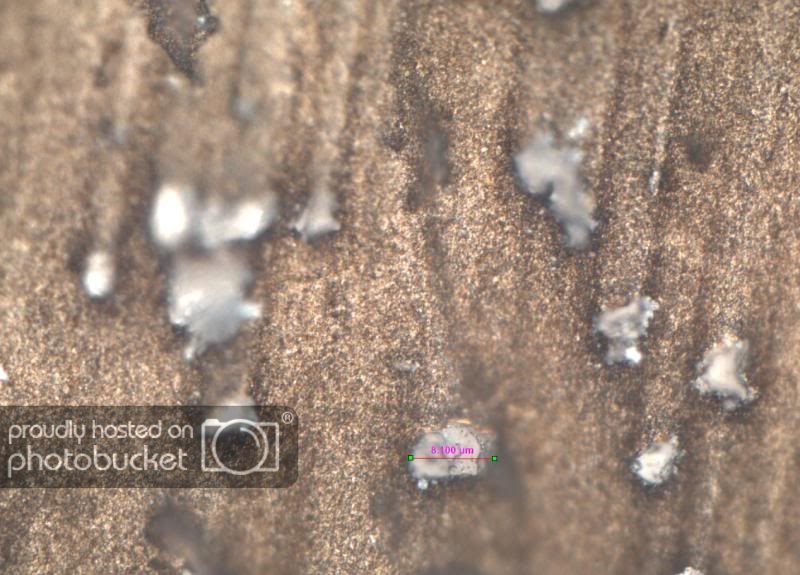
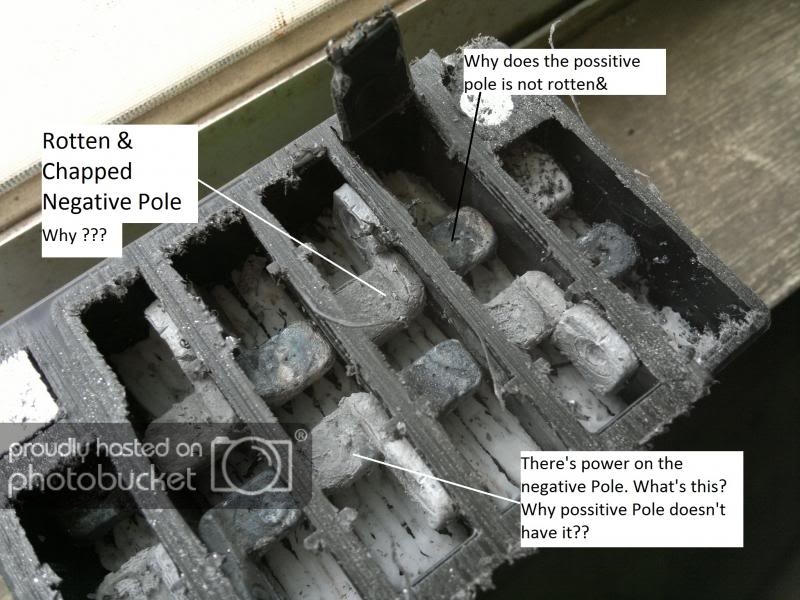
My Lead-acid battery went wrong, when open it, i found this. Please see the picture in those links and help me on this.

I am at [email protected]. Please notify me when you answer. Thank you so much.

Pic1:
2013-08-14-5534.jpg


Pic2:

2013-08-14-5529.jpg


Pic3:

2013-08-14-5545.jpg


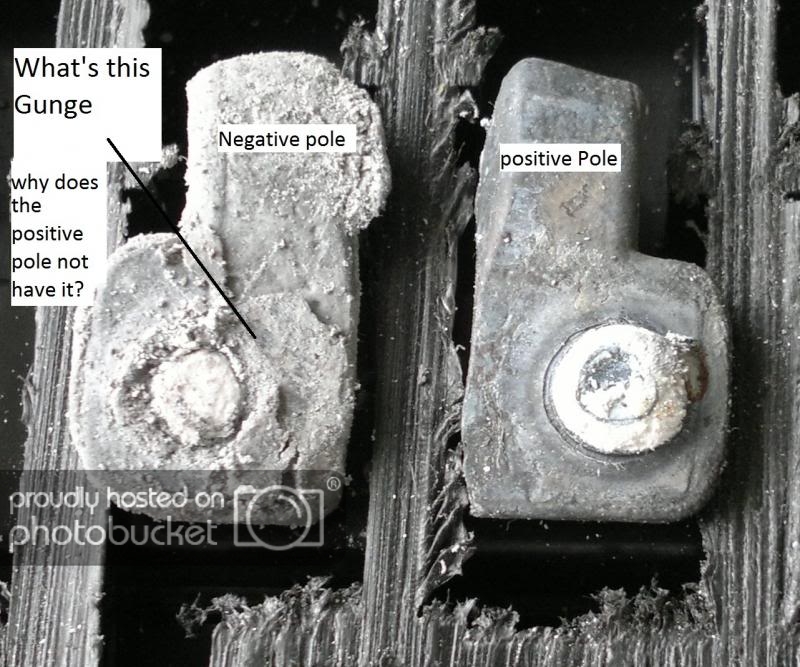
Pic4:

2013-08-14-5550.jpg
 
Last edited:

duke37

Jan 9, 2011
5,364
Joined
Jan 9, 2011
Messages
5,364
The white gunge will be lead suphate, possibly formed if the battery has not been kept charged.

Lead and lead sulphate are poisonous as is sulphuric acid. Take the battery to a recycling centre where it can be disposed of safely.
 

Jame Do

Aug 18, 2013
5
Joined
Aug 18, 2013
Messages
5
Thank you for your prompt advice. I'll be careful as much as I can.

Actually investigating this case is a part of my job. Would you please help me to answer those question:

1. Why is that weld easy to separate?
2. Why is only the negative pole rotten and chapped? ( the positive pole is not )

Thank you so much for your time !!!
 
Last edited:

duke37

Jan 9, 2011
5,364
Joined
Jan 9, 2011
Messages
5,364
1. The weld material will be different to the base material. (Stress, grain size etc.) It seems to be more susceptible to galvanic corrosion.

2. The battery changes its plates from lead sulphate to lead and lead oxide when charged. If the battery is not kept charged, the lead sulphate becomes stable. Look up the electrochemistry of a lead acid battery. Early vehicles had the battery positive connected to chassis, supposedly to reduce galvanic corrosion, a bit like plating in reverse.

Batteries should always have the plates covered with electrolyte but the posts obviously have to come above the liquid.
 

Y2KEDDIE

Sep 23, 2012
259
Joined
Sep 23, 2012
Messages
259
Battery terminal corrosion

Your corrossion is due to galvanic recation. Your batteriy's negative terminal is made of material that has more free electrons than the positive terminal. ( the nature of your lead acid cell. As curent (electrons) flow from the negative terminal to the positive terminal thru a load, the negative terminal errodes.

When you attach the negative terminal to the chassis of a automobile , that chassis becomes a source of electrons as well. Where ever there is current flow ( neg to pos) there must be a difference of potential.and corrosion will occur.

If your connections are the same material/resistance,have more free electrons and temperature there won't be as much voltage drop and thus less corossion.

It's a little more complex than this in theory but hopefully you get the idea.
 

john monks

Mar 9, 2012
685
Joined
Mar 9, 2012
Messages
685
Y2KEDDIE, What happens when you charge the battery? What gets corroded then?
 

Y2KEDDIE

Sep 23, 2012
259
Joined
Sep 23, 2012
Messages
259
Charging the battery

When you charge the battery the electron flow is forced the other way. Hopefuly you increase the flow only enough to force the acid out of the plates and back into the water (electrolyte). If too much voltage is placed across the battery and the recharge process is "forced" , the electrolyte will boil, overheat, and physically damage the active components. This will cause sulfating, a form of corrosion.

This is similar when protecting a stucture (metal building, hull of a ship, etc).This is called cathodic protection. The stucture will corrode because its galvanic current goes from the stucure into the ground (earth), because the stucture is at a higher potential than the eath. You can put and anode in the ground nearby and the anode wil be sacrificed rather than the stucture. You can slow down that process by impressing a dc voltage in the oposite direction. The choice of anode is determined by the material your trying to protect.
 

duke37

Jan 9, 2011
5,364
Joined
Jan 9, 2011
Messages
5,364
The potentials are the same, charging or discharging.
An interesting case of differential corrosion is season cracking (stress corrosion cracking) which caused great problems when brass bullets were stored in stables in India and the ammonia attacked the grain boundaries and the bullets disintegrated.
 

john monks

Mar 9, 2012
685
Joined
Mar 9, 2012
Messages
685
I guess I walked into this. The way cathodic protection works is that the device being protected has a negative voltage applied to it relative to its environment. And what happens is that electrons exit the surface of the device and positively charged ions migrate to the device being protected such as an underground gasoline tank.
What perplexes me in this case the negative pole that is deteriorating. Where am I confused? Is it that we are confusing the crystalline structures as deterioration?

I just read an article on this process. Maybe this will help: http://www.batteryvitamin.net/understanding_corrosion
 
Last edited:

Y2KEDDIE

Sep 23, 2012
259
Joined
Sep 23, 2012
Messages
259
Battery corrossion

I find it difficult trying to describe what's going on in a battery circuit. External to the battery I think in terms of electron flow; inside the battery the terms reference ion flow.

There's a lot happening, and different depending if it's charging or discharging.

Rarely I see a positive terminal of a battery with any type of corrosion. I believe this is because the material of the terminal is a higher level than the metal its connected to. This is why positive grounding of the frame of an automobile is a better choice.
 

Jame Do

Aug 18, 2013
5
Joined
Aug 18, 2013
Messages
5
thank you so much for your helpful& interesting knowledge.

Would you please help me to answer these question in the pictures below. Thank you so much !

2013-08-14-5545-Copy-1.jpg


2013-08-14-5550-Copy.jpg


By the way this is the material of the pole:
ICWNGmaimau50xdimen.jpg
 
Last edited:

john monks

Mar 9, 2012
685
Joined
Mar 9, 2012
Messages
685
Base on the article I read, upon charging the positive plate which is PbSO4 disassociates into PbO2 and the negative plate which is PbSO4 disassociates into Pb. So the S which is sulfur goes into the water or electrolyte and the extra O or oxygen turns into a gas and gets vented off. So originally the positive plate is lead oxide which structurally is weak and this may be why the positive plate or terminally deteriorates.

Normally you apply more charge into a battery than what you get back out through discharge so for simplicity I only considered the charge situation. So in this case inside the battery electrons would be leaving the negative plate through the electrolyte and into the positive terminal.

So normally in the electroplating process or cathodic protection circuitry the positive terminal is sacrificed because electrons are going into the plate while at the same time positively charge ions is leaving the terminal and migrate towards the negative terminal and after the power is removed the ions become deionized and is simply plated onto the negative terminal. Sometimes ions simply stay in the electrolyte and eventually get washed away and you're left with a mess.
 

Jame Do

Aug 18, 2013
5
Joined
Aug 18, 2013
Messages
5
Thank you so much for your help. I wish you'll patient of my questions and my curiosity

Would you please make it clearer? What's that gunge in the 1st picture ?
 

duke37

Jan 9, 2011
5,364
Joined
Jan 9, 2011
Messages
5,364
Some batteries have lead alloy plates for strength. Batteries for static use have pure lead plates.

In the latter case, the gunge can only be lead sulphate.
 

Jame Do

Aug 18, 2013
5
Joined
Aug 18, 2013
Messages
5
Thank you duke !!!

but when we charge battery, PbSO4's turned to Pb and PbO at negative and positive plate, why does PbSO4 still appear on only negative plate
 

duke37

Jan 9, 2011
5,364
Joined
Jan 9, 2011
Messages
5,364
To change from sulphate it is necessay that it is immersed in the electrolyte.
I cannot help more in this topic but there was a good reference included previously giving details of the best way of preserving a lesd/acid battery.
 
Top