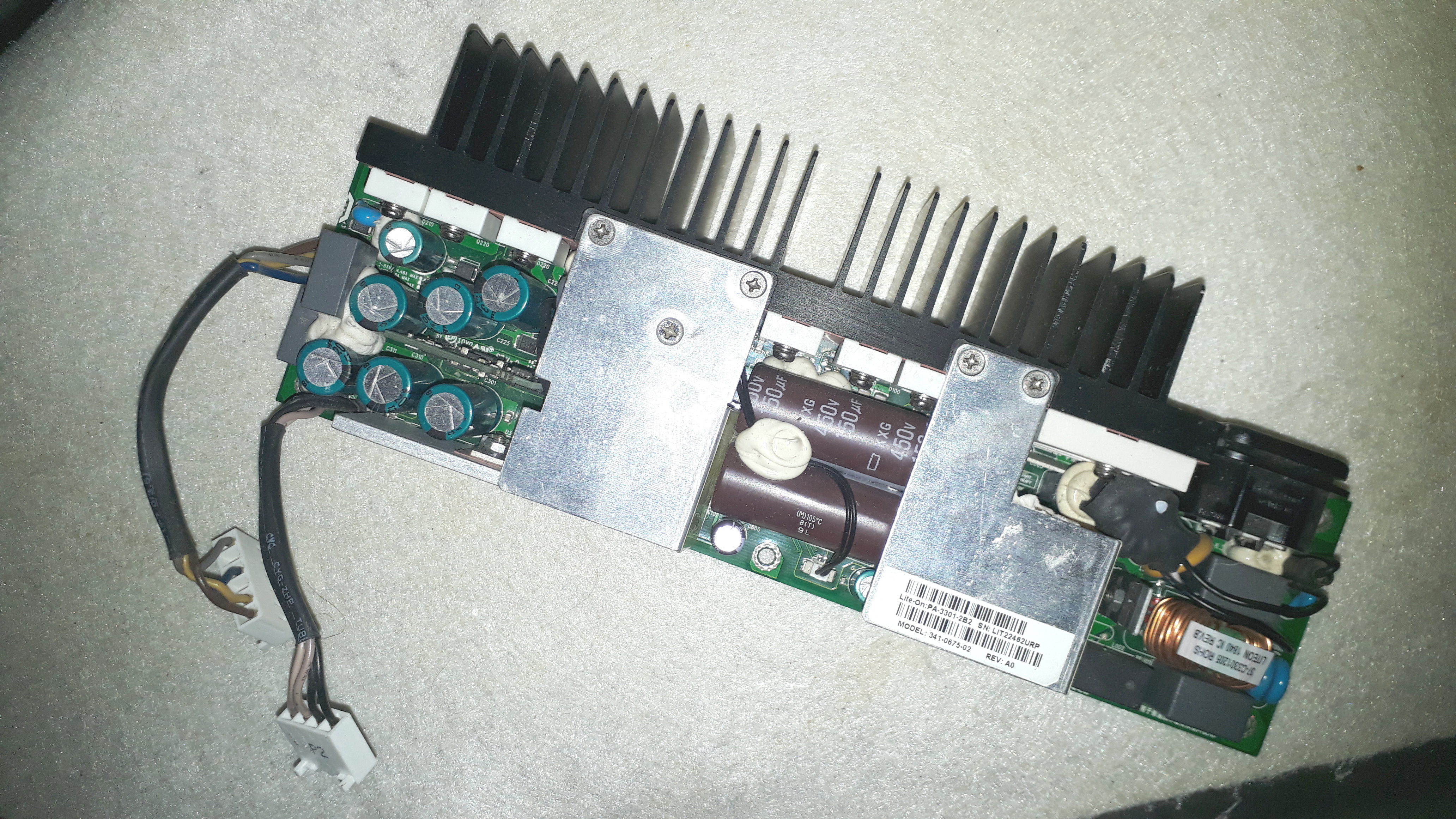
@73's de Edd any thoughts with the model # he stated ?
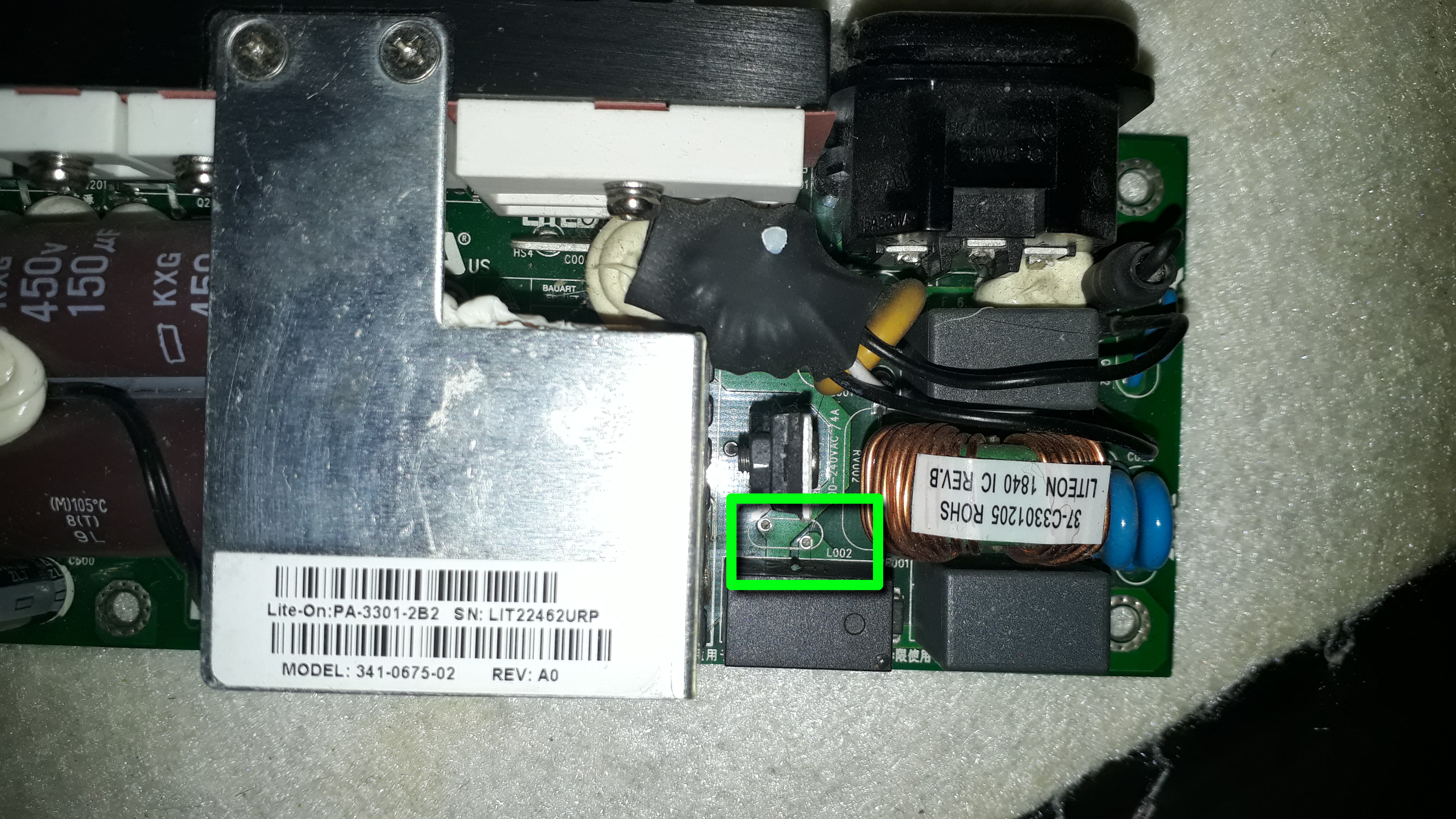
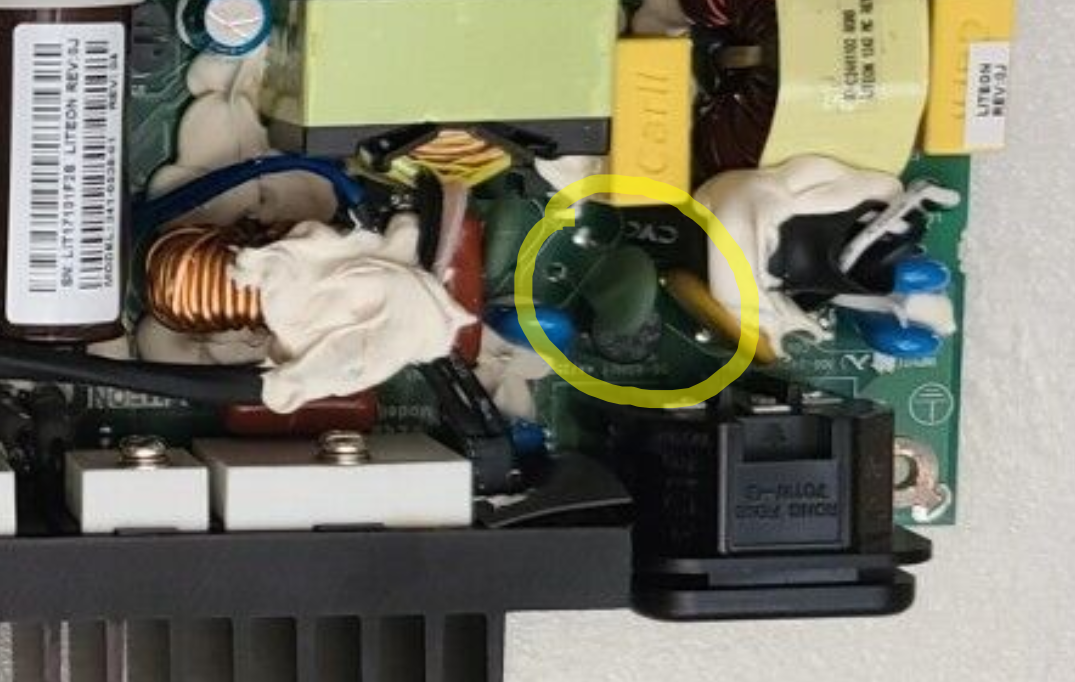
It was a component (capacitor)
No . . .no . . .no . . .no . . . . it's NOT a (ceramic) cap
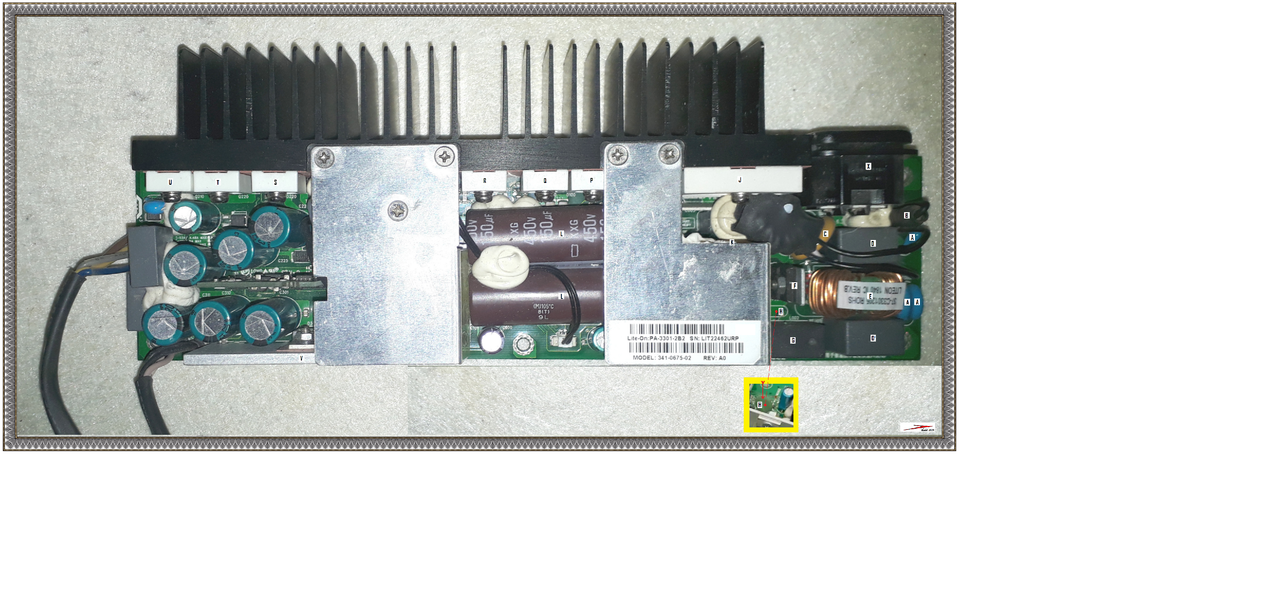
Why 'soitanly . . . . . . in putting my LEARNED eyes . . . . and that's being HEAVY ACCENTED on the LEARNED . . . . . . upon the photo . . . . and transferring to the mark-up below . . .
I AM SEEING . . . . .
AC power coming in at that top right X connector where AC power is initially met with item B a heat shrink enshrouded pig tail AC line fuse and then AC power gets shunted with item C varistor.
Then AC power is shunted with X safety capacitor item D and passes down and into contra wound RFI/EMI toroidal choke coils and out of them into another X safety cap . . . item D'.
Now, finally, the hot AC line voltage goes into your H mystery device . . . .which is being an incoming surge current limiting thermistor . . . . with its negative temp coefficient . . . no less.
Lite On power supplies have used SCK-2R55A . . . . . .CL110 and SCK10 units in the past.
Now your pictures neglected to show a sticker with the power rating of this supply upon it . . . . to be able figure its cold / hot transition value. BUT I think that I can see just one of its DC output supplies . . . . . that is developing 200'ish watts.
Fill us in on that spec . . . . for thermistor computation.
For that part to be overloaded and burnt up,expect the hidden fuse to also be blown.
The initial
fault was probably being a crowbar like short of the P-Q-R power components mounted to the heat sink or the Item J bridge rectifier or possibly even the brown item L . . . . .E-capacitors.
I will fill in the other items later . . . . . .if needed. You now know the main ones.
I would be installing 2 hook up wires into the thermistor holes and terminating into a 50-100 watt 230-240V INCANDESCANT lamp and initially powering up the supply after having tested all of those prior suspects for shorts, THEN . . . .if the lite comes on BRIGHT after power up . . .still problems.
The other condition is the lamp would only come up to a dim orange glow during the 300 ufd of E-caps initial very charge up surge, then dim.
Since full line power is not available for operation. Matter of fact that dim and short test phase may need a VERY DARK room to see it.
BUT if no BRIGHT light you seem to have eliminated the major defective components.
NOW . . . . .
What say you ?
Do a Left CLICKEE-CLICKIEE to make mo' BIGGIE-BIGGIE !
73's de Edd . . . . .

.