Television reception antennas farce...

Externet

Aug 24, 2009
943
Joined
Aug 24, 2009
Messages
943
Hello. Is there anyone here that can show me an impedance-versus-frequency plot for any television reception antenna of any manufacturer ?
 

Delta Prime

Jul 29, 2020
2,987
Joined
Jul 29, 2020
Messages
2,987
TV reception antennas are nominally designed for either 75-ohm unbalanced or 300-ohm balanced standard impedances.
An antenna’s impedance plot demonstrates how its input resistance and reactance vary wildly across different frequencies. While exact numbers vary by element length, all standard television reception antennas (like Yagi-Uda and log-periodic designs) follow the same universal impedance.
Because commercial impedance curves (Smith charts or VSWR plots) are proprietary, they are not typically published.
 
Last edited:

davenn

Moderator
Sep 5, 2009
14,470
Joined
Sep 5, 2009
Messages
14,470
Hello. Is there anyone here that can show me an impedance-versus-frequency plot for any television reception antenna of any manufacturer ?

1) The impedance of an antenna isnt directly related to frequency. So no, you wont find a freq. Vs imp. plot
2) The impedance will be quite constant across a wide range of frequencies
3) The impedance is determined by the type/style of the feedpoint and overall antenna, regardless of frequency

e.g. for #3)

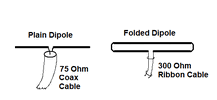
the feedpoint impedance of a plain dipole is typically 50 to 75 Ohms
the feedpoint impedance of a folded dipole is typically 300 Ohms
dipoles.GIF

Usual feedpoint impedances of a dipole on its own.
Once additional elements are added, this effectively lowers the feedpoint impedance.
A plain dipole can drop down to around 25 to 50 Ohms
A folded dipole can drop down to around 200 Ohms


Dave
cheers
Dave
 

Externet

Aug 24, 2009
943
Joined
Aug 24, 2009
Messages
943
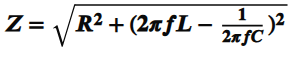
The impedance of an antenna isnt directly related to frequency. So no, you wont find a freq. Vs imp. plot
And what is f here ? : 1779206775046.png


The impedance will be quite constant across a wide range of frequencies
So changing a frequency does not change the impedance ? What do you mean by 'quite' ?
1779207105448.png


---> And why do antenna tuners exist for ?
 
Last edited:

davenn

Moderator
Sep 5, 2009
14,470
Joined
Sep 5, 2009
Messages
14,470
So changing a frequency does not change the impedance ? What do you mean by 'quite' ?
1779207105448.png


---> And why do antenna tuners exist for ?

not the meaning I was using for quite .... language difference between you and me

change quite to reasonable range
The freq range of an antenna has to move significantly ( depending on construction and other factors)
before the impedance changes significantly

Theory is a good guide, practical operation/testing/using is where you really find out what works and
what doesnt

This is more noticeable on HF than on VHF and up into microwave freq's.

Antenna tuners are needed to keep the
1) transmitter matched to the antenna
2) the variation of type of antenna
3) resonant freq of an antenna

Your response hinted at that maybe you dont quite understand antenna resonance ?

I gotta leave home for work .... will finish this at work

OK back .....

Amateur radio operators often use antenna tuners on HF antennas 3 - 30 MHz range
because they want the transmitter to see a good load across a very wide range
But what most dont understand is that, tho the transmitter is happy looking at a good load,
The antenna is horribly inefficient anywhere it's used away from its resonant frequency.
They also love to use a single, random length, long wire antenna, resonant nowhere on any
of the bands of interest, so again, they use a tuner to make some use of it

Antenna construction also affects the resonant bandwidth and therefore the impedance.
The thinner the antenna element, the narrower the bandwidth and therefore a tuner is
needed even to move the transmitter as little as 200kc.

Conversely, at say the 2m band, 144 - 148MHz, or even 70cm band 430 - 450MHz,
the resonance and impedance of the antenna can stay reasonably consistant over many MHz.
Even at 23cm band 1240 - 1300MHz, 60MHz of bandwidth, an antenna can still be resonant
across that 60MHz and therefore the impedance doesnt vary much ... + - a few Ohms.
This may sound bad in theory, but in practice is irrelevant.

So you can see there are a number of factors that allow the impedance to stay reasonably
constant over a wide range.

As an amateur radio operator and also for professional work, I have been playing with antennas
for the best part of 50 years

cheers
Dave
VK2TDN
 
Last edited:

crutschow

May 7, 2021
984
Joined
May 7, 2021
Messages
984
Hello. Is there anyone here that can show me an impedance-versus-frequency plot for any television reception antenna of any manufacturer ?
And what will you do if you have that info?

I would think the antenna gain vs. frequency (into a fixed load) would be of more interest.
 
Top