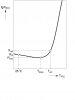
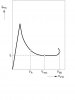
I'm working with a PTC heater circuit. I've been stuck with something anyone who worked with a PTC heaters will understand. The PTC heater was chosen due to its self limiting characteristics. I'm running a small PTC heater element off of 24vdc. The problem is the inrush current on the heater. If the heater is run at 100% duty cycle, the current quickly drops to 3amps (which is acceptable). Here is the problem, the heater will quickly jump to 9amps when initially turned on cold, then over several seconds, drop to a steady state of 3amps. I've been working on a PWM control that limits the current by adjusting the duty cycle to 4amps, but the heater never makes it over the hump and runs crippled. If I allow the duty cycle to climb to 9amps, then the heater will run all day at 3amps after going over the 9amp peak.
I've been working on the idea that the voltage should be controlled using a PWM chopper circuit, but it looks like I may need to add some sort of pass transistor limit that allows the heater to be at 24v constantly. Originally, we tried a BJT shunt limiter but it generated as much heat as the heater itself!
Any clever people out there who solved this problem or should I punt and find a linear resistance heater?