Hi all,
I'm new here so first I will introduce myself:
I am 29 and live in the Netherlands and work as a technician E&I
Hobbies include welding, CNC and "basic" electronics
I just finished the build of my practice no-budjet CNC engraver.
http://www.youtube.com/watch?feature=player_profilepage&v=piWEYOGqN44
Now I know I can, I want to make a CNC plasma cutting table.
The mechanical and electrical part is no problem, so I will save that for later.
The problem lies in the torch height measurement. The torch of the plasma cutter must stay at the same height during cutting, even when the plate bends because of the heat.
The trick now is to create a control system that allows the torch to follow the "curved" plate. There are special kits for sale that can do this but they are very expensive. so there is no fun in doing that.
These kits work with an arc voltage measurement, the arc voltage is a measure of the distance between the torch and the plate. If you know the distance the control system is just a small trick.
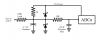
My own idea is to use a voltage divider for scaling of the open arc voltage to a 0-5v voltage.
This I can read as an analog signal into an Arduino and then use 2 outputs (up, down) to adjust the height.
The problem lies in filtering the signal and protecting my Arduino to the high peaks.
A plasma torch puts out anything from 0 to 200/300 Vdc (negative BTW) and it's very dirty. A voltage divider gets this down to the required 0 to 5 for the arduino, but I need to make sure no spikes go above this.
My knowledge of electronics is limited, two years ago I have done a basic course electronics because at work it sometimes comes in handy.
Maybe some of you already have had this problem before and could give me some helpful tips. Thanks for your help!
Greetings ArcSpark
I'm new here so first I will introduce myself:
I am 29 and live in the Netherlands and work as a technician E&I
Hobbies include welding, CNC and "basic" electronics
I just finished the build of my practice no-budjet CNC engraver.
http://www.youtube.com/watch?feature=player_profilepage&v=piWEYOGqN44
Now I know I can, I want to make a CNC plasma cutting table.
The mechanical and electrical part is no problem, so I will save that for later.
The problem lies in the torch height measurement. The torch of the plasma cutter must stay at the same height during cutting, even when the plate bends because of the heat.
The trick now is to create a control system that allows the torch to follow the "curved" plate. There are special kits for sale that can do this but they are very expensive. so there is no fun in doing that.
These kits work with an arc voltage measurement, the arc voltage is a measure of the distance between the torch and the plate. If you know the distance the control system is just a small trick.
My own idea is to use a voltage divider for scaling of the open arc voltage to a 0-5v voltage.
This I can read as an analog signal into an Arduino and then use 2 outputs (up, down) to adjust the height.
The problem lies in filtering the signal and protecting my Arduino to the high peaks.
A plasma torch puts out anything from 0 to 200/300 Vdc (negative BTW) and it's very dirty. A voltage divider gets this down to the required 0 to 5 for the arduino, but I need to make sure no spikes go above this.
My knowledge of electronics is limited, two years ago I have done a basic course electronics because at work it sometimes comes in handy.
Maybe some of you already have had this problem before and could give me some helpful tips. Thanks for your help!
Greetings ArcSpark