High Voltage component

duke37

Jan 9, 2011
5,364
Joined
Jan 9, 2011
Messages
5,364
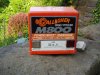
I have repaired various electric fence units and there are some components connected in series/parallel across the output. They are light brown with a white end. I have never changed one of these even if the diodes have been blown apart. They seem to have no connection. Any idea what their purpose is?end2006 086.jpg end2006 087.jpg
 

davenn

Moderator
Sep 5, 2009
14,470
Joined
Sep 5, 2009
Messages
14,470
They seem to have no connection. Any idea what their purpose is?
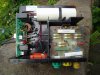
They appear to be connected between other components

Im picking ... probably resistors .... see if you can get a resistance measurement across them
 

duke37

Jan 9, 2011
5,364
Joined
Jan 9, 2011
Messages
5,364
They show no connection.
If they were inductors, the wire would need to be mighty thin.
At the time I looked at this fencer I did not have a capacitance meter.

My thought is that they could be a diode with sufficient series elements to appear open circuit on a normal low voltage meter or maybe a spark gap.
 

Arouse1973

Adam
Dec 18, 2013
5,178
Joined
Dec 18, 2013
Messages
5,178
Point for being creative... but lighting would have enough potential to arc across those traces and components wouldn't it?
No, thats the whole point. Think about how they work. :)
 

Gryd3

Jun 25, 2014
4,098
Joined
Jun 25, 2014
Messages
4,098
No, thats the whole point. Think about how they work. :)
I glanced at lightning suppressors a while back. Aren't they just a spark gap to ground?
Larger gap would allow for a higher voltage to remain in the system. It very well could be a lightning protection circuit.. but I am not familiar with different kinds of suppressors to say one way or the other with certainty... I'm still eye-balling the white caps on one end... Thinking they have some significance. Hopefully someone can come in here and say "You're all wrong, those things are..." :p
 

davenn

Moderator
Sep 5, 2009
14,470
Joined
Sep 5, 2009
Messages
14,470
No, thats the whole point. Think about how they work. :)

No, it arcs across those and everything else on the board, everything gets toasted

I still go with resistors for current limiting
I still remember the days in the older TV's where you would see a number of high voltage resistors strung together in the EHT lines to do current limiting .... I see this as the same sort of thing

For a short time I did consider them as diodes as part of the diode multiplier but that isn't correct.
You can see the diode and capacitor multiplier along the back of the board
 

Gryd3

Jun 25, 2014
4,098
Joined
Jun 25, 2014
Messages
4,098
No, it arcs across those and everything else on the board, everything gets toasted

I still go with resistors for current limiting
I still remember the days in the older TV's where you would see a number of high voltage resistors strung together in the EHT lines to do current limiting .... I see this as the same sort of thing

For a short time I did consider them as diodes as part of the diode multiplier but that isn't correct.
You can see the diode and capacitor multiplier along the back of the board
Makes sense. 3 groups of parallel components string together in series. I've done something similar with lower wattage resistors to make an equivalent resistor to handle a larger load.
There is a spot for a third component to add in parallel to each group as well..
 

Arouse1973

Adam
Dec 18, 2013
5,178
Joined
Dec 18, 2013
Messages
5,178
I glanced at lightning suppressors a while back. Aren't they just a spark gap to ground?
Larger gap would allow for a higher voltage to remain in the system. It very well could be a lightning protection circuit.. but I am not familiar with different kinds of suppressors to say one way or the other with certainty... I'm still eye-balling the white caps on one end... Thinking they have some significance. Hopefully someone can come in here and say "You're all wrong, those things are..." :p

Agreed if a direct lightning strike hit the wires then game over. But this is not as common as you may think. The lightning stroke that hit's the ground generates a massive electric field which will induce currents into fence wires as they are basically long antennas. It is this that the lightning suppressors are designed for, the secondary effect.

Some people also put a small coil on the fence wires to give some extra inductance to slow down the rate of change of current. This gives the suppressors something to work on and thus clamping the high voltage to a much lower value which prevents damage to the circuit. Suppressors can be spark gaps or GDTs or MLVs or diodes. But I must admit I am siding with Dave here that they could be some sort of resistor.

Adam
 

Bluejets

Oct 5, 2014
7,374
Joined
Oct 5, 2014
Messages
7,374
Mmm, good educated guess on your part.

Just goes to show that studying theory always pays sooner or later.
 
Top