You are using an out of date browser. It may not display this or other websites correctly.
You should upgrade or use an alternative browser.
You should upgrade or use an alternative browser.
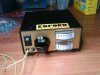
Koford (Slot Car) Bench Power Supply Project
- Thread starter TheChad
- Start date


Scroll to continue with content
Hey guys!
Well been using the new power supply for a few months! It's been working fantastic! No heat regardless of amp/voltage!
My only problem at this point is that it's very hard to adjust voltages minute amounts, a tiny bump of the knob jumps the voltage...
Today I took a measurement with the knob (50k ohm rheostat) on the front panel turned all the way up, with the internal rheostat turned down to limit the voltage output to 12.6v Max, I measured the ohms with the meter set on 20k ohms, I got a reading of 2.99, which means ~3000 ohms, right?
The internal rheostat and the external rheostat are both 50k ohm.
Since my maximum reading was ~3000 ohms, if I were to get a 3k ohm external rheostat, would that give me much more control over the voltage range?
Thanks!
-TheChad
Well been using the new power supply for a few months! It's been working fantastic! No heat regardless of amp/voltage!
My only problem at this point is that it's very hard to adjust voltages minute amounts, a tiny bump of the knob jumps the voltage...
Today I took a measurement with the knob (50k ohm rheostat) on the front panel turned all the way up, with the internal rheostat turned down to limit the voltage output to 12.6v Max, I measured the ohms with the meter set on 20k ohms, I got a reading of 2.99, which means ~3000 ohms, right?
The internal rheostat and the external rheostat are both 50k ohm.
Since my maximum reading was ~3000 ohms, if I were to get a 3k ohm external rheostat, would that give me much more control over the voltage range?
Thanks!
-TheChad

If I remember correctly, the internal and external rheostat were connected in parallel for the final product. (Please correct me if I'm wrong)Hey guys!
Well been using the new power supply for a few months! It's been working fantastic! No heat regardless of amp/voltage!
My only problem at this point is that it's very hard to adjust voltages minute amounts, a tiny bump of the knob jumps the voltage...
Today I took a measurement with the knob (50k ohm rheostat) on the front panel turned all the way up, with the internal rheostat turned down to limit the voltage output to 12.6v Max, I measured the ohms with the meter set on 20k ohms, I got a reading of 2.99, which means ~3000 ohms, right?
The internal rheostat and the external rheostat are both 50k ohm.
Since my maximum reading was ~3000 ohms, if I were to get a 3k ohm external rheostat, would that give me much more control over the voltage range?
Thanks!
-TheChad
You can add a resistor in series, or in parallel to the rheostat to narrow the output voltage range quite a bit.
So...
Step 1: Determine the Max, and Min voltage you want to be able to set.
Step 2: Using only 'one' of the rheostats, adjust the power supply to the lowest setting you want. Then measure the rheostat.
Step 3: Using only 'one' of the rheostats, adjust the power supply to the highest setting you want. Then measure the rheostat.
From the information in Steps 2 and 3, we can modify the adjustment rheostat to give you control from the min - max value... which should allow you to have a more gradual control. Additionally, you could use a secondary external rheostat. One for rough adjustment, and another for fine adjustment.
The path you take is up to you. Let us know!
. And I'm glad you are enjoying it. You put a lot of work into that thing, it's always nice to have a project work out

If I remember correctly, the internal and external rheostat were connected in parallel for the final product. (Please correct me if I'm wrong)
You can add a resistor in series, or in parallel to the rheostat to narrow the output voltage range quite a bit.
So...
Step 1: Determine the Max, and Min voltage you want to be able to set.
Step 2: Using only 'one' of the rheostats, adjust the power supply to the lowest setting you want. Then measure the rheostat.
Step 3: Using only 'one' of the rheostats, adjust the power supply to the highest setting you want. Then measure the rheostat.
From the information in Steps 2 and 3, we can modify the adjustment rheostat to give you control from the min - max value... which should allow you to have a more gradual control. Additionally, you could use a secondary external rheostat. One for rough adjustment, and another for fine adjustment.
The path you take is up to you. Let us know!
. And I'm glad you are enjoying it. You put a lot of work into that thing, it's always nice to have a project work out
You are correct, the 2 rheostats are wired in parallel to achieve a final result. I took the external rheostat and turned it all the way up, then turned the internal rheostat down to achieve a final MAX voltage of 12.6v, with out the 2 wired in parallel, the max voltage is ~14 something volts..
The Minimum Voltage I want would be the minimum voltage the board is capable of, which is 1.2v. The Maximum Voltage I want would be 12.6v. (Could be a little less, it doesn't need to be an exact number)
The internal rheostat is used strictly to limit the max voltage. So I assume it would be best to turn the internal rheostat all the way up and measure the external rheostat at the minimum voltage and the 12.6 Maximum voltage? (Isn't this already what the internal rheostat is doing?)
Thanks!
-TheChad
Hrm.. well, here's where it gets a little interesting then.
With the internal rheo set the way it is. The output is now limited from 1.2V to ~12V correct?
In order to get more precision as you adjust the dial, you either need to work with 2 external rheostats, or you need a replacement external rheo that has a greater travel distance.
How 'fine' of a control do you want to achieve?
With the internal rheo set the way it is. The output is now limited from 1.2V to ~12V correct?
In order to get more precision as you adjust the dial, you either need to work with 2 external rheostats, or you need a replacement external rheo that has a greater travel distance.
How 'fine' of a control do you want to achieve?
Hrm.. well, here's where it gets a little interesting then.
With the internal rheo set the way it is. The output is now limited from 1.2V to ~12V correct?
In order to get more precision as you adjust the dial, you either need to work with 2 external rheostats, or you need a replacement external rheo that has a greater travel distance.
How 'fine' of a control do you want to achieve?
Well, the current external Rheostat's range is from 1'o Clock to 9'o Clock.. I don't have any room to add a 2nd external rheostat..
So the External rheostat is 50k... But if the internal rheostat is turned down to say 20k, then I would only need the external rheostat to be 20k right? Which should give me a wider range of adjustment in the same travel distance than 50k, right?
I couldn't really get a measurement of the internal rheostat because it's wired to the external rheostat, I would have to disconnect the external rheostat to read the internal rheostat... (Than again, when I took a reading of the external rheostat, it was probably also effected by the internal rheostat setting)
So if I disconnect the external rheostat, and take a reading of the internal rheostat set to a maximum voltage of 12.6v, lets say the rheostat reads 20k ohm, does my logic from above apply? Could I just get a 20k Ohm external rheostat and effectively gain more control over the same travel distance?
As far as how "Fine" of control I want, the digital meter reads 2 digits to the right of the decimal point when under 10v, and 1 digit to the right of the decimal point when over 10v. I typically use the power supply in the range of 3v-6v..
Currently, when I am at say 3.48v I want to bump it up to 3.50, I turn the know an unnoticeable about to try and bump the voltage and it jumps to say 3.82v (The are not exact numbers).. I will get it eventually after microscopically moving the knob back and forth for a few minutes, but I would like to be able to control that better..
-TheChad
Well... If the internal rheo is set at 20k and the external is set to 50k, then combined, they will provide 14.3K.
The tricky part here... is that any rheo you pick that has the same travel will have the same result...
If you swap out the external rheo, you will end up adjusting the internal rheo to compensate... but the new rheo will still adjust the voltage at the same rate. (It will be non-linear, but should be pretty close to a linear result that you may not notice)
If you have a rheo that travels from 1 - 9 Oclock (240 degree) then you would end up getting close to 0.05 V per degree.
The tricky part here... is that any rheo you pick that has the same travel will have the same result...
If you swap out the external rheo, you will end up adjusting the internal rheo to compensate... but the new rheo will still adjust the voltage at the same rate. (It will be non-linear, but should be pretty close to a linear result that you may not notice)
If you have a rheo that travels from 1 - 9 Oclock (240 degree) then you would end up getting close to 0.05 V per degree.
If I were to remove the internal Rheostat from the picture and tested the external rheostat to be at the appropriate Max voltage of 12.6v at say 30k Ohms, would getting a 30kohm rheostat not give better control/adjustability because the additional 20k ohms of range is simply removed from the picture?
If I reduced the Max voltage on the internal Rheostat down to say 8v, is that going to give me better control on the external rheostat?
Is narrowing the range not going to help in this case?
Thanks!
-TheChad
If I reduced the Max voltage on the internal Rheostat down to say 8v, is that going to give me better control on the external rheostat?
Is narrowing the range not going to help in this case?
Thanks!
-TheChad
Not really... the internal rheo results in limiting the 'total' resistance of both that result in 12V max... you would have the same result with a single rheo with a 240 degree range and a max of 12 desired Volts.If I were to remove the internal Rheostat from the picture and tested the external rheostat to be at the appropriate Max voltage of 12.6v at say 30k Ohms, would getting a 30kohm rheostat not give better control/adjustability because the additional 20k ohms of range is simply removed from the picture?
Narrowing the range will certainly help.If I reduced the Max voltage on the internal Rheostat down to say 8v, is that going to give me better control on the external rheostat?
Is narrowing the range not going to help in this case?
Thanks!
-TheChad
1.2 - 8V will almost double the precision.. so instead of 0.05V per degree, you would get 0.027V per degree. Of course you could not go past 8V then...
There has got to be a better item.. I saw this, but it's pricey
http://www.digikey.ca/product-detail/en/7286R50KL.25/987-1137-ND/2408715
It turns greater than 240 degrees
Last edited:
Not really... the internal rheo results in limiting the 'total' resistance of both that result in 12V max... you would have the same result with a single rheo with a 240 degree range and a max of 12 desired Volts.
Narrowing the range will certainly help.
1.2 - 8V will almost double the precision.. so instead of 0.05V per degree, you would get 0.027V per degree. Of course you could not go past 8V then...
Well, at this point it doesn't seam like I have any other option, unless I want to go to a multi rotation rheostat, which I don't think would be very good for my application...
I really don't need 12v, I set it to 12.6v just because the transformer said 12.6v so I figured for consistency I would set the max output to 12.6v.. When testing motors I am always in the 3-4.5v range, when running armature and tire truer, I set it to 4.8v. So really I don't really even need to go over 6v, but it's nice to have the additional range to rev a motor for testing from time to time. If I were to run any of my fast motors at 12v with no load for more than a fraction of a second it would likely have catastrophic results! (Spinning at well over 200k RPM)
Oh wow... Then I'd be willing to bet that adjusting the internal rheo to limit the output voltage to a lower value will give you more accuracy. It's free to tryWell, at this point it doesn't seam like I have any other option, unless I want to go to a multi rotation rheostat, which I don't think would be very good for my application...
I really don't need 12v, I set it to 12.6v just because the transformer said 12.6v so I figured for consistency I would set the max output to 12.6v.. When testing motors I am always in the 3-4.5v range, when running armature and tire truer, I set it to 4.8v. So really I don't really even need to go over 6v, but it's nice to have the additional range to rev a motor for testing from time to time. If I were to run any of my fast motors at 12v with no load for more than a fraction of a second it would likely have catastrophic results! (Spinning at well over 200k RPM)
You could try adding a small-value pot in series with your external pot to give finer adjustment. I use one of these units as a variable power supply and have removed the internal pot and replaced it with a 10K pot in series with a 470ohm pot, and that gives good results.
What's the point of having a small value pot at all? Why not just put in a 10k ohm resister in series of the 470 OHM pot?
By using 2 pots in series like that, you would also not be able to turn the voltage down to minimum voltage with out turning both pots down to "0" right?
-TheChad
By using 2 pots in series like that, you would also not be able to turn the voltage down to minimum voltage with out turning both pots down to "0" right?
-TheChad
I am thinking maybe changing out the current POT which is a 260-Degree 20% tollerance Pot, to this one: http://www.digikey.com/product-detail/en/450T328F503A1C1/CT3058-ND/4733108 which is a 320-Degree 10% tolerance pot.
This should give me an additional 60-degree's of adjustment and being of a lower tolerance, the adjustments should be more accurate? If I understand that information correctly?
-TheChad
This should give me an additional 60-degree's of adjustment and being of a lower tolerance, the adjustments should be more accurate? If I understand that information correctly?
-TheChad
In my case I needed the full range of voltage available. The 10K is the main control and the 470ohm is a fine control.What's the point of having a small value pot at all? Why not just put in a 10k ohm resister in series of the 470 OHM pot?
Yes - but that's no problem.By using 2 pots in series like that, you would also not be able to turn the voltage down to minimum voltage with out turning both pots down to "0" right?
-TheChad
Okay, today I measured the internal pot and external pot... (Disconnected from each other)
The external all the way up measures ~44k Ohm, the internal pot all the way up measures ~43k Ohm
All the way down they both measure "0"..
With the internal pot set @ ~17k Ohms, the voltage is @ 12.6v.. (External pot disconnected)
I know I may sound repetitive and I apoligize for that, but I don't understand why if I used a 20k ohm external pot (still wired to the internal pot set @ ~17k Ohms), why that would not give me better control?
Narrowing the range of the external pot would seem like it should offer better/narrower path to control the range?
With the pots wired together, when the external pot reaches ~17k ohm, the rest of the range is ignored right?
With the 2 pots wired together, the internal pot set @ ~17k Ohms (individually), the external pot set @ ~44k Ohms (100%, individually), I measure ~16k Ohms...
Thanks!
-TheChad
The external all the way up measures ~44k Ohm, the internal pot all the way up measures ~43k Ohm
All the way down they both measure "0"..
With the internal pot set @ ~17k Ohms, the voltage is @ 12.6v.. (External pot disconnected)
I know I may sound repetitive and I apoligize for that, but I don't understand why if I used a 20k ohm external pot (still wired to the internal pot set @ ~17k Ohms), why that would not give me better control?
Narrowing the range of the external pot would seem like it should offer better/narrower path to control the range?
With the pots wired together, when the external pot reaches ~17k ohm, the rest of the range is ignored right?
With the 2 pots wired together, the internal pot set @ ~17k Ohms (individually), the external pot set @ ~44k Ohms (100%, individually), I measure ~16k Ohms...
Thanks!
-TheChad
Last edited:
Time to throw math at youOkay, today I measured the internal pot and external pot... (Disconnected from each other)
The external all the way up measures ~44 Ohm, the internal pot all the way up measures ~43 Ohm
All the way down they both measure "0"..
With the internal pot set @ ~17 Ohms, the voltage is @ 12.6v.. (External pot disconnected)
I know I may sound repetitive and I apoligize for that, but I don't understand why if I used a 20k ohm external pot (still wired to the internal pot set @ ~17 Ohms), why that would not give me better control?
Narrowing the range of the external pot would seem like it should offer better/narrower path to control the range?
With the pots wired together, when the external pot reaches ~17 ohm, the rest of the range is ignored right?
Thanks!
-TheChad
If you set the internal pot to 17K (Or used a 17K resistor instead... would make no difference) then the power supply would output 12.6V
... now if you connect a 20K pot to it in parallel the new resistance would be (1/17 + 1/20)^-1 = 9.1K max. This would limit your output to the 6-7V range and you could no longer go higher.
That said; the pot would still turn 270 degrees and would go from 0V - 7V which would give you finer control than your current setup, but only up to 6-7V.
Additionally, you could simply set the internal pot to 12K and continue to use the 40K external for almost identical results.
The keywords here are travel, and voltage range. Regardless of the pot you use, if you plan to control 0V to 12.6V with a single 270 degree rotation you will have roughly 0.05V per degree (which may be difficult to turn smoothly depending on the knob).
By limiting your output voltage range to 9V instead, you end up with a 60% improvement with a 0.03V per degree.
If you cannot limit the voltage any more... then the only other solution is to get a pot that turns more than 270 degrees, or to get a secondary external pot that you can use as a 'fine' control.
The 'fine' control pot would stay set in the middle, and would be a smaller value (say.. 1/10th the value of the course adjustment pot).
Additionally, if you can find one, I have seen course/fine adjustment knobs on test equipment... I'm just not sure how to source them.
I've used pots that "click". Which would make control much easier...
But I don't know if they make them with built in switches and they were of the "infinitely adjustable" type..
Maybe I should try a different knob!
My knob is a 1.25" knob..
I found that one pot I posted above (http://www.mouser.com/ProductDetail...y/rJgGbtXoiCKVSBiSimKSS8BMYOKvz0mob2XN%2bug==) that goes a 320-degree range.. What about tlowrance? Will a pot with less tolerance be more accurate?
Thanks!
-TheChad
But I don't know if they make them with built in switches and they were of the "infinitely adjustable" type..
Maybe I should try a different knob!
My knob is a 1.25" knob..
I found that one pot I posted above (http://www.mouser.com/ProductDetail...y/rJgGbtXoiCKVSBiSimKSS8BMYOKvz0mob2XN%2bug==) that goes a 320-degree range.. What about tlowrance? Will a pot with less tolerance be more accurate?
Thanks!
-TheChad
Last edited:
If you get a potentiometer that is 40K +- 10%... that just means that the value of the potentiometer could be 44K... or 36K (or anywhere in between)I've used pots that "click". Which would make control much easier...
But I don't know if they make them with built in switches and they were of the "infinitely adjustable" type..
Maybe I should try a different knob!
My knob is a 1.25" knob..
I found that one pot I posted above (http://www.mouser.com/ProductDetail/CTS/450T328F503A1C1/?qs=/ha2pyFadugAOy/rJgGbtXoiCKVSBiSimKSS8BMYOKvz0mob2XN%2bug==) that goes a 320-degree range.. What about tlowrance? Will a pot with less tolerance be more accurate?
Thanks!
-TheChad
The accuracy of the value you get is not as important, as you can adjust is with the internal pot to limit it to whatever you desire.
If you found a pot that travels 320 degrees, you will find that it will give you a 'little' more accuracy as you turn it... but not a significant degree.
I highly suggest you set the internal potentiometer to limit your power supply's output to 9V as a test to see how the adjustment works for you.
You could even limit it to a lower value.
If you can provide a value in which you are happy with the accuracy of the power supply. (even if the voltage is too low!) then we can do a little math to determine how much physical travel a replacement will need.
For example, you are not happy with how much the power supply jumps when set to 12V... but would you be happy with how the knob behaves if you limit yourself to 9V or 6V?
Similar threads
- Replies
- 6
- Views
- 595


- Replies
- 1
- Views
- 4K
- Replies
- 4
- Views
- 4K

- Replies
- 3
- Views
- 2K

- Replies
- 1
- Views
- 3K