Temporary Delay Circuit

GLB76

Aug 1, 2022
8
Joined
Aug 1, 2022
Messages
8
Hello All,

I need help designing a temporary delay circuit. It will be using 5VDC. The attached file shows my attempts at making this work. Circuit one is the original configuration. The AIU is an axillary board that has a normal 5vdc input that is looking for a ground to activate its output which is read by a computer program. When the program cycles through, it will activate the relay. The issue is, is that I have to hold the push button switch until the program cycles through. I want to be able to press, release and walk away. The second circuit was my attempt at using an OR gate for the delay and a second set of contacts on the relay. When the switch was pressed, the input to the AIU is taken low and the output of the OR gate holds it in that state until the relay actuates. Since the OR gate responds faster than the relay, the transition of the relay allows the OR gate to change back to a high output effectively resetting the circuit. This worked at first, but in a short time the OR gate starting getting very hot. For the third circuit, I changed out the OR gate for a relay that is latched on when the button is pressed. However, the transition of the relay is too fast when activated by the AIU to allow the relay to go back to a de-energized state. Any thoughts on how to improve on any of these ideas to make it work will be greatly appreciated. Also, I need about 100 of these circuits, so anything too complicated or expensive will not be practical. Thanks.
 

Attachments

  • AIU Schematic.pdf
    15.3 KB · Views: 18

kellys_eye

Jun 25, 2010
6,512
Joined
Jun 25, 2010
Messages
6,512
What you need is a monostable. These can be constructed using logic gates or devices dedicated to the task (like the ubiquitous 555) - there are many, many examples across the web.
 

crutschow

May 7, 2021
984
Joined
May 7, 2021
Messages
984
in a short time the OR gate starting getting very hot
Why?
What OR gate were you using with what voltages?
If everything was 5V, the gate should not overheat.
Are all the unused gate inputs grounded?
 
Last edited:

GLB76

Aug 1, 2022
8
Joined
Aug 1, 2022
Messages
8
During one test, all gates were tied to either a ground or 5V source. IC was too hot to touch. One other test had half of the gates ungrounded and it got hot as well, just was slower heating up. When the chip was +100 degrees, I stopped the test.
 

CircutScoper

Mar 29, 2022
300
Joined
Mar 29, 2022
Messages
300
During one test, all gates were tied to either a ground or 5V source. IC was too hot to touch. One other test had half of the gates ungrounded and it got hot as well, just was slower heating up. When the chip was +100 degrees, I stopped the test.

...all gates were tied to either a ground or 5V source...

Only inputs or output pins too? If the latter, then you have a perfect explanation for overheating!!
 

Bluejets

Oct 5, 2014
7,374
Joined
Oct 5, 2014
Messages
7,374
http://www.talkingelectronics.com/te_interactive_index.html

Look on the left side for the second book on transistors.
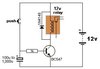
Scroll down the main page and look for....... "delay turn off- turns off a circuit after a delay"
Look at the 4th diagram under "time delay circuits"......
Note that the first 3 are delay ON but the last is delay off after push button pressed.

Just need to change supply to 5V, relay to 5V coil and perhaps the resistor to 330-470R
Capacitor size to suit delay.

Delay OFF.jpg
 

GLB76

Aug 1, 2022
8
Joined
Aug 1, 2022
Messages
8
Thanks to those who have responded so far. One point that I did not mention is that the delay is variable and times out when the relay is activated. Time can vary from a fraction of a second to several seconds. It all depends on when the computer program cycles through and reads the low input to the AIU. I guess for a general question, can the output of an OR gate be looped back to one of the inputs per my schematic? The relay is in line with the loop back circuit. Does the circuit require a pull-up resistor to bring the loop back to a high state when the relay changes?
 

GLB76

Aug 1, 2022
8
Joined
Aug 1, 2022
Messages
8
Sorry, I didn't see your question in your original post. I bought these from Amazon. The listing is "
Todiys New 10Pcs for 74HC32 74HC32N SN74HC32 SN74HC32N MC74HC32AN HD74HC32P DIP-14 Logic Gate Quad 2-Input OR Gates SN74HC32N." I won't have access to the chips to verify the printed number until later today. I will post again when I have the chip in hand.
 

crutschow

May 7, 2021
984
Joined
May 7, 2021
Messages
984
Don't see a reason for the overheating unless you were applying more than 5V for power or to any of the inputs, or had any of the outputs grounded or going to 5V.

An exact schematic of all the gate connections (including unused gates, and power and ground) would help, as we seem to be missing something.
 

GLB76

Aug 1, 2022
8
Joined
Aug 1, 2022
Messages
8
I couldn't find a reason for the over heating either. I am using a SN74H32N OR gate. As for the schematic goes, it would just be a quadruple of the schematic attached to my original post. I am using a 5v (actually measures 5.3v) for power and all inputs are used. Ground and power are pins 7 & 14 respectively. The output is not grounded but is tied to the input of the AIU which is 5v looking for a low or ground to signal it. During the initial testing of the circuit, the output of the OR gate with both inputs grounded, would take the input to the AIU to ground as intended. Then when the relay cycled, it would break the circuit allowing the AIU to a 5v level and also taking one of the OR gate inputs high, making the output high as well. This is what I wanted the circuit to do, just without the heating up. Thanks for you help.
 

crutschow

May 7, 2021
984
Joined
May 7, 2021
Messages
984
It would appear that there is a hidden load on one of the OR gate outputs.
Either that, or you have a bad OR gate chip.
 

GLB76

Aug 1, 2022
8
Joined
Aug 1, 2022
Messages
8
If you don't see anything wrong with my circuit design, my next step will be to buy Texas Instruments chips.
 

crutschow

May 7, 2021
984
Joined
May 7, 2021
Messages
984
If you don't see anything wrong with my circuit design, my next step will be to buy Texas Instruments chips.
Since I haven't seen a full schematic, only a simplified diagram of the connections, I cannot make an informed answer to that question.
If you built the circuit without a schematic, then how do you know it's correct?
 

Bluejets

Oct 5, 2014
7,374
Joined
Oct 5, 2014
Messages
7,374
Not overdriving the output with the relay current (assume AUI is a relay)
Perhaps a full circuit diagram with details would shed some light.

Edit:- ah...ok see your load whatever it is, is the AIU, same request though.
 

GLB76

Aug 1, 2022
8
Joined
Aug 1, 2022
Messages
8
I don't necessarily have a schematic but I do have a line drawing that shows all the connections. I'll get it posted tomorrow. How do I know it's correct? It does function as designed before it heats up.
 

Bluejets

Oct 5, 2014
7,374
Joined
Oct 5, 2014
Messages
7,374
before it heats up.

That is what everyone is saying.......
Ever heard of cannot see the forrest for the trees or/ then the penny dropped...??

That drawing 2 looks problematic.....
 

GLB76

Aug 1, 2022
8
Joined
Aug 1, 2022
Messages
8
Bluejets, you could very well be correct. I may not be able to see what is right in front of me. I guess that is why I'm here. The corporate knowledge of this forum is much greater than I have. So, here is my copy of the wiring diagram with all connection shown. The schematic in the upper right shows one input to the AIU.
 

Attachments

  • Wiring Diagram2.pdf
    289 KB · Views: 5
Top