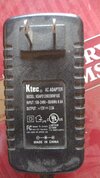
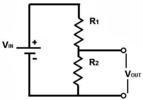
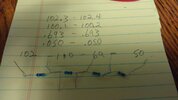
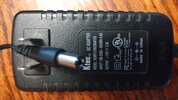
yep the numbers work!!! OK so when you have a 9.6v power requirement, and you have a 12v source you need to reduce the volts by 2.4v... So put a 2.5v led in the line, and you have used 2.5v, but the source is a dedicated 12v dc, and the requirement is not 9.5vdc it is 9.6vdc so the optional 2.5v light bulb ain't getting it! Because the supply is DC, it is going to require a linear reduction to effect the proper change, as a parallel reduction would change the current equally. Where the 12v circuit requires a reduction by a ratio of 1.25 then the resistance should probably be >9.35, but I am stomping a +3m chain just to slow the power to the 9.5v state, I didn't stop at 9.7 because of the size and type of the source power. I would think that as I tested the wall wart the power climbed from 6vdc to 12vdc before leveling off at 12.1vdc. The current is plenty I would think, for my application, but where the power requirement is less that the source, the source should require a shunt of the power that is not needed, and it probably should be isolated from the original PSU. using a bridge network and or schottkey diodes to keep the current from avalanching. Reducing the 12v to 9.6v is superfluous with voltage division. In this application 1.25v must be shunted with no more than a .8a loss. For the PSU to remain stable, an ideal circuit might be applied which maintains the 12v, at 2A, then reduces the power, and drives the device.