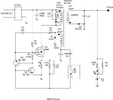
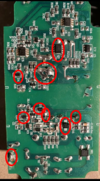
D1 is, in my opinion, the 'flyback rectifier' and not a zener. Measure the DC across the bridge rectifier (+ and - terminals) for around 310V DC (steady, assuming a 230V AC input?).
If you have a steady voltage at the bridge rectifier (same at the +/- terminals of that big smoothing capacitor) then the most liekly suspect - without delving into too much fault-finding - is likely to be the device on the heatsink and covered in silicone gunk - this is the main switching device and/or integrated switching controller. You'll need to desolder that to test and/or replace. If it's a simple MOSFET then testing will suffice but if it's an integral switching controller you need to replace it.
After that then IC1 could be suspect.
TBH I'd be looking for the DC OUTPUT of the secondary and, with no AC on the input, inject the equivalent DC from a power supply and see if the actual charge/control side of the secondary is performing properly i.e. does it do what it's supposed to do?
The largest capacitor on the secondary side would normally have the DC across it (from D6 and D7) and the resistors R21A,B and C monitor charge current for fault conditions (I'm assuming your battery is actually ok?).
Keep away from the high voltage side (leave it unpowered) until you're certain the secondary charging control circuitry is working.