Ok I won’t know when it needs recharging soon or when it’s fully charged though I might plug into a current meter and will be able to see when it’s fully charged when the current is zero?
No! & Yes!
No, you’re better off getting your multimeter and doing a voltage measurement when your battery is completely charged it should be at 4.2 V. It’s the easiest way for you to monitor your battery and when you’re using your flashlight or torch, you must check it as well and make sure your battery does not discharge below 3 V. Yes when your battery is fully charged, the charging current will be at zero, you are referring to OCV (Open Circuit Voltage) but this is based on cell chemistries the OCV can be correlated with the cell state-of-charge, SOC (100 x Available Capacity/Total Capacity).
Open-Circuit Voltage (OCV): The OCV of a cell is present when the current flow is zero and the internal cell state is at equilibrium.
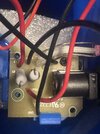
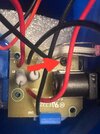
In addition to my request of taking a photograph of the other side of the board to check visually for short circuit of the LED.
I wanted to take a look at your (BMS) battery management system that controls the charging process.
BMS units can implement safety measures such as overcharge and over-discharge protection.
In your case, your torch tells you what condition your battery’s in; it does this by turning on an LED to indicate your batteries condition
or (SOC) state of charge.
You have just eliminated the ability of your torch to communicate with you and that is very dangerous.
My concern is that you may leave your torch on for an extended period of time and severely discharge your battery; over-discharging increases the risk of thermal runaway. Thermal runaway is a chain reaction of events in which the battery generates excessive heat, leading to a self-sustaining increase in temperature(endothermic). This can ultimately result in the battery venting, releasing flammable electrolytes, or even exploding! This is due to their high energy density and flammable electrolytes or (battery chemistry).