Math Severity as applied to Serious Electronics

Status
Not open for further replies.

John R Retired

Mar 13, 2022
155
Joined
Mar 13, 2022
Messages
155
How much Math do you really need to seriously work with electronics? "Seriously" is the keyword, meaning to be taken serious
by someone who makes their living as a Tech or Engineer in the Electronics industry.
There are the typical formulas, OHMs law, Resistors, capacitors, inductors series and parallel, Kirchoffs law etc.
which are not that complex. But how deep do you have to go in Math to be looked at as a serious contender in the Electronics industry?

Anyone know?
 

davenn

Moderator
Sep 5, 2009
14,470
Joined
Sep 5, 2009
Messages
14,470
But how deep do you have to go in Math to be looked at as a serious contender in the Electronics industry?

Anyone know?

that's a pretty open Q. depends a lot on the type/area of electronics you want to work in

In all my years of servicing, 45+, minimal maths is fine

in design work, much deeper would be required

that's basically the 2 extremes

Dave
 
Last edited:

John R Retired

Mar 13, 2022
155
Joined
Mar 13, 2022
Messages
155
that's a pretty open Q. depends a lot on the type/area of electronics you want to work in

In all my years of servicing, 45+, minimal maths is fine

in design work, much deeper would be required

that's basically the 2 extremes

Dave

I tried to make it not an open Q, but didn't know how to narrow it down.


"in design work, much deeper would be required"

Could you elaborate on that a little?

Thanks
 
Last edited by a moderator:

danadak

Feb 19, 2021
1,063
Joined
Feb 19, 2021
Messages
1,063
The question far too broad for a simple answer.

I used a lot of simple algebra until I got into production analysis and started using
statistics for some measures.

Later I worked a lot on AC small signal solutions, and LaPlace is a life saver, basically algebra.
Added to that was signal flow graph analysis to evaluate rapidly transfer functions for linear
circuits.

Then working with filters found sensitivity analysis quite useful for determining filter variance with
component variance, T and V and component characteristics like resistors ohms, capacitor
capacitance....done with simple calculus and algebra. If you work with IIR and FIR filters and
FFT helps if you have exposure to Z transform, mostly more algebra and dealing with discontinuous
functions applied to linear signals, like switching.

If you do RF work complex variables and S parameters. Advanced work requires wave equation
analysis, mix of calculus and algebra.

You do not have to be a math major, but willing, as an EE, to learn new tools, adapt to models
that address the variation in design from DC to Maxwells equations for propagation all dependent
on the kind of work / problems you need to address.

Dont lose sight or despair, mostly good algebra skills top of list, again dependent on what you will be
asked to design, handle. And its incremental, you build on basics step at a time. No one asks you to
derive Einstein's equations as entry fee.....:)

Regards, Dana.
 
Last edited:

John R Retired

Mar 13, 2022
155
Joined
Mar 13, 2022
Messages
155
"Dont lose sight or despair, mostly good algebra skills top of list, again dependent on what you will be
asked to design, handle. And its incremental, you build on basics step at a time. No one asks you to
derive Einstein's equations as entry fee.....:)

Regards, Dana."

So what you are saying is that it depends of what aspect or branch of Electronics you are working with.

Actually, I'm not dreading the Math, but kind of looking forward to it. Although I'm not a math wizard at all, just an amateur,I do see
Math as fascinating, since the Laws of Physics & the Universe are based on it. So while experimenting with electronics, and maybe creating something that's worth my time, I can incorporate math with the electronics. Like killing 2 birds with one stone.
Math can be applied to "anything" after all and again it is the "operating framework" of the universe.
I also know some Boolean algebra and the various number systems like, Hex, Octal, Binary and, OR, NOR, AND logic etc.
I need to fill in some gaps of math knowledge I missed along the way. Electronics (and Ardunio) may give me a platform to fill
in those gaps while building some gadgets along the way. That being said, Electronics, seems to be a dead end nowadays due to
the microminiature circuits technology currently, and even a lot of engineers are expressing frustation with the industry and feel
like they are just throwaway cogs in the machine of electronics manufacturing. Even kids are doing Arduino now, which makes me
feel like a Dinosaur, but Math never goes the way of the Dinos.
 

AnalogKid

Jun 10, 2015
3,045
Joined
Jun 10, 2015
Messages
3,045
Feedback and control systems get into some pretty hairy math, including matrix algebra.


Network analysis of circuits and systems gets deep into complex numbers for stability analysis.


And for real thrills, there's nothing like RF work; again, deep into complex algebra and complex vector calculus.


Depending on what field you are in, you either never use this stuff or you're into it every week.

ak
 

hevans1944

Hop - AC8NS
Jun 21, 2012
4,968
Joined
Jun 21, 2012
Messages
4,968
I started out working electronics as a hobby. First thing I learned was Ohm's Law. This did require simple algebra and basic arithmetic skills. Later, with more formal education, I learned trigonometry and plane (Euclidian) geometry. Then there was an hiatus while my brain matured enough to grasp concepts in calculus. My main difficulty was grasping the essential concept of a mathematical limit. Once over that hurdle, progress was rapid until I signed up for a math course in matrix algebra. This was an honors course for math majors and I just could not understand most of the material being taught. I only signed up for the course because I was interested in automatic controls. It takes a lot of skill to design a negative feedback control system that will land a rocket on its exhaust. That is way above my level of incompetency, but I still managed to get over it and continue a successful career as a warmonger, working for Department of Defense contractors. The key is to realize your limitations. You then can study and work to overcome them, or simply accept the fact that not every technician or engineer has the chops to derive Einstein's General Theory of Relativity and go on from there. My math skills topped out with solving differential equations, which is much like working a cross-word puzzle. Then I discovered computers and the Runge-Kutta method of solving differential equations. End of story. Throw the "problem" over the transom and let some software weenie program the solution. Of course, that's a career in its own right. It helps to know how to program, even though AI is now available to help with that too.

So, if you are just starting out in your exploration of electronics, first find something that you feel enthusiastic about and pursue that. Learn enough math to become proficient as you trod your path to success. If you want to learn more, that's okay too, but don't let math be your motivation. Learning is a life-long process that you should continue until the day you die. Satisfaction will either come, or you will discover your limitations. Either way, enjoy the journey and remember to have fun doing so.
 

bertus

Moderator
Nov 8, 2019
3,835
Joined
Nov 8, 2019
Messages
3,835

John R Retired

Mar 13, 2022
155
Joined
Mar 13, 2022
Messages
155
Hello,

Yes, there are more books available over there:
https://archive.org/details/opensource?tab=collection&query=electronics&and[]=language:"English"

A well known series is from neets:

Bertus

I've been looking for a book that traces the development of physics-electricity to modern electronics, say like from (1700-1800s) Ben Franklin and his kite to simple Morse code over telegraph wires to simple radio, then simple TV to tube-valve-transistor-ICs-Microprocessor etc Computers. But not one that just skims over the superficial history in 10 minutes. Rather one that explains in at least some depth the development and discovery of ever expanding knowledge and experiments that moved the development of electricity work to electronics through the decades during the past severl hundred years. IDEAL would be also a chart of some kind that illustrates the development of using the electron from simple electrostatics up to where we are today with Quantum computers and AI.
The point being to get a clearer context and overview of how discovery and development progressed at a glance so to speak.

Do you know of any book like that?

Thanks
 

bertus

Moderator
Nov 8, 2019
3,835
Joined
Nov 8, 2019
Messages
3,835
Hello,

Worldradiohistory has a bookshelf full of old books:

Bertus
 

Delta Prime

Jul 29, 2020
2,987
Joined
Jul 29, 2020
Messages
2,987
There are the typical formulas, OHMs law, Resistors, capacitors, inductors series and parallel, Kirchoffs law etc.
which are not that complex
Not that complex for a reason, they broke it down for us!
Your avatar!
Thyratrons?
My great grandfather introduced me to those when I was 13 (officially a teenager).
Your posts tells me you love electronics.
And you’re trying to find a reason why you should not love electronics. The formulas have been derived for us already from physicist ,mathematicians.
But you must realize they spent their entire lives, documenting with paper
& pen!
OHM’S law is derived from classical physics as well as quantum mechanics “Empirically”.
Dependent on which reference frame you are using; electrons exhibit a phenomenon of being a “wave -particle”.
My point is electronics is fun. Use the equations given by our elders. If you get stuck, we will unstick you!
I mean that in the best possible way! :)
 

John R Retired

Mar 13, 2022
155
Joined
Mar 13, 2022
Messages
155
Not that complex for a reason, they broke it down for us!
Your avatar!
Thyratrons?
My great grandfather introduced me to those when I was 13 (officially a teenager).
Your posts tells me you love electronics.
And you’re trying to find a reason why you should not love electronics. The formulas have been derived for us already from physicist ,mathematicians.
But you must realize they spent their entire lives, documenting with paper
& pen!
OHM’S law is derived from classical physics as well as quantum mechanics “Empirically”.
Dependent on which reference frame you are using; electrons exhibit a phenomenon of being a “wave -particle”.
My point is electronics is fun. Use the equations given by our elders. If you get stuck, we will unstick you!
I mean that in the best possible way! :)
I got interested when I was a teenager. Built some Heathkits, Allied shortwave kit, visited the local AM radio station (small town 5000 Watts) and watched the gas in the tubes oscillate as the DJ broadcast and spun records. Tore apart old TVs for parts.
Took basic electronics in the Navy. Took some electronics college courses a decade or so later. Got a few jobs mainly
in manf. assembly but not Tech or engineer. Ended up in Aerospace working on the mechanical side of tech mainly for the money
to support a family. I was weak in math and that is why I did not pursue electronics as a vocation. Now retired have been trying to
justify picking up the pieces and filling in the gaps I missed in my youth. Can't tke it too serious though since I'm in my winter years.
IfI had to do it again, probably would have pursued Engineering and then Scientist always was interested in Space science. Took
several tours of JPL, seen the Voyager, Galileo Rovers and Mars yards at JPL, also the high tech electronics lab. All fascinating.
The fact that the electron is part of Atomic structure of matter is something many people take for granted. To me it is amazing that
we are working with the atomic structue of Matter with electronics. Just adjacent to the eleectron is the nucleus of atom power
which coul destroy or help mankind. To me that is incredible. Good thing the electron can't be "split" like the proton and neutron
mass or we would be in deep s__t...lol. I am interested in the pure Math also. Math describes the framework of the Universe.
To me that is almost religious.
So, even though I am lacking in some skills around electronics--physics, I understand the significance of what they represent.
Electronics gives an experimenter (or Pro) a chance to combine universal math with some practical physical creation to go
beyond just mental theory in your head. "Hands On" makes it more interesting. In any case, I'm just a hobbyist I suppose
even though I have been looking for some "goal" to make money with it, (other than a JOB). After all I just said, nowadays
electronics ends up being just some used junk you can find in a Thrift store or on trash pick up day in front of someones house.
Still it's the closest I'll get to a Physics lab.

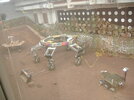
Photos---JPL

Obscure Face--anonymous Me


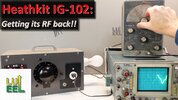
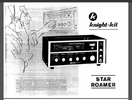
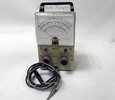
Some Kits

1752181816199.jpeg

1752181882670.jpeg

1752182210485.jpeg

1752182928576.jpeg


1752183025776.png

1752183582660.jpeg
 
Last edited:

John R Retired

Mar 13, 2022
155
Joined
Mar 13, 2022
Messages
155
I concur!
I’m 30 years old a student at a university where I’m also employed as an electronic research laboratory technician there’s so much more yet to see… :)
What do you see as the minimum sklls and knowledge nowadays, to add any value as an employee to an electronics company, where they would want to hire you? With the high cost and gov't. regulations of running a business in Calif. I wonder if there are companies who can even justify operating in Cali. Maybe government electronics jobs if there is such a thing.
 

Delta Prime

Jul 29, 2020
2,987
Joined
Jul 29, 2020
Messages
2,987
What do you see as the minimum sklls and knowledge nowadays, to add any value as an employee to an electronics company, where they would want to hire you? With the high cost and gov't.
A sheep skin ; academia!
And whatever you do if you’re applying for an electronic technician position. Do not correct the electronics test questions that are given during the interview.
My first job at 16 was with Motorola RF microwave terrestrial repeater sites mountain tops.
 

John R Retired

Mar 13, 2022
155
Joined
Mar 13, 2022
Messages
155
A sheep skin ; academia!
And whatever you do if you’re applying for an electronic technician position. Do not correct the electronics test questions that are given during the interview.
My first job at 16 was with Motorola RF microwave terrestrial repeater sites mountain tops.
A Sheepskin like in a Bachelors degree?

How about an Associates Degree?

How about "Some Classes"?

I almost have an AA, just need a couple general classes.

What do they expect you to do coming in the door? (i.e. hitting the ground running)
If it is like mechanical Aerospace, the bigger the company, the less you do.
The smaller the company & you are expected to know everything.

I worked at a small electro-mechanical company (20-30 workers).
A machinist came in from a big company who had been laid off there.
All he could do was very limited in that small company job. He was soon fired.
I did contract work later at his big employer (a Union Job) where he was called back and seen him there.
All he did was "ONE PART" over and over again. He was happy & making decent money.
 

John R Retired

Mar 13, 2022
155
Joined
Mar 13, 2022
Messages
155
Yes, yes and yes, and this community can help you with your homework! :)
I'm not holding my breath for a job even with any kind of a degree. Did you see my name? Have your heard of age discrimination?
Companies don't want a liability to deal with. Maybe a small company would deal with me, I doubt a large company would.
I don't even have the job experience in electronics except for Pro industry assembly and that was a few decades ago before
SMDs came into use. It was ICs then and solder machines mostly. Also as it has been said here, "ad Nauseum" most electronics
tech is replacing modules or boards and toss the malfunctioning board in the scrap barrel for gold plated parts to sell to the junkman.
I'm not 30 yrs old like you. Still sometimes am opportunity might come along out of the blue. Having an AS degree might be good
for my ego though. Making money in electronics at my age is a long shot with the technology & hardware in its current state.
Still I continue on into the unknown future.
 
Status
Not open for further replies.
Top