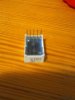
Common anode or common cathode display?

IC71

Sep 8, 2014
20
Joined
Sep 8, 2014
Messages
20
Hello,

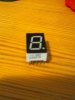
I am on Module 3 of my electronics 11 course, and I am on section 12: Running a 7-segment Display, lesson 39: Introducing the 7-segment Display, pages 147 and 148 in my “Electronic Circuits for the Evil Genius” guidebook . I am trying to map out the pins, but I can't tell what 7-segment LED I have. Is it a CA or a CC? I'll send pictures.IMG_2381.JPG IMG_2382.JPG
 

KrisBlueNZ

Sadly passed away in 2015
Nov 28, 2011
8,393
Joined
Nov 28, 2011
Messages
8,393
It would help if the markings on the display were readable! Find the part number on the side of the package, and look it up using Google or on http://www.digikey.com.
 

Gryd3

Jun 25, 2014
4,098
Joined
Jun 25, 2014
Messages
4,098
It would help if the markings on the display were readable! Find the part number on the side of the package, and look it up using Google or on http://www.digikey.com.
Or, if for whatever reason, you dont have the internet :rolleyes:
You could poke and prod with the diode setting on a multi-meter.

You should be familiar enough to determine common cathode/anode based on these results.
 

hevans1944

Hop - AC8NS
Jun 21, 2012
4,968
Joined
Jun 21, 2012
Messages
4,968
... You could poke and prod with the diode setting on a multi-meter.
I would poke and prod with a 1.5 V D-size dry-cell connected in series with a 100 Ω 1/4 W resistor. Some segment will light up and the reverse voltage applied by the dry-cell should not be enough to damage reverse-biased segments. You should then be able to determine if this is a common-anode or a common-cathode display. Better yet, find the datasheet and compare to that.
 

hevans1944

Hop - AC8NS
Jun 21, 2012
4,968
Joined
Jun 21, 2012
Messages
4,968
@IC71 : Nice photo! Unfortunately, a Digi Key as well as a Google search returned... nothing. Try my " D-size dry-cell and 100 Ω current limiter" suggestion to find the pins for each of the segments and the decimal point. Should take you all of a two minutes to find the segment LEDs, once you have one end of the resistor soldered to one end of the dry cell and a "test probe wire" soldered to the other end of the dry cell. Use the free end of the resistor as a "probe" while you hold the dry-cell in your hand. Let us know what you find out.
 

Arouse1973

Adam
Dec 18, 2013
5,178
Joined
Dec 18, 2013
Messages
5,178
I think the A might denote common cathode. Give that a try.
Adam
 

IC71

Sep 8, 2014
20
Joined
Sep 8, 2014
Messages
20
Thank you all for the help, the middle pin on both sides are ground, but does that mean it's a CA or is i a CC? I think it might mean it's CC, but please tell me if it is the other way around.

again, Thank you all for the help
 

(*steve*)

¡sǝpodᴉʇuɐ ǝɥʇ ɹɐǝɥd
Moderator
Jan 21, 2010
25,510
Joined
Jan 21, 2010
Messages
25,510
If the common pin must be negative to make the segments light up, the device is common cathode. Conversely, if it must be positive, the device is common anode.
 
Top