Draper led torch charging light remains on

Status
Not open for further replies.

Mikezoe65

Dec 19, 2024
19
Joined
Dec 19, 2024
Messages
19
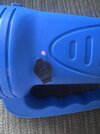
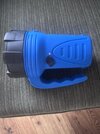
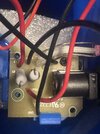
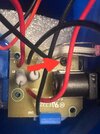
Following recharging the red charging light now remains on though the torch still works well.
i maybe grabbed the wrong charger which could have damaged the pc? I assumed that as long as the current was DC the torch protective circuit would only allow charging at the 3.7v Li-ion required. Am I mistaken?
is there a solution save disconnecting the led bulb?
 

Attachments

  • IMG_8520-compressed.jpeg
    IMG_8520-compressed.jpeg
    109.9 KB · Views: 6
  • IMG_8519-compressed.jpeg
    IMG_8519-compressed.jpeg
    101.9 KB · Views: 6
  • IMG_8518-compressed.jpeg
    IMG_8518-compressed.jpeg
    196.8 KB · Views: 6

Delta Prime

Jul 29, 2020
2,987
Joined
Jul 29, 2020
Messages
2,987

Mikezoe65

Dec 19, 2024
19
Joined
Dec 19, 2024
Messages
19
Like most I have a drawer full of chargers with different pin diameters and am happy to find one which fits the device rather than try to read the output DC voltage. I need to stop assuming it doesn’t matter!

IMG_8526.jpeg
 

Delta Prime

Jul 29, 2020
2,987
Joined
Jul 29, 2020
Messages
2,987
Excellent, thank you.
If it’s possible? Could you snap another picture of the underside of that board? Thanks again.
 

Mikezoe65

Dec 19, 2024
19
Joined
Dec 19, 2024
Messages
19
That would be difficult unfortunately. I’ve sent the problem to Draper to advise what to do and will post their reply here.
 

Mikezoe65

Dec 19, 2024
19
Joined
Dec 19, 2024
Messages
19
Nice one! I can assure you that removing that screw will not make getting a photo of the pcb any easier as the wiring and led indicator light will obstruct. And anyway it’s probably only got components on the top. What do you imagine is going to be revealed?
 

Delta Prime

Jul 29, 2020
2,987
Joined
Jul 29, 2020
Messages
2,987
I can assure you that removing that screw will not make getting a photo of the pcb any easier
I believe you.
What do you imagine is going to be revealed?
That the power supply plugged in to charge the battery was a higher current and voltage then the charger that came with your flashlight.Heat is generated on the PCB board, which could have melted the solder to a poorly connected wire, which is making contact with the led, resulting in the LED being on after it is charged; a short circuit which would be easily confirmed visually.
 

Mikezoe65

Dec 19, 2024
19
Joined
Dec 19, 2024
Messages
19
I believe you.

That the power supply plugged in to charge the battery was a higher current and voltage then the charger that came with your flashlight.Heat is generated on the PCB board, which could have melted the solder to a poorly connected wire, which is making contact with the led, resulting in the LED being on after it is charged; a short circuit which would be easily confirmed visually.
I’ve heard back from Draper that the model was discontinued in 2018 and they can’t assist!
I may now look at removing the pcb controller board screw and seeing whether there is any evidence of solder melting due to wrong charger plug (too high voltage output).
 

Delta Prime

Jul 29, 2020
2,987
Joined
Jul 29, 2020
Messages
2,987
I’ve heard back from Draper that the model was discontinued in 2018 and they can’t assist
Again, I understand. Exact same thing has happened to me, and I’m sure, others as well.
So in your honor, I’m typing this with my middle finger! Forget Drapper.
whether there is any evidence of solder melting due to wrong charger plug (too high voltage output).
Yes, that is exactly what I said, but I could also be wrong because you could’ve grabbed the appropriate charger for it just as well.
I’m on your side. Let’s see what’s on the other side of that board. :cool:
 
Last edited:

Mikezoe65

Dec 19, 2024
19
Joined
Dec 19, 2024
Messages
19
Again, I understand. Exact same thing has happened to me, and I’m sure, others as well.
So in your honor, I’m typing this with my middle finger! Forget Drapper.

Yes, that is exactly what I said, but I could also be wrong because you could’ve grabbed the appropriate charger for it just as well.
I’m on your side. Let’s see what’s on the other side of that board. :cool:
 

Mikezoe65

Dec 19, 2024
19
Joined
Dec 19, 2024
Messages
19
Examined the torch again but can see it would not be easy to reveal the underside of the pcb without using a soldering iron. Decided to disconnect the offending charging led (waggled its leads until they broke) and after charging for a couple of hours the torch works well. Will test it every morning for the next few days but I suspect there is no continuous discharge anymore and that it is charging fine. Ok I won’t know when it needs recharging soon or when it’s fully charged though I might plug into a current meter and will be able to see when it’s fully charged when the current is zero?
 

Delta Prime

Jul 29, 2020
2,987
Joined
Jul 29, 2020
Messages
2,987
Ok I won’t know when it needs recharging soon or when it’s fully charged though I might plug into a current meter and will be able to see when it’s fully charged when the current is zero?
No! & Yes!
No, you’re better off getting your multimeter and doing a voltage measurement when your battery is completely charged it should be at 4.2 V. It’s the easiest way for you to monitor your battery and when you’re using your flashlight or torch, you must check it as well and make sure your battery does not discharge below 3 V. Yes when your battery is fully charged, the charging current will be at zero, you are referring to OCV (Open Circuit Voltage) but this is based on cell chemistries the OCV can be correlated with the cell state-of-charge, SOC (100 x Available Capacity/Total Capacity).
Open-Circuit Voltage (OCV): The OCV of a cell is present when the current flow is zero and the internal cell state is at equilibrium.
In addition to my request of taking a photograph of the other side of the board to check visually for short circuit of the LED.
I wanted to take a look at your (BMS) battery management system that controls the charging process.
BMS units can implement safety measures such as overcharge and over-discharge protection.
In your case, your torch tells you what condition your battery’s in; it does this by turning on an LED to indicate your batteries condition
or (SOC) state of charge.
You have just eliminated the ability of your torch to communicate with you and that is very dangerous.
My concern is that you may leave your torch on for an extended period of time and severely discharge your battery; over-discharging increases the risk of thermal runaway. Thermal runaway is a chain reaction of events in which the battery generates excessive heat, leading to a self-sustaining increase in temperature(endothermic). This can ultimately result in the battery venting, releasing flammable electrolytes, or even exploding! This is due to their high energy density and flammable electrolytes or (battery chemistry).
 
Last edited:

Mikezoe65

Dec 19, 2024
19
Joined
Dec 19, 2024
Messages
19
Thanks for your very detailed reply which alarmed me somewhat! I don’t know anything about Lthium Ion batteries but doubt seriously that the tiny cell in this torch would cause an issue. When its voltage drops below a certain value won’t the main led light simply go out?
 

Delta Prime

Jul 29, 2020
2,987
Joined
Jul 29, 2020
Messages
2,987
When its voltage drops below a certain value won’t the main led light simply go out?
They’re simply isn’t enough technical data & this is not your fault. I cannot tell you the sequence of which failures are detected and responded to… you will have to continue with your powers of observation to detect differences in your batteries performance. good luck to you..
 

Mikezoe65

Dec 19, 2024
19
Joined
Dec 19, 2024
Messages
19
My new strategy is to test the torch daily until it fails to illuminate then charge at 5V DC for 8 hours but checking every so often ie not overnight. Hopefully this will enable me to continue using it for the foreseeable.
 

Mikezoe65

Dec 19, 2024
19
Joined
Dec 19, 2024
Messages
19
Oblique response presumably using the squirrel to assert my actions have no logic. That’s your opinion though I disagree.
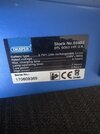
Once drained I can charge for about 4 hours knowing that should fully charge (From the infoplate). That way not leaving the torch on charge unattended (I can do other things) any risk of the house burning down should be eliminated!
 

Delta Prime

Jul 29, 2020
2,987
Joined
Jul 29, 2020
Messages
2,987
Oblique response presumably using the squirrel to assert my actions have no logic. That’s your opinion though I disagree
On the contrary, my good friend. I agree with you 100%. givenlimited information. The direction you have chosen is sound…. I salute you..
 
Status
Not open for further replies.
Top