How fragile are diodes? Can you screw them up soldering them?

makiyoung

Jun 13, 2017
3
Joined
Jun 13, 2017
Messages
3
I'm building a Rullywow Queen of Bone. This is my first pedal and I've been going slowly, taking my time.

I started to solder in the diodes today. I had no real issues with the 1N4148 diodes aside from the slipping while I was soldering them, so they're standing proud from the board on one side.

I also soldered in the 1S1588 diodes.

I was worried about the 1N4148 diodes that were standing proud, so I measured them with my multimeter and they seemed fine. While I had it out, I measured the 1S1588 diodes and I'll get a quick flash of a reading before it zeroes out.

So far I've only soldered in 2 of the 1S1588's out of 4. However, I only ordered 6 in total and they took 3 months to arrive in the mail from Oz. So, if there is a chance I did burn them out I'd like to avoid doing the same thing when I solder in the rest.

Any suggestions?
 

(*steve*)

¡sǝpodᴉʇuɐ ǝɥʇ ɹɐǝɥd
Moderator
Jan 21, 2010
25,510
Joined
Jan 21, 2010
Messages
25,510
If you take only a few seconds to solder each end you will do them no damage.

The reading you get depends on what other components are around them in the circuit once you solder them in. On a resistance range if you see a higher reading one way than the other then they're likely OK. Capacitors in the circuit or diodes in anti-parallel will give you the oddest readings.

If you have the circuit diagram we might be able to figure out what an OK reading would be.
 

Audioguru

Sep 24, 2016
3,656
Joined
Sep 24, 2016
Messages
3,656
A cheap soldering iron has no control of its temperature. It gets hotter and hotter until it damages parts when they are soldered. If the solder has good flux in it then the high temperature burns it away then each solder joint takes longer time.
Cheap plumber's solder needs a high temperature and does not have the flux that is used when soldering electronic parts.

My soldering iron has controlled temperature and NEVER gets too hot.
My solder is electronics type that is 63/37 (plumbers use 60/40) with a flux core and each solder joint is finished in 1 second.

The schematic of the circuit ( http://www.rullywow.com/wp-content/uploads/2016/07/QoB2-rev2A-Build-Doc-REVISED.pdf ) shows that the diodes are used to produce extreme distortion (overdrive).
It is not good to measure the forward/reverse resistance of a diode in its circuit because then the resistance parallel with it messes up the measurements.
 

duke37

Jan 9, 2011
5,364
Joined
Jan 9, 2011
Messages
5,364
My solder is electronics type that is 63/37 (plumbers use 60/40) with a flux core and each solder joint is finished in 1 second.
Not quite, plumbers use 40Sn/60Pb, a lot different to eutectic solder.
 

Chemelec

Jul 12, 2016
291
Joined
Jul 12, 2016
Messages
291
Most Plumbers solder is 50/50.

My Iron is 50 watt and Not Temperature Controlled.
Never been a Problem, even with SMT Parts.

I have even used my 100-140 watt Weller Soldering Gun on 1N4148 diodes.
Never Damaged one yet, But I am Quick.
 

Irv

Jun 7, 2017
112
Joined
Jun 7, 2017
Messages
112
Not quite, plumbers use 40Sn/60Pb, a lot different to eutectic solder.

Not to mention that plumbers' solder flux will eventually destroy electronic circuits, because of the high acid content.
 

73's de Edd

Aug 21, 2015
3,730
Joined
Aug 21, 2015
Messages
3,730
If a slight spacing is permissible, the clamping on of a curved mini hemostat pliers jaws will be carrying off the heat from the soldered lead BEFORE it can even get to the diode proper.
 
Last edited:

Robert_fay

Jun 15, 2017
124
Joined
Jun 15, 2017
Messages
124
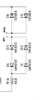
Looking at the circuit there is a good chance that you are not reading through the diode and instead are reading through the circuit and that is what you are getting your readings. The section below looks like you would just read through the opposite diode.

upload_2017-6-15_17-48-24.png
 

davenn

Moderator
Sep 5, 2009
14,470
Joined
Sep 5, 2009
Messages
14,470
Looking at the circuit there is a good chance that you are not reading through the diode and instead are reading through the circuit and that is what you are getting your readings. The section below looks like you would just read through the opposite diode.

View attachment 34596

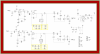
your schematic is a bit too small to make out clearly
got a better one ?
 

73's de Edd

Aug 21, 2015
3,730
Joined
Aug 21, 2015
Messages
3,730
The dip switches are associated with:
Clipping engagement at +- 0.7V
Clipping engagement at +- 1.4V through a feedback loop

Mo' Bigger . . . . .
Clipping circuit.png

73's de Edd
 
Top