
Hellmut1956
- Aug 11, 2014
- 74
- Joined
- Aug 11, 2014
- Messages
- 74
Hi, I am building a Panel for my electronic lab and I want to protect it from possible short circuits:
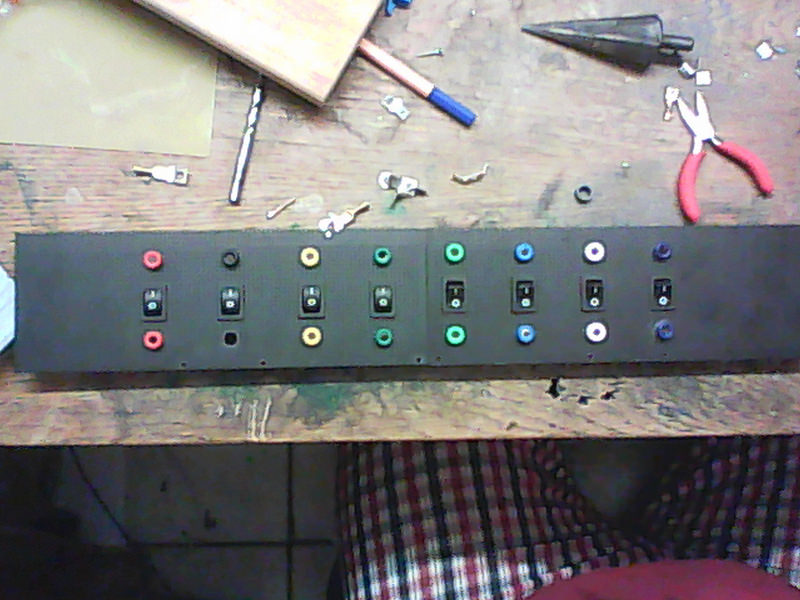
This first picture shows a front view. The different voltages coming from a modified PC 600 W power supply are fed hidden to the lower row of receptacle connectors, then fed to the switch and the upper row gives access to the supply depending on the switch position.
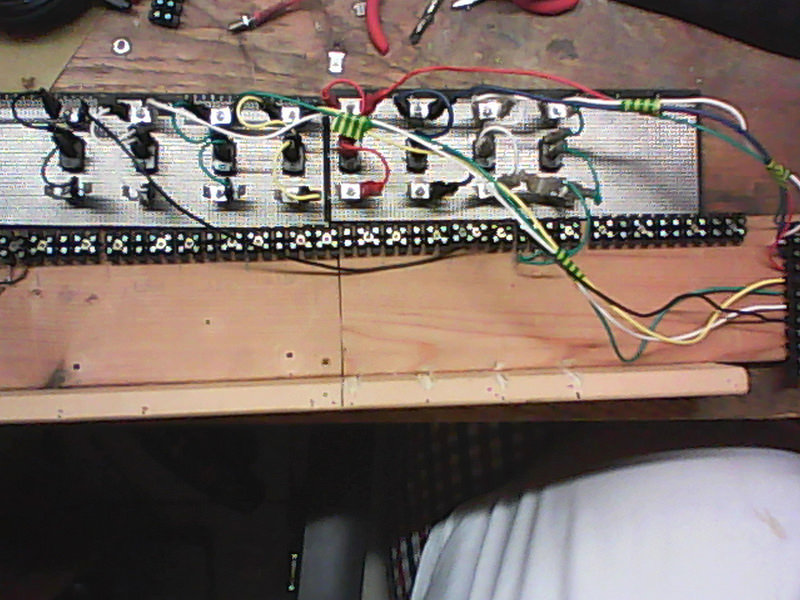
Here a view to the same panel from below. It shows the cables that come from the connector row on the right edge of the picture. Below the panel you see the screwable connectors, 5 for each tension, so that I as the user have the choice to select if I want to use the receptacle connector on the front side of the panel or connect a cable to one of the related screwable connectors.
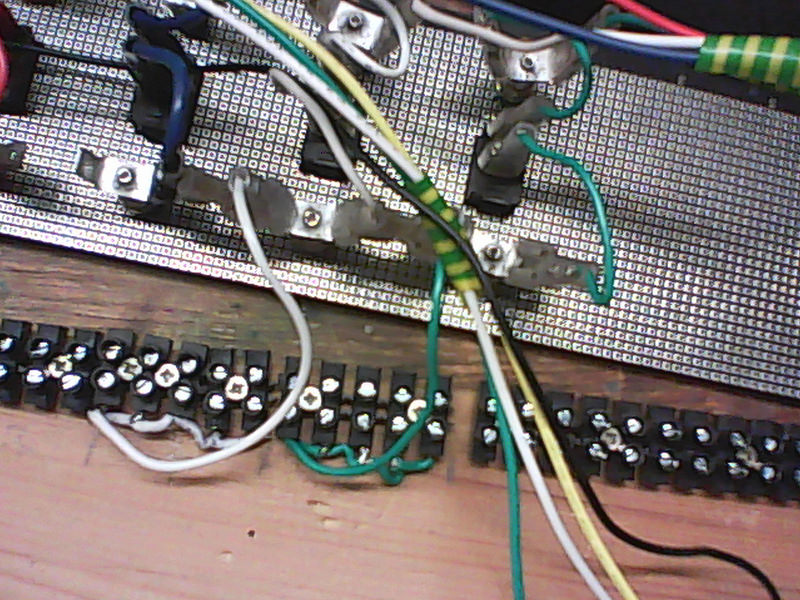
here you see why I came to the conclusion a short circuit protection is necessary! Let's take a detailed look at the white cable connecting the power to the corresponding screwable connectors. The risk that a short circuit could happen any time in the future does not only result from short circuits taking place further down the line, but also i.e. the white and the green cable are so close to each other that a short is possible! Of course I will install not conducting physical barriers to prevent this from happening, but I also want to place electronic fused just before the connectors row on the right edge show in a picture above.
Now that you have the background info for my question, here my questions:
I want to use electronic self resetting fuses, PTC's, that cut the line if a sudden rise of the current flowing to the increases. How can I find the proper PTC fuses?
Here the data for maximum allowed currents for the lines providing the tensions to the Panel:
-12 VDC: 6A
-5 VDC: 6A
+3.3 VDC: 10A
+ 5 VDC: 10 A
+12 VDC: 6A
+24 VDC: 10A
+24 VDC to 40 VDC: 10 A
The first 5 tensions come directly from the PC power supply, the 24 VDC up to 10 A are the result of a tension doubling circuit and the last supply comes from a battery pack of 12 LiFePO4 connected in series and where the tensions does fluctuate between this values depending of how much this pack supplies from Full to empty for recharge!
I do not want to use melting fuses as shorts may happen quite a few times and I want the fuses to react relatively fast!
This first picture shows a front view. The different voltages coming from a modified PC 600 W power supply are fed hidden to the lower row of receptacle connectors, then fed to the switch and the upper row gives access to the supply depending on the switch position.
Here a view to the same panel from below. It shows the cables that come from the connector row on the right edge of the picture. Below the panel you see the screwable connectors, 5 for each tension, so that I as the user have the choice to select if I want to use the receptacle connector on the front side of the panel or connect a cable to one of the related screwable connectors.
here you see why I came to the conclusion a short circuit protection is necessary! Let's take a detailed look at the white cable connecting the power to the corresponding screwable connectors. The risk that a short circuit could happen any time in the future does not only result from short circuits taking place further down the line, but also i.e. the white and the green cable are so close to each other that a short is possible! Of course I will install not conducting physical barriers to prevent this from happening, but I also want to place electronic fused just before the connectors row on the right edge show in a picture above.
Now that you have the background info for my question, here my questions:
I want to use electronic self resetting fuses, PTC's, that cut the line if a sudden rise of the current flowing to the increases. How can I find the proper PTC fuses?
Here the data for maximum allowed currents for the lines providing the tensions to the Panel:
-12 VDC: 6A
-5 VDC: 6A
+3.3 VDC: 10A
+ 5 VDC: 10 A
+12 VDC: 6A
+24 VDC: 10A
+24 VDC to 40 VDC: 10 A
The first 5 tensions come directly from the PC power supply, the 24 VDC up to 10 A are the result of a tension doubling circuit and the last supply comes from a battery pack of 12 LiFePO4 connected in series and where the tensions does fluctuate between this values depending of how much this pack supplies from Full to empty for recharge!
I do not want to use melting fuses as shorts may happen quite a few times and I want the fuses to react relatively fast!


