jackorocko
- Apr 4, 2010
- 1,284
- Joined
- Apr 4, 2010
- Messages
- 1,284
I need some help, school failed me or it has just been so long that I have become stupid. Latter being the more likely.  So please HELP!!!!!
I need to put in a chimney pipe, and I want to buy my chimney pipe. But I am having a hard time figuring out the length of the piece between the two elbows to get the pipe out past the overhang on my roof.
The overhang is 2 feet and and the elbow is a 'stiff' 30 degrees. Can not be changed. I have looked up the cosine, sine, tangent ratio table. http://portalsso.vansd.org/portal/p...6/TAB1792612/AA667DC74A36C5A8E0404A0A84004321
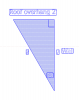
So now that I have my ratio's how can I figure out the two lengths, more importantly the adjacent and hypotenuse sides of the triangle? I think I am close, but that last bit of math formula is evading me. I will upload a picture soon in case my description is unclear.
So please HELP!!!!!I need to put in a chimney pipe, and I want to buy my chimney pipe. But I am having a hard time figuring out the length of the piece between the two elbows to get the pipe out past the overhang on my roof.
The overhang is 2 feet and and the elbow is a 'stiff' 30 degrees. Can not be changed. I have looked up the cosine, sine, tangent ratio table. http://portalsso.vansd.org/portal/p...6/TAB1792612/AA667DC74A36C5A8E0404A0A84004321
So now that I have my ratio's how can I figure out the two lengths, more importantly the adjacent and hypotenuse sides of the triangle? I think I am close, but that last bit of math formula is evading me. I will upload a picture soon in case my description is unclear.
Attachments
Last edited:


