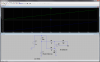
Hi everyone, thanks for reading this. I've just started putting basic circuits together and am trying to move onto something a little more advanced. In this circuit I'm trying to monitor several things. Essentially I want to make a battery powered device that can monitor the output voltage, current and load resistance of a power module using a microcontroller (probably an ATMEL/ATMEGA) . If possible could you guys take a look at it and let me know about problems/errors I've made, component selection etc.. ?
Many thanks
M

BATT+ and BATT- are 2 x Li-Ion cells in series
VOUT is the output from a 20A variable power module that can output from 0.6V to 6.6V
VSENSE goes to a 10 bit 3.3V ADC so a divider is used to bring the maximum 8.4V supply voltage down to 3.3V and is used to detect the battery level.
OSENSE goes to a 10 bit 3.3V ADC so a divider is used to bring the maximum 6.6V output down to 3.3V and is used to detect the output voltage.
ISENSE goes to a 10 bit 3.3V ADC and is used to detect the voltage across the load. The opamp amplifies the difference between the VOUT and the voltage after the shunt by a factor of 11. The output is then put through a divider to bring it down to the 3.3V ADC tolerance.
RLOAD is a removable and replaceable load that can vary from 0.2 ohms to 5 ohms although I'm never going to use anything much lower than 1 ohm.
The microcontroller can then use the following to work out the data (some degree of calibration will be required to fine tune)
VOUT = OSENSE / 155.2 (Output voltage of module)
BATT = VSENSE / 121.9 (Battery level)
ASHUNTV = ISENSE / 155.2 (Amplified voltage drop)
SHUNTV = (VOUT - ASHUNTV) / 11 (Voltage across the shunt)
IOUT = SHUNTV / 0.01 (Output current)
RLOAD = (VOUT-SHUNTV) / IOUT (Resistance of RLOAD)
Many thanks
M
BATT+ and BATT- are 2 x Li-Ion cells in series
VOUT is the output from a 20A variable power module that can output from 0.6V to 6.6V
VSENSE goes to a 10 bit 3.3V ADC so a divider is used to bring the maximum 8.4V supply voltage down to 3.3V and is used to detect the battery level.
OSENSE goes to a 10 bit 3.3V ADC so a divider is used to bring the maximum 6.6V output down to 3.3V and is used to detect the output voltage.
ISENSE goes to a 10 bit 3.3V ADC and is used to detect the voltage across the load. The opamp amplifies the difference between the VOUT and the voltage after the shunt by a factor of 11. The output is then put through a divider to bring it down to the 3.3V ADC tolerance.
RLOAD is a removable and replaceable load that can vary from 0.2 ohms to 5 ohms although I'm never going to use anything much lower than 1 ohm.
The microcontroller can then use the following to work out the data (some degree of calibration will be required to fine tune)
VOUT = OSENSE / 155.2 (Output voltage of module)
BATT = VSENSE / 121.9 (Battery level)
ASHUNTV = ISENSE / 155.2 (Amplified voltage drop)
SHUNTV = (VOUT - ASHUNTV) / 11 (Voltage across the shunt)
IOUT = SHUNTV / 0.01 (Output current)
RLOAD = (VOUT-SHUNTV) / IOUT (Resistance of RLOAD)


 This is my first venture into current sensing so naturally I'm a little green. I'd have used the simpler low side sensing if the load wasn't chassis earthed, but it is unfortunately,. Thanks for the help.