PLz help me with my project!

Name...

Apr 6, 2016
40
Joined
Apr 6, 2016
Messages
40
Guys i need an intruder alarm( like just the circuit so i can work with it) that can actually work in real life and not just in software mode, and this is how i want it to work. When there is light a green buzzer turns on and when there is no light so perhaps when someone cuts the source of light by walking, then a red LED and buzzer turn on. PLZ HELP
 

Gryd3

Jun 25, 2014
4,098
Joined
Jun 25, 2014
Messages
4,098
Guys i need an intruder alarm( like just the circuit so i can work with it) that can actually work in real life and not just in software mode, and this is how i want it to work. When there is light a green buzzer turns on and when there is no light so perhaps when someone cuts the source of light by walking, then a red LED and buzzer turn on. PLZ HELP
Hrm...
Time for you do do some research ! :D
You can do this with visible light and an LDR . Trigger a transistor (or pair of transistors in a 'darlington pair') with the LDR. The transistor will take care of powering / controller the light / buzzer.

You can also use an IR LED / Detector if you don't want the light to be visible. This is the same thing used in most 'break-beam' sensors. Additionally, you can also buy a pre-made product... Many stores have a little module above a door way that counts customers, or a break-beam across the door way. These are either for information, or for alerting the staff that someone has entered.
 

Name...

Apr 6, 2016
40
Joined
Apr 6, 2016
Messages
40
@Gryd3

By the way what i basically want is a circuit that can go off(as in the buzzer) when someone enters a house, so in others words detecting motion. But when it doesn't detect motion, an LED would just be on. Do you have a circuit that can do that or what i explained in the first post.
 

Gryd3

Jun 25, 2014
4,098
Joined
Jun 25, 2014
Messages
4,098
@Gryd3

By the way what i basically want is a circuit that can go off(as in the buzzer) when someone enters a house, so in others words detecting motion. But when it doesn't detect motion, an LED would just be on. Do you have a circuit that can do that or what i explained in the first post.
What kind of experience do you have?
This project can be build quickly and inexpensively with anything from an LDR, an IR LED and Receiver, or an actual purchased PIR motion detector...
Using a transistor is a very important skill to have, and is honestly the only thing really standing in your way... Any of the above items can be used to trigger a transistor which can either control the lights, or a relay if you want to control something way more powerful.
I won't draw a picture if it doesn't look like you are trying to find an answer yourself.
 

Name...

Apr 6, 2016
40
Joined
Apr 6, 2016
Messages
40
@Gryd3

To be honest i really dont have much experience and thats why i am here, because i need a hand with this circuit that i am going to make. Also, yes i know this circuit can be built inexpensively. I am working hard to finding answers and i already have a circuit and i done it on a breadboard to see if it works however it doesn't work the way i want it to; the two LEDs ans buzzer are on at the same time and 24 7 when the battery is in.
 

Gryd3

Jun 25, 2014
4,098
Joined
Jun 25, 2014
Messages
4,098
@Gryd3

To be honest i really dont have much experience and thats why i am here, because i need a hand with this circuit that i am going to make. Also, yes i know this circuit can be built inexpensively. I am working hard to finding answers and i already have a circuit and i done it on a breadboard to see if it works however it doesn't work the way i want it to; the two LEDs ans buzzer are on at the same time and 24 7 when the battery is in.
Do you have a drawing of the circuit you built we can look at?
Did you use an NPN or PNP transistor?
What device are you currently using to detect someone... Motion, LDR, Ir, or something else?

I'm sure it will be easy to correct the circuit you have built, and can most certainly help with that
 

Name...

Apr 6, 2016
40
Joined
Apr 6, 2016
Messages
40
@Gryd3

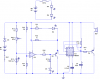
I am using a pnp transistor and the device is an LDR. When i breadboarded this circuit, all the outputs are on at the same time, where as the green LED is meant to be one when there is light and when there is no light a red LED and buzzer are meant to be on. Why does this not happen and what can we do for this to happen?

Also, i am using a small circuit transmitter so when someone walks through they block the light and the buzzer is alerted. Additionally, the buzzer is on at around 840 lux in the LDR, does that just mean that it is really sensitive?
 

Attachments

  • upload_2016-4-7_0-13-46.png
    upload_2016-4-7_0-13-46.png
    16 KB · Views: 108
Last edited:

Gryd3

Jun 25, 2014
4,098
Joined
Jun 25, 2014
Messages
4,098
@Gryd3

I am using a pnp transistor and the device is an LDR. When i breadboarded this circuit, all the outputs are on at the same time, where as the green LED is meant to be one when there is light and when there is no light a red LED and buzzer are meant to be on. Why does this not happen and what can we do for this to happen?

Also, i am using a small circuit transmitter so when someone walks through they block the light and the buzzer is alerted. Additionally, the buzzer is on at around 840 lux in the LDR, does that just mean that it is really sensitive?

View attachment 26131
This should have been the first post. Excellent!
First thing I note is that pot1 is wired to act like a simple resistor... the middle pin is the 'variable' part and it's not connected to anything.
pot1 is going to be very important in tuning your LDR so it only triggers in the light condition you want.

Do you have a multi-meter?
Look at IC3 .. if you can please measure the voltage on the + input, - input, and the output before R16.
This is a comparator and will change it's output based on the + and - inputs. So if the device is not changing states like you want, this would be the first thing to test. If the output does not change, then you need to hold the meter on the + input and measure the voltage as you adjust your sensor... This voltage is the one that will change. The voltage on the - input is the 'threshold' or 'reference' voltage... If the input on the + side never crosses the measurement you get on the - input when we need to adjust pot1 or swap out a resistor or two to make the 'reference' on the - input more suitable to switch when the desired amount of light shines on the LDR.
 

Name...

Apr 6, 2016
40
Joined
Apr 6, 2016
Messages
40
@Gryd3

Ok, but right now i dont have a multi-meter but when i have access to one i will do what is needed and reply back to you. Also are you saying if i just have the right voltage divide in the potentiometer then the circuit would work in the way i want it to.
 

Gryd3

Jun 25, 2014
4,098
Joined
Jun 25, 2014
Messages
4,098
@Gryd3

Ok, but right now i dont have a multi-meter but when i have access to one i will do what is needed and reply back to you. Also are you saying if i just have the right voltage divide in the potentiometer then the circuit would work in the way i want it to.
Not quite. We will be looking at this in stages.
The comparator 'IC3' is doing the the work in toggling logic on/off depending on the LDR. If that works fine, we explore the output side of that to make sure the transistor and everything behind it is setup properly.

The - Input on IC3 should be 4.5V based on the schematic.
The + Input varies... and based on the schematic, I think the incorrectly wired potentiometer might be to blame... but we should always confirm before jumping to conclusions ;)

You can of course try to bypass POT1 to see what happens. Please don't accidentally bypass R13 when you do this though.

Ideally... what should happen here, is when the Comparator output is 'high', it should be lighting up D4. And at this time Q3 should be off so there should be no current through D2.
When the Comparator output is 'low', the transistor (Q3) should turn on which will bypass D4 (turning it off) and providing a path for current to flow for D2 (turning it on). While at the same time, the 555 timer 'trigger' gets toggled which will set off the buzzer.

We know how it 'should' work, just need to test to make sure.
We can blindly swap out parts and change something, but what if a part is damaged that is causing the problem?
 

Name...

Apr 6, 2016
40
Joined
Apr 6, 2016
Messages
40
@Gryd3

How should a potentiometer be wired in this circuit, like can you possibly draw me it or just simply tell were all the three pins should go; becuase as you said that can solve the problem of the whole circuit, right? AND also there are no damaged components, i swapped them out and tried to see if anything changes but nothing does; all three outputs are still on at once.
 
Last edited:

Name...

Apr 6, 2016
40
Joined
Apr 6, 2016
Messages
40
@Gryd3

In terms of this circuit i might of just realised why it is not working to how its meant to be, on the software i used to draw this circuit, a 10k potentiometer was used and when i breadboarded it i used a B100K potentiometer. Am i right in why this circuit might not be working?
 
Last edited:

Gryd3

Jun 25, 2014
4,098
Joined
Jun 25, 2014
Messages
4,098
@Gryd3

In terms of this circuit i might of just realised why it is not working to how its meant to be, on the software i used to draw this circuit, a 10k potentiometer was used and when i breadboarded it i used a B100K potentiometer. Am i right in why this circuit might not be working?
Sorry for the delay.
If you planned with a 10k pot, but used a 100k pot this circuit should still work... but the job of this pot is to adjust the sensitivity of the circuit. You will find that the adjustment is very touchy as a slight turn on a 100k pot changes much faster than a large turn on a 10k pot.
In any case, a pot should be wired to make use of it's middle pin. This is the pin that provides the 'variable' resistance that a pot is usually used for. Depending on the circuit you can use all three pins differently...
I'll provide a couple example, both of which can apply to this circuit.
- Using it as a variable resistor. You would end up using one of the outside pins and the middle pin only. Ignoring the other outside pin (or connecting it to the middle) . As you adjust the potentiometer, the value presented from the edge to the middle pin will vary.
- Using it as a 'voltage' divider or reference, you connect one edge pin to a voltage source (9V in this example), and the other edge to ground. The middle pin will now provide a variable 'voltage' that can be adjusted anywhere from 9V to 0V by adjusting the potentiometer. The reason I say this, is that you could also use a single pot instead of R10 and R14 if you wanted to adjust the 'reference' voltage for the comparator.

In your circuit however... the POT is used as a variable resistor, so simply moving a connection from the edge pin to a middle pin should fix this portion of the circuit.
Can you please confirm the part number for the transistor as well? There are two types, and we need to make sure you are using a PNP type.
 

Name...

Apr 6, 2016
40
Joined
Apr 6, 2016
Messages
40
@Gryd3

My transistor is a BC 557. So if i just correct the wiring of the potentiometer as a variable resistor(using the top pin connected to R13 and middle pin connected downwards to the LDR) then the circuit will work?
 

Gryd3

Jun 25, 2014
4,098
Joined
Jun 25, 2014
Messages
4,098
@Gryd3

My transistor is a BC 557. So if i just correct the wiring of the potentiometer as a variable resistor(using the top pin connected to R13 and middle pin connected downwards to the LDR) then the circuit will work?
It would certainly seem that way, although I highly encourage you to get a multi-meter to poke at it.
That would correct the input side of the circuit, but I don't like how you say 'Both' LEDs stay on
 

Name...

Apr 6, 2016
40
Joined
Apr 6, 2016
Messages
40
@Gryd3

I done the potentiometer and same result again. ALL OUTPUTS ON AT ONCE. I dont think this circuit is ever gonna work. Do you have a schematic of an alarm?
 

Gryd3

Jun 25, 2014
4,098
Joined
Jun 25, 2014
Messages
4,098
@Gryd3

I done the potentiometer and same result again. ALL OUTPUTS ON AT ONCE. I dont think this circuit is ever gonna work. Do you have a schematic of an alarm?
You should really get a meter and test the inputs and outputs of the IC I mentioned earlier.
It's difficult to troubleshoot blindly.
- We don't know if you built the schematic properly.
- We don't know if the voltages are as expected.
- We don't know a lot of things here.
 

Arouse1973

Adam
Dec 18, 2013
5,178
Joined
Dec 18, 2013
Messages
5,178
Well if the voltage that appears on the emitter of the transistor is higher than the base by approx. 0.7 Volts then they will both be on.
Adam
 
Top