PWM Circuit project help

Alexander Lauderdale

Nov 3, 2014
3
Joined
Nov 3, 2014
Messages
3
Hello everyone!

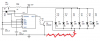
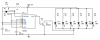
I am doing a project for my electrical unit for uni, and I decided to build a simple led dimmer using PWM. I got used this schematic attached - only difference is that my collector and emitter of the transistor are not connected (wouldn't work if they were) and I used a 9v DC source.
Anyway, I need to explain how exactly this works and I am nearly done. I am just stuck on explaining how exaclty the transistor is working in this. I asked my lecturer and he said "like a tap, the base is the valve controlling how much current is passing through". He is right but its not helping in my calculations to show that its doing that. If anyone has another way of showing what its doing it would be greatly appreciated. Also any equations that would make ity easier to explain - this isn't too important though, just as long as I can explain what its doing.

Thanks guys!!
 

Attachments

  • Circuit-Diagram-of-PWM-LED-DIMMER-USING-NE555.png
    Circuit-Diagram-of-PWM-LED-DIMMER-USING-NE555.png
    35 KB · Views: 72

Harald Kapp

Moderator
Moderator
Nov 17, 2011
14,271
Joined
Nov 17, 2011
Messages
14,271
only difference is that my collector and emitter of the transistor are not connected (wouldn't work if they were
Please explain. Without emitter and collector being connected, the transistor will not work at all. The circuit configuration as shown in your schematic is fine.

I am just stuck on explaining how exaclty the transistor is working in this
That's the easy part: it doesn't work, see above.:confused:

asked my lecturer and he said "like a tap, the base is the valve controlling how much current is passing through". He is right but its not helping in my calculations to show that its doing that.
Assuming for now that the transistor is connected correctly (contrary to what your post states), which calculations do you mean? Study this ressource, I think it will answer your question.
 

Martaine2005

May 12, 2015
5,276
Joined
May 12, 2015
Messages
5,276
Hi Alexander,
Is the collector and emitter connected together in your picture? Wouldn't the leds be on constant bypassing the transistor?

But 'like a tap' is not very helpful!!
The output of the 555 is set to come on and off at a set frequency by a capacitor and resistor on the input side.
The transistor gets that output from the 555 to base, which in turn opens the emitter. Which allows current to flow from collector through emitter to (ground) 0v.
But it isn't constantly open like a tap. It is switching on and off at what ever frequency is given.

Martin
 

Tha fios agaibh

Aug 11, 2014
2,253
Joined
Aug 11, 2014
Messages
2,253
my collector and emitter of the transistor are not connected (wouldn't work if they were).... how exaclty the transistor is working in this.
Martin is right.
The pwm functions should not work either way. (Either ce shorted, or ce open)
The short answer is: It's not working.
It functions as a diode which has no impact on the leds.
 

Harald Kapp

Moderator
Moderator
Nov 17, 2011
14,271
Joined
Nov 17, 2011
Messages
14,271
Thanks Martin for "working out" the changed schematic.
 

Harald Kapp

Moderator
Moderator
Nov 17, 2011
14,271
Joined
Nov 17, 2011
Messages
14,271
You don't need the transistor and 1k. The 555 will drive the LEDs directly
In this setup: yes. The 555 can drive up to 200mA which is sufficient here. If you need more current the transistor is required.
It is probably a good idea to get used to having a trnasistor at this position so you don't forget it when required.
 

Martaine2005

May 12, 2015
5,276
Joined
May 12, 2015
Messages
5,276
I put a resistor and transistor there as a matter of course. It may not be needed all of the time, but two extra components wont break the bank. It does definitely keep the 555 running cooler though while driving a few strings of leds.

EDIT: I think the OP has detention! He hasn't replied..

Martin
 
Top