Hi guys, This is a total newbie question, hope someone can help me out
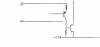
I want to use a transistor (MOSFET) as a switch in a circuit that runs between a positive voltage (changes with load) and -12V, but the transistor should be powered by a microcontroller which outputs between 0V and +5V.
What's the simplest way to do this?
I'm getting stuck because the common voltage at the input and output are not the same (don't know if that's the right terminology, but what I mean is the voltage common to the input and output of each transistor i.e. 0V on the microcontroller isn't the same as the -12V on the output.)
I am thinking that if an N-channel MOSFET has source tied to -12V, then it should be in cut off at gate=-12V and fully saturated at gate=0V, and I'm sure there must be a way to use another transistor to get from this input to this output, but all the basic info I can find assumes 0V is the common voltage throughout.
Hope that's vaguely understandable.
PS. I'd rather avoid having to use a relay if I can because of the slow switching time, although if it's impossible to do with transistors, I could use a solid state relay, best not to if I don't have to though.
Cheers guys,
Matt
I want to use a transistor (MOSFET) as a switch in a circuit that runs between a positive voltage (changes with load) and -12V, but the transistor should be powered by a microcontroller which outputs between 0V and +5V.
What's the simplest way to do this?
I'm getting stuck because the common voltage at the input and output are not the same (don't know if that's the right terminology, but what I mean is the voltage common to the input and output of each transistor i.e. 0V on the microcontroller isn't the same as the -12V on the output.)
I am thinking that if an N-channel MOSFET has source tied to -12V, then it should be in cut off at gate=-12V and fully saturated at gate=0V, and I'm sure there must be a way to use another transistor to get from this input to this output, but all the basic info I can find assumes 0V is the common voltage throughout.
Hope that's vaguely understandable.
PS. I'd rather avoid having to use a relay if I can because of the slow switching time, although if it's impossible to do with transistors, I could use a solid state relay, best not to if I don't have to though.
Cheers guys,
Matt