Op-Amps and General Points.

jkele

Nov 21, 2010
13
Joined
Nov 21, 2010
Messages
13
Hi everybody

I would like to design a little audio amplifier, just to help my understand Op-amp and how to use them in a practical sense. I dont really know what values of resistors to pick can someone help me.

This is what i am currently thinking of.

Using an Non-inverting amplifier, have the (+) input going to a microphone and connect the output to a speaker. If the output is not loud enough should i use a feedback loop or feed this output into another Non-inverting amplifier?

Also - one of my big problems is looking at a circuit and thinking what are all these components here for? For example looking at http://tangentsoft.net/audio/bitmaps/hs-opamp-schem.png

I hardly understand what most of those components are doing. Apart from doing a lot of practice in building circuits how can i understand the role these components play in a practical circuit?
 

(*steve*)

¡sǝpodᴉʇuɐ ǝɥʇ ɹɐǝɥd
Moderator
Jan 21, 2010
25,510
Joined
Jan 21, 2010
Messages
25,510
You are far better off looking for an existing design than trying to design your own.

After you have found a working design, you can find out how it works and learn from that.

One issue with driving a speaker is that you require significant power output, something which many op-amps do not have.

The design depends on a huge number of variables, the first being the type of microphone you're using.
 

jkele

Nov 21, 2010
13
Joined
Nov 21, 2010
Messages
13
Thanks for the feedback, i would really like to use my own OP-AMP to do this, i can get one of the net but i want to have some experience at designing circuits (yes I am eager). Why do i need significant power output? I was just going to use an 8-Ohm speaker.

In regards to the last point, i dont mean designing just for OP_AMPS but for any generic circuits, if i was to look at a schematic and be told this is what the circuit is for how can i go and deduce what each component is doing?
 

rob_croxford

Aug 3, 2010
262
Joined
Aug 3, 2010
Messages
262
Passive components such as resistors and capacitors can play a variety of roles within a circuit and so they can not be labled with any generic opperation. My advice would be to do some reading on the operation of op-amps. Then you can go through the circuit peice by peice to figure out wat each individual component is doing.
 

barathbushan

Sep 26, 2009
223
Joined
Sep 26, 2009
Messages
223
Why do i need significant power output? I was just going to use an 8-Ohm speaker.

?

You require significant power to "PRODUCE VIBRATIONS" at the diaphragm of the speaker ,
to hear your voice signal

The gain of the op-amp is limited by its saturation voltage , so consider your op-amp output
voltage to be at 15v , from the datasheet of a 741 opamp , let the output current be 25ma

therefore the output power is

p=15*25ma

p=375mw

which is not enough

so you have to "POWER AMPLIFY" your output
 

barathbushan

Sep 26, 2009
223
Joined
Sep 26, 2009
Messages
223
I was just going to use an 8-Ohm speaker

less resistance means more current pulling !!
more current pulling means more power requirement !!

so you can say "JUST A 32 ohm (or higher) speaker "
but not "just an 8 ohm speaker" :D
 
Last edited:

(*steve*)

¡sǝpodᴉʇuɐ ǝɥʇ ɹɐǝɥd
Moderator
Jan 21, 2010
25,510
Joined
Jan 21, 2010
Messages
25,510
Barathbushan:

Actually, you won't get that 375mW into an 8 ohm load from a 741 unless you use a transformer to match the impedance.

You'll actually get something closer to 0.025^2 * 8, or 0.005 watts (5 mW)

The problem is that across an 8 ohm load at 25 mA, you will not get a very large voltage swing (i.e. nowhere near 15V)

375mW would actually be quite a reasonable power for a small speaker.

jkele:

What do you mean "my own OP-AMP"? You realise that an op-amp is a generic term for a high gain differential amplifier -- right? There are many thousands of different types, but all can be used with the same basic circuits.

We're suggesting you get a design using an op-amp from somewhere (so you'll know it works).

We can explain how it works. We may even be able to assist you in designing one from scratch, but we'd need to know the type of microphone you want to use.

We need to know this because microphones, like speakers, have output levels and impedances that need to me matched with an amplifier or you will get disappointing results.
 
Last edited:

barathbushan

Sep 26, 2009
223
Joined
Sep 26, 2009
Messages
223
hi steve its 375 mw not 375 ma :), the power i calculated was the maximum power an op-amp can supply at all its limits going by the typical value in the
741 datasheet
, it was not the power consumed by the 8 ohm speaker as you thought


when i spoke about power amplification I had this 8 ohm 5 watt speaker in mind

3ne3ka3md5W35U05R0abbe03cb4e972b81a4d.jpg


Even though its small , it consumes 5W of power , which jkelle's opamp cant provide enough power [375mw] , yes the speaker will work , but
not too well.


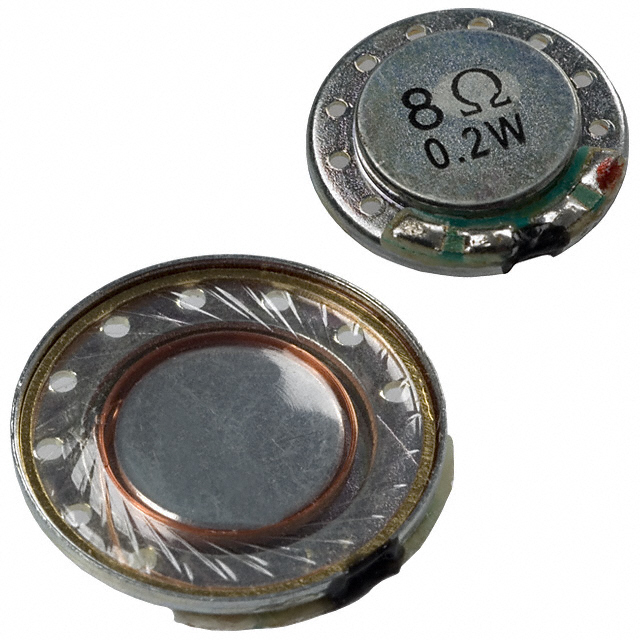
maybe jkelle wanted to power this 8 ohm 200mw earphone speaker :)
CDMG13008L-02.jpg
 
Last edited:

(*steve*)

¡sǝpodᴉʇuɐ ǝɥʇ ɹɐǝɥd
Moderator
Jan 21, 2010
25,510
Joined
Jan 21, 2010
Messages
25,510
@jkele , you cant use your own op-amp :)
There are different op-amps for different applications .
In your case , you should chose a high output power op-amp , just made specifically for audio signal amplification . Take a look at it here
http://www.national.com/mpf/LM/LM3886.html#Overview

That amplifier is going way over the top for output power (an LM380 or similar is more along the right track).

It is certainly possible that these devices would have insufficient gain for some microphones (and we *STILL* don't know what it is).

There are far simpler and cheaper ways of driving a speaker than such a high power amplifier.

This page demonstrates how it can be done.
 

(*steve*)

¡sǝpodᴉʇuɐ ǝɥʇ ɹɐǝɥd
Moderator
Jan 21, 2010
25,510
Joined
Jan 21, 2010
Messages
25,510
Thanks everybody, so the moral of this discussion is you cant just grab a circuit and work out what the stuff is there for unless you are given the purpose of the circuit so the easiest way to get in the know is to do lots of practical applications?

No, not at all. It's normally possible to take a circuit at figure out what things are doing.

The moral is: We can't help you unless you answer the questions we ask you.

You want an op-amp circuit to amplify the output of a microphone and drive a speaker. But you STILL haven't answered the question -- What type of microphone?

You don't seem to understand a lot about electronics. I would advise you to pretend that only the first two posts in this thread exist (yours, and my first reply), and answer my question.
 

jkele

Nov 21, 2010
13
Joined
Nov 21, 2010
Messages
13
I can see i have caused some confusion.

Steve - to your first post. I plan on using an electret microphone.
Barathbushan to your first post, thanks i cant Belive i missed that :(
Steve - to your second post, I didn't mean to imply that i want to build i my own i saw previous posts and the way i interpreted it is that people wanted me to grab a audio amp design of the net and study that - i didn't want to do that i wanted to look through data sheets and find one that i think suits me (i am thinking of using the LM386).
Steve - to your last post, how can i develop this ability of looking at the circuit and figure out what things are doing. There are so many uses - this is what i meant by gaining some practical experience along with theoretical knowledge to develop this ability.

Apologies to everybody, i was away for a bit so i did breeze over the posts but now i have got some time on my hands to fully read all the posts.
 

(*steve*)

¡sǝpodᴉʇuɐ ǝɥʇ ɹɐǝɥd
Moderator
Jan 21, 2010
25,510
Joined
Jan 21, 2010
Messages
25,510
Deciding on a chip first is not always the best way to go, but having said that, a 386 is as good a starting point as any. Notice that it's not an op-amp, but an audio amplifier.

The 386 has its voltage gain internally limited to 20 -- and that is low. However it can be increased to 200 with a couple of external components. When driving a low impedance device (like an 8 ohm speaker) you don't need a huge voltage swing to get enough power to have a clearly audible signal -- hence with a reasonably large input signal, the amount of voltage gain required is quite small (and an electret mic provides quite a high level signal as microphones go).

Your next step should be to do some research to find if there are any recommendations for this chip, driving a speaker, and amplifying the output of an electret microphone.

The manufacturers datasheet is the first place to look, and maybe they have application notes as well. (I just checked, the datasheet has lots of useful information).

The next step is to look wider for other designs, and googling for them is a reasonable step. See what other people have done, and learn from that. I googled for "lm386 electret microphone" and found a number of links -- I looked at the first. You should compare these circuits with the ones in the datasheet and play "spot the difference".

Explaining them yourself, or having others assist you by helping you explain the differences will lead to greater understanding (and I gather that's exactly what you're after).

Beware that circuits you find on some random web page may have aspects of poor design (and these certainly do). You might need to research how an electret microphone is used to determine what one of these poor design issues is.

However, bear in mind that what you learn doing this is not all applicable to op-amps because the LM386 is designed for a specific purpose and does not act like most op-amps in a number of respects (most of which are important for your use in this instance)
 
Last edited:

jkele

Nov 21, 2010
13
Joined
Nov 21, 2010
Messages
13
http://www.techlib.com/electronics/audioamps.html#LM386,

Head down to the LM386 Audio Amplifier Section, from reading the fact sheet i can see that when the capacitor is connected from Pin 1 - Pin 8, the gain is increased. The capacitor across Pin 7 acts as a by-pass capacitor. Pin 3 is connected to a the 10K variable resistor to adjust the input voltage and hence the output voltage of the OP-AMP.

From here I find to hard to determine what the rest of the components are except the switch and the speaker. This is what i am struggling with, picking up a schematic and determining what the components are there for. For example i never imagined i would need all those components i just thought i would use the LM386 as a non-inverting amplifier and use the schematic given

http://www.electronics-radio.com/ar...nal-amplifier-op-amp/op-amp_basic_non_inv.gif - if i did do this would it still work just not as well?

EDIT : Since the LM386 is not an op-amp its not suited for this purpose
 
Last edited:

(*steve*)

¡sǝpodᴉʇuɐ ǝɥʇ ɹɐǝɥd
Moderator
Jan 21, 2010
25,510
Joined
Jan 21, 2010
Messages
25,510
OK, this is what I was looking at.

Better to refer to the functions rather than the pin numbers. Pin 3 is the non-inverting input. The 10K pot is essentially a variable potential divider. Note that the circuits on the page I was looking at use a 100K pot. 100K is not appropriate because the input impedance of the LM386 is significantly less than 100K.

The circuit you show (typical non-inverting op-amp circuit) relies on the power supply being split (i.e. +/- 9V (say)). In this case there is only a single ended supply, so the capacitor in series with the speaker is there to prevent DC going through it (the output hovers around mid-rail with no signal).

You will note something interesting about connecting an electret microphone (that they require power). It's not done especially well on the page I have pointed out to you. You can google for the preferred method, but you might also like to consider what happens if a pot is used to adjust it and it is set to the minimum resistance.
 

jkele

Nov 21, 2010
13
Joined
Nov 21, 2010
Messages
13
Thanks for that Steve, how were you able to deduce what the function of the capacitor in series with the speaker is, does it just come from knowing a lot of theory or having a lot of practical experience or both. Like i said, this is my biggest problem.
 

(*steve*)

¡sǝpodᴉʇuɐ ǝɥʇ ɹɐǝɥd
Moderator
Jan 21, 2010
25,510
Joined
Jan 21, 2010
Messages
25,510
It comes from knowing what a capacitor does, as well as experience. It's a common way to handle this situation.

If you look at inputs and outputs of many audio amplifiers you will notice that they have a capacitor on their input and output. One reason for this is to block the DC so that various stages do not affect the biasing of previous or subsequent stages. In this case it removes the 1/2 supply bias on the output of the amplifier, allowing only the AC signal to reach the speaker.
 

jkele

Nov 21, 2010
13
Joined
Nov 21, 2010
Messages
13
Well i know that a capacitor stores charge and is an open circuit at DC and short circuit at AC. I should be able to apply this knowledge to the circuit deduce its position in the circuit right?
 
Top