I would take it from this that you know this and I’m potentially in the mire
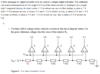
I do know this, having played with flash A-to-D converters in the 1970s. I doubt you are "potentially in the mire" because you have the ability to discover how it was done, lo! those many moons ago. And that is why no one that I know actually builds flash converters from discrete components anymore... except as an educational exercise. They already exist as integrated circuits with binary coded outputs.
At one time there was a bar-code display that was used as a VU (Volume Unit) meter in some hi-fi audio rigs. This display device consisted of ten or twelve (I forget how many) LED bars stacked one above the other that would successively illuminate and stay on as the sound level increased. The number of bars illuminated was an indication of the VU level, important for magnetic tape recording. As the sound level decreased, the number of bars illuminated also decreased. A special integrated circuit (
LM3914, see post #19 below by
@Harald Kapp) accepted audio input and performed a flash A-to-D conversion whose output was very much the same as the circuit you posted. The major difference was the conversion was deliberately non-linear because that's the way VU meters roll. Later, a similar IC (I think this was the LM3814 that Harald linked to in his post below) provided linear steps to light up successive LED bars. I think that one may still be in production somewhere, but I haven't bothered to research that.
There are integrated circuits that will accept binary coded inputs and produce segment-driver outputs for 7-segment displays. It is a "good thing" that you are learning about this stuff, especially if your goal is to eventually become an accomplished integrated circuit designer.
BTW, op-amps are not ideal comparators for flash converters because op-amps are too slow. The only reason that I know of to actually use a flash converter is speed of conversion. With fast comparators, they will out perform any other analog-to-digital conversion circuit I can think of. Software defined radios (SDRs) may use flash converters, as do some military sensor applications, but successive approximation conversion is cheaper and less complicated and usually "gud enuf". You should be learning about these as well as integrating-type analog-to-digital conversion.
EDIT: Thanks
@Harald Kapp for finding the modern LM3914!