Sir Slyman . . . . .
Slyman . . . . .
Can you tell us what 2 holes the meter probes were plugged into ?
What position was the meter knob in ?
What voltage or current source was you trying to meter ?
AND THEN . . . . .EVERYTHING BLEW UP !
Then we will know what direction to go.
ALSO is /was that 0.2A chip fuse blown ?
In your repair cleanup, you need to use a typewriter eraser and STRONG solvent and brush to assure all of the carbo-metallic flash deposition at the left end of the 20A copper wire shunt gets cleaned off the PCB.
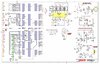
Initially . . .without having your feedback . . . it looks like 2 of the DC current range current shunts were blown open. . . . .FORTUNATELY . . . .you don't gots what it takes, to blow open R15 current shunt.
According to some . . .OF
MANY . . . . DT2905A schematics your 200 ma current range shunt of R17 mounting pads are for a 0.99 ohm resistor and confirm for me . . . . . that the smaller R16 pads are connecting in parallel to R17 so that an optional 27 ohm resistor . . .they say . . . . would trim in that sole 0.99 0hm resistor . . . .on down to a more EXACTING ~ 0.9549839228295821 ohms.
BUT it looks like, to me, that there
NEVER was a 27 ohm installed on those R16 pads.
If the next R42, current shunt for the 20 ma current range, is damaged . . . . . . . . 9 ohms is listed for its value.
I would have to see the front of your meter and its switch positions for other DC CURRENT range shunts, if there are others.
BUT I don't think that will be relevant as smaller currents involve HIGHER value current shunt resistor values.Therefore, they wouldn't get damaged.
Considering your access to acquiring those special resistor values and types . . . . . . . . . .this wise old owl . . . . . would use leaded metal film resistors of 1 and 10 ohm values and borrow another meter that will measure DC current .
You then install those new shunt resistors with one end 1/2 folded over full lead length and the other longer lead, then trimmed down, to make them the same length . . . . . to their respective pads.
Then build up a current reference of a 9V transistor type rectangular battery and a 47 om resistor in series with one battery + lead to give yourself an~ 190 ma current reference to test the 200ma DC current range .
Also get a 470 ohm resistor to then later use in the same manner, to test the 20 ma DC current range.
TESTING AND CALIBRATION . . . . .
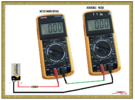
The meters get interconnected as is shown above, with the series current limiting resistor being changed out in accordance as to whether the 200ma or 20 ma calibration is being set.
The original meter should be exhibiting a bit higher current reading than is being correct, by virtue of a higher stock value resistor having been chosen.
We will now correct for that by taking a 500 ohm variable potentiometer and placing one " flying" hook up wire on its CENTER terminal and another wire on either of the side terminals. Then you connect the two free wire ends to an ohmmeter and rotate the pot to its 500 ohm setting.
Move over to the test hook up now where you will have two meters readings, temporary solder tack the pots flying lead ends across the shunt resistor and very slowly lower the value of the pots parallel resistance s that the serviced meters reading agrees with the "good " referencing meter. When they are matched, shut down and disconnect and read the final adjusted resistance of the pot, that will then be the needed value
of trim resistor that will need to be installed across that ranges current shunt resistor . . . . .you will have to use the closest stock value available and install it across the main shunt resistor for that current range.
Repeat the procedure for the lower current range while using its different current limiting value.
Thaaaaaaaassssit . . . . . . .
Slyman
If you don't spleakee velly good . . .the Englee . . . .you might need some assist in Arabic, from our most honnable and esteemed
Pharoan from Egypt . . . .
73's de Edd . . . . .
WE ARE NOW APPROACHING A TIME WHERE INTELLIGENT PEOPLE ARE BEING
SILENCED, SO THAT STUPID PEOPLE WON'T BE OFFENDED.
.