Would anybody help with a basic circuit design and spec please

danadak

Feb 19, 2021
1,062
Joined
Feb 19, 2021
Messages
1,062
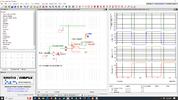
I had an error in Opto LED current needed. Eg. R2 value. Here is approximate
solution, based on what I think is Opto Coupler on your module.

One should do worst case, eg. lowest value of 12V supply, lowest
value of CTR in opto coupler, eg, margins, but try this out.

Note R4 is relay internal coil R, its not one you place in circuit, just a
value of the coil resistance in the relay.
1720261800259.png
 

Stu8

Jul 4, 2024
21
Joined
Jul 4, 2024
Messages
21
I had an error in Opto LED current needed. Eg. R2 value. Here is approximate
solution, based on what I think is Opto Coupler on your module.

One should do worst case, eg. lowest value of 12V supply, lowest
value of CTR in opto coupler, eg, margins, but try this out.

View attachment 64090
Thanks, I've been doing a little googling to learn a bit about opto, transistors, hi low level etc, to try come across a little less dim. Also looked into the modules, similar to those i've bought.
Maybe also worth mentioning, the laser receiver I am using runs off 2 AA batteries. The 12v side of things will be run off a tractors 12v supply, and so more like 14v when running. Not sure if I needed to mention that, but rather say it than not
Thanks

Stu
 

Stu8

Jul 4, 2024
21
Joined
Jul 4, 2024
Messages
21
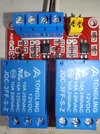
Ok, so first octo relay module has arrived, its 12v 2ch hi/low input

The currents drawn, not activated - 0.003A, 1 relay activated 0.046A, both relays activated 0.089A, 12.12v with relay not activated, 12.07 / 12.03v with 1 / both relays activated

Was this the info needed?

Im still waiting for the 3v relay to arrive

Thanks
 

danadak

Feb 19, 2021
1,062
Joined
Feb 19, 2021
Messages
1,062
If one looks at the PCB for the module one can see there is an
optocoupler as input then feeding a NPN transistor to drive relay.
So if relay is roughly 50 mA coil, then transistor base from optocoupler
must supply ~ 5 mA to insure transistor is saturated.

So looking at Opto its marking for CTR not visible. So a quick test
would be to determine what current thru its LED side energizes the
relay. I am thinking, looking at datasheet, 5 mA or greater is region
of operation.

So simple method to try, take your 1.8-2V input thru a series R to
LED (opto coupler input side) anode, its cathode to ground, and try
that. R = (1.8 - Vled) / 10 mA =~ (1.8 - 1.2) / 10 mA =~ 60 ohms. And see
if circuit driver Laser can supply the 10 mA. If so done. Otherwise the
earlier NPN drive for opto led side will be needed.

The test for laser side supply is to monitor its V (the 1.8 - 2V) when the
10 mA is drawn from it. If the V collapses then buffering it via NPN is
vital. If V stays fairly constant with the additional load then simple
direct input thru limiting R should be OK.

Regards, Dana.
 
Last edited:

Stu8

Jul 4, 2024
21
Joined
Jul 4, 2024
Messages
21
If one looks at the PCB for the module one can see there is an
optocoupler as input then feeding a NPN transistor to drive relay.
So if relay is roughly 50 mA coil, then transistor base from optocoupler
must supply ~ 5 mA to insure transistor is saturated.

So looking at Opto its marking for CTR not visible. So a quick test
would be to determine what current thru its LED side energizes the
relay. I am thinking, looking at datasheet, 5 mA or greater is region
of operation.

So simple method to try, take your 1.8-2V input thru a series R to
LED (opto coupler input side) anode, its cathode to ground, and try
that. R = (1.8 - Vled) / 10 mA =~ (1.8 - 1.2) / 10 mA =~ 60 ohms. And see
if circuit driver Laser can supply the 10 mA. If so done. Otherwise the
earlier NPN drive for opto led side will be needed.

The test for laser side supply is to monitor its V (the 1.8 - 2V) when the
10 mA is drawn from it. If the V collapses then buffering it via NPN is
vital. If V stays fairly constant with the additional load then simple
direct input thru limiting R should be OK.

Regards, Dana.
does this give you anymore info?

Edit to add.....2.3mA at the signal (set at low signal) when activating 1 relay, with 12v signal
 

Attachments

  • IMG_20240708_133144159.jpg
    IMG_20240708_133144159.jpg
    339.4 KB · Views: 3
  • IMG_20240708_132439325.jpg
    IMG_20240708_132439325.jpg
    256.5 KB · Views: 3
Last edited:

danadak

Feb 19, 2021
1,062
Joined
Feb 19, 2021
Messages
1,062
The 2.3 mA the coil or OpTo LED current ?

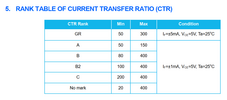
Looks like no mark for CTR :

1720443681202.png

So try post #26, hopefully your CTR is good (high).


Regards, Dana.
 

Stu8

Jul 4, 2024
21
Joined
Jul 4, 2024
Messages
21
The 2.3 mA the coil or OpTo LED current ?

Looks like no mark for CTR :

View attachment 64116

So try post #26, hopefully your CTR is good (high).


Regards, Dana.
Ok, thanks, got some resistors on order. The 2.3mA was the low level input to trigger the relay, what I assumed would be called signal?? the previously 46mA for 1 relay was the permanent live and ground for the relay when 1 relay was activated, I assumed that was the coil?

Thanks
 

danadak

Feb 19, 2021
1,062
Joined
Feb 19, 2021
Messages
1,062
Sounds like just the series R into the OptoLED will do the job.
I would calc it for 5 mA, should give you plenty of margin.

Regards, Dana.
 

Stu8

Jul 4, 2024
21
Joined
Jul 4, 2024
Messages
21
Sounds like just the series R into the OptoLED will do the job.
I would calc it for 5 mA, should give you plenty of margin.

Regards, Dana.
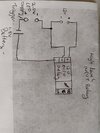
While I am waiting for parts, I had a bit of a different approach thought, would you give your opinion on it please.
OK, so the 12v octo relay is hi or low level input. For this thought, its set to high level. The 2.0 out of the receiver LED isn't enough to activate the relay via the input (+ve, ground, input), but if I add a 1.5v AA battery in series, it will activate the relay. I've not tried this with the actual LED 2.0v yet, only with an AA battery as the led 2.0v substitute, and then another AA as the battery in the circuit
Would this work of could it cause load on the led receiver circuitry that I dont want. Excuse the amateur diagram but hope it gives an idea

ThanksIMG_20240709_095351649.jpg
 

danadak

Feb 19, 2021
1,062
Joined
Feb 19, 2021
Messages
1,062
Yes and No. Yes you could trim the input to sit at the threshold of
turning relay on but power supply variation due to T and V would easily raise
havoc tripping relay when not desired.

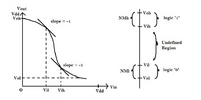
Its called noise margin when controlling something on/off. The wider the Vin-Vil
the better in below graph.

So short answer is no to idea.

1720517615588.png
 

Stu8

Jul 4, 2024
21
Joined
Jul 4, 2024
Messages
21
Yes and No. Yes you could trim the input to sit at the threshold of
turning relay on but power supply variation due to T and V would easily raise
havoc tripping relay when not desired.

Its called noise margin when controlling something on/off. The wider the Vin-Vil
the better in below graph.

So short answer is no to idea.

View attachment 64126
That makes perfect sense, thanks. Sadly further parts haven't been delivered yet
 

Stu8

Jul 4, 2024
21
Joined
Jul 4, 2024
Messages
21
Still waiting on parts, but ordered some more too, 3v opto module with hi/lo level input. I Think (bit of hope too) the supply from the led will drive these directly without further messing. With bits I have around it appears to work, but I have since seen that the approx 2v at the LED's seems to be a permanent live, with the receiver unit powered on, and it appears its the ground that is switched. My guess is a low level opto relay module will work directly from the receiver unit. Maybe wrong, but an easy fix if it does
 

Stu8

Jul 4, 2024
21
Joined
Jul 4, 2024
Messages
21
OK, thanks for all the help here. To bring this to an end, the switching ground on the LED's made this easy, for each LED I bought a 3v Opto Module with low level trigger. The control side of the modules powered by the receiver batteries, the trigger connected to the switched ground of the LED, the relay side connected to the 12v supply and the solenoid, the setup works perfectly. Im going to power the receiver with a 12v>3v transformer rather than batteries, so the whole lot can be run off the vehicle electrics

Cheers for all the suggestions and advice
 

JillKent

Jul 16, 2024
1
Joined
Jul 16, 2024
Messages
1
Hi, just signed to ask for a little help.
I'm looking to use a 1.8 - 2.0v LED supply to switch a relay to in-turn activate and deactivate a 12v solenoid.
The LED is on a receiver for a Laser, when this LED is activated, I want it to power a 12v solenoid to activate and deactive Hydraulics
The Receiver is powered @ 3v by 2 AA batteries, but the voltage across 1 LED is 1.8v, the other 2.0v, when they are activated

I'm assuming (per LED) I need a relay, transistor and a resistor. The 12v side of things from the solenoid to the relay is no issue for me, but the transistor is outside my experience

With a basic diagram, could someone give me a list of suitable parts/part numbers?

Thanks

Stu

Circuit Design​

  1. LED: When the LED is activated, it provides a 1.8V or 2.0V signal.
  2. Transistor: We use an NPN transistor (e.g., 2N2222) to amplify the LED signal.
  3. Resistor: A base resistor is needed to limit the current entering the transistor's base.
  4. Relay: A 5V or 12V relay is used to control the solenoid.
  5. Diode: Placed across the relay coil to protect the transistor from back EMF (e.g., 1N4007).
  6. 1721092756923.png
  7. Parts List​

    1. NPN Transistor: 2N2222 or equivalent
    2. Resistors:
      • R1: LED current-limiting resistor (chosen based on LED characteristics)
      • R2: 1kΩ (base resistor to protect the transistor base)
    3. Relay: 5V or 12V relay (chosen based on the solenoid operating voltage)
    4. Diode: 1N4007 (for relay coil protection)
    5. Power Supply:
      • 3V power (2 AA batteries)
      • 12V power (solenoid power supply)
  8. Operation Instructions​

    1. When the LED is activated, its voltage is applied to the base of Q1 through R2, turning Q1 on.
    2. When Q1 is on, the relay coil is energized, closing the relay switch.
    3. The closed relay contacts connect the 12V solenoid power, activating the solenoid.
    4. When the LED is off, Q1 turns off, de-energizing the relay, and the solenoid stops working.
  9. Notes​

    • Ensure that the current through the LED does not exceed its maximum rating.
    • Select an appropriate relay with a coil voltage and current rating within the transistor's capabilities.
    • The diode should be placed across the relay coil to prevent back EMF from damaging the transistor.
  10. If you have any questions about any part of this or need more detailed information, feel free to ask!
 

Stu8

Jul 4, 2024
21
Joined
Jul 4, 2024
Messages
21

Circuit Design​

  1. LED: When the LED is activated, it provides a 1.8V or 2.0V signal.
  2. Transistor: We use an NPN transistor (e.g., 2N2222) to amplify the LED signal.
  3. Resistor: A base resistor is needed to limit the current entering the transistor's base.
  4. Relay: A 5V or 12V relay is used to control the solenoid.
  5. Diode: Placed across the relay coil to protect the transistor from back EMF (e.g., 1N4007).
  6. View attachment 64167
  7. Parts List​

    1. NPN Transistor: 2N2222 or equivalent
    2. Resistors:
      • R1: LED current-limiting resistor (chosen based on LED characteristics)
      • R2: 1kΩ (base resistor to protect the transistor base)
    3. Relay: 5V or 12V relay (chosen based on the solenoid operating voltage)
    4. Diode: 1N4007 (for relay coil protection)
    5. Power Supply:
      • 3V power (2 AA batteries)
      • 12V power (solenoid power supply)
  8. Operation Instructions​

    1. When the LED is activated, its voltage is applied to the base of Q1 through R2, turning Q1 on.
    2. When Q1 is on, the relay coil is energized, closing the relay switch.
    3. The closed relay contacts connect the 12V solenoid power, activating the solenoid.
    4. When the LED is off, Q1 turns off, de-energizing the relay, and the solenoid stops working.
  9. Notes​

    • Ensure that the current through the LED does not exceed its maximum rating.
    • Select an appropriate relay with a coil voltage and current rating within the transistor's capabilities.
    • The diode should be placed across the relay coil to prevent back EMF from damaging the transistor.
  10. If you have any questions about any part of this or need more detailed information, feel free to ask!
Wow thankyou for all that. So far, I have managed to get this working using low level trigger octocoupler relay modules, off the (ebay) shelf. I found the LED's were activated and deactivated by a switching ground, which made a convenient low level trigger. I have ended up using 3 of these, 1 for each LED, so have 1 for 'up' LED, 1 for 'down' LED, and a third is now a stop LED. When the stop LED activates, it activates the relay module to cut the ground to the 2 solenoids, bit of a safety backup, as 'out of range' illuminates all 3 LED's. Hopefully this will continue to work as hoped, if not, i'll come back to this

Thanks
 

danadak

Feb 19, 2021
1,062
Joined
Feb 19, 2021
Messages
1,062
@JillKent, there are free online schematic drawing tools to make
for user easy schematic creation, which will get you clear readable schematics for posting.
Just google for them.

Or use the free available spice simulators or free PCB design tools for schematic creation.


Regards, Dana.
 
Top