A Problem about LM2903

KAKU

Aug 10, 2021
9
Joined
Aug 10, 2021
Messages
9
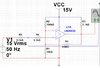
Regarding the problem of different simulation results when the non-inverting input terminal and the inverting input terminal of the comparator LM2903 are different, as shown in the figure. And why can't the input be negative when it is powered by a single power supply?
LM2903 schematic.jpg

Moderators note : replaced link with manufacturers link, using the site again will lead to a ban.
 
Last edited by a moderator:

Harald Kapp

Moderator
Moderator
Nov 17, 2011
14,282
Joined
Nov 17, 2011
Messages
14,282
Regarding the problem of different simulation results when the non-inverting input terminal and the inverting input terminal of the comparator LM2903 are different, as shown in the figure.
Where's the question? What are the different results that you are worried about? What do you expect, what do you see instead?
And why can't the input be negative when it is powered by a single power supply?
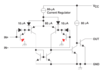
The internal circuit of the LM2903 looks like this:
upload_2021-9-8_5-51-58.png
When you apply a negative input voltage to IN+ or IN-, the base-collector diodes (marked red) will become conductive and clamp the input to GND.
 

KAKU

Aug 10, 2021
9
Joined
Aug 10, 2021
Messages
9
Where's the question? What are the different results that you are worried about? What do you expect, what do you see instead?

The internal circuit of the LM2903 looks like this:
View attachment 52872
When you apply a negative input voltage to IN+ or IN-, the base-collector diodes (marked red) will become conductive and clamp the input to GND.
Sorry.
Maybe I do not express my question clearly.
My problem is why the simulation results are different when the non-inverting input terminal and the inverting input terminal of the comparator LM2903 are different.
 

Harald Kapp

Moderator
Moderator
Nov 17, 2011
14,282
Joined
Nov 17, 2011
Messages
14,282
why the simulation results are different
Different from what?
Please state clearly what your inputs to the comparator are, which output you expect and which output you get instead of the expected.
 

Audioguru

Sep 24, 2016
3,656
Joined
Sep 24, 2016
Messages
3,656
Your 15V RMS input voltage has peak voltages of +21.2V and -21.2V which are destroying the comparator's input that must be within the power supply voltage which is +15V and 0V.
Therefore you must attenuate the input voltages.
 
Top