
Hello I'm trying to make a circuit to make a motor spin in both directions and so that I can alter its speed.
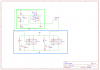
>The blue rectangle is the part of the circuit for the bi-directional control. The blue rectangle circuit works prefect on its own
>The green rectangle circuit is used to alter the speed of the motor. (A slightly different model of this circuited worked perfectly standalone).
Now the design I've tried below only lets me control the speed of the motor in one direction and not in the other. Can someone please suggest how I can alter the circuit so I can control the speed of the motor in both directions? (Preferably without building a second 555 timer astable circuit, I want to try to keep to one but if this isn't possible then whatever comes to your mind!)
Thank you
>The blue rectangle is the part of the circuit for the bi-directional control. The blue rectangle circuit works prefect on its own
>The green rectangle circuit is used to alter the speed of the motor. (A slightly different model of this circuited worked perfectly standalone).
Now the design I've tried below only lets me control the speed of the motor in one direction and not in the other. Can someone please suggest how I can alter the circuit so I can control the speed of the motor in both directions? (Preferably without building a second 555 timer astable circuit, I want to try to keep to one but if this isn't possible then whatever comes to your mind!)
Thank you


