Electronic Stethoscope 2

solycutema

Jul 3, 2006
16
Joined
Jul 3, 2006
Messages
16
Dear AUDIoguru,

Thanx for the input.

These are my measured voltage:
TL072 Pin 4 = -7.2V
          Pin 6 = -0.08V
          pIn 7 = -0.12V
          pIn 8 = +0.07V

LM386 Pin 1 = +1.5v
          Pin 5 = +1.9V
          Pin 6 = +2.7V
          Pin 7 = +0.2V
          Pin 8 = +0.2V

UA741 Pin1 = -6.9V
          Pin2 = -0.43V
          Pin3 = -0.5V
          Pin4 = -6.7V
          Pin5 = -6.9V
          Pin6 = -0.47V
          Pin 8 = +0.34V

When i plugged in the DC supply, LED blinks contanstly. I hear buzzing sound continuously through the headphones. when i tap on the electret mic, the buzzing sound will tap also. what problem am i facing? pls advice. thank you.


audioguru2

Apr 6, 2004
12,026
Joined
Apr 6, 2004
Messages
12,026
Hi Soly,
Your circuit doesn't have a positive 9V supply:
Pin 8 of the TL072 is supposed to be +9V. Yours is nothing.
Pin 6 of the LM386 is also supposed to be +9V. Yours is very low at only +2.7V.

The above pins are connected together and should measure exactly the same voltage. Yours have different voltages.

Your -9V supply measures -7.2V on pin 4 of the TL072 but measures only -6.7V on pin 4 of the uA741. They are connected together so they should measure exactly the same voltage. Yours have different voltages.
It should be closer to -9V.


solycutema

Jul 3, 2006
16
Joined
Jul 3, 2006
Messages
16
Dear Audioguru,

What shoud i do now?

If my PCB connections are correct, what maybe wrong?
If the Microcontroller are faulty, would it cause the different voltages?

Is it ok if i supplied more than 9 Vs?

how to check if my ICs are faulty?


audioguru2

Apr 6, 2004
12,026
Joined
Apr 6, 2004
Messages
12,026
solycutema said:
If my PCB connections are correct, what maybe wrong?
Pin 8 of the TL072 is connected to pin 6 of the LM386 on your pcb and is labelled "+9V" correctly. You measured different voltages so maybe the printed copper track is broken. Measure the copper with an ohm-meter to see where it is broken.
Measure the voltage of the positive battery while it is powering the circuit.

Pin 4 of the TL072 has a jumper wire to the -9V battery and pin 4 of the uA741 also has a jumper wire to the -9V battery but the voltages measured different. Measure the resistances of the copper track and the resistances of the jumper wires to see where it is broken.

If the Microcontroller are faulty, would it cause the different voltages?
Maybe the microcontroller or its voltage regulator is shorting the +9V battery.

Is it ok if i supplied more than 9 Vs?
Look at the datasheets for its ICs. The max supply voltage for the LM386 is 15V.

how to check if my ICs are faulty?
They are cheap. Replace them to see if one is bad.
 

solycutema

Jul 3, 2006
16
Joined
Jul 3, 2006
Messages
16
Dear Audioguru,

You were right when u said that the voltages are missing.

I'm using DC power supply. I can't seperate the positive voltage and the negative voltage. From the DC male jack to the female jack, with a multimeter, i can get both the +ve and -ve voltage. But once i connect the two ends [the end that connects to com port on multimeter], the voltages reduced to 0.2volts. Why is that so? Pls help. Thanx.

p/s sorry for troubling u this few daes. =)


audioguru2

Apr 6, 2004
12,026
Joined
Apr 6, 2004
Messages
12,026
The circuit uses two 9V batteries One makes the positive supply and the other makes the negative supply.
You need to have two separate power supplies to make the two voltages.


gregtorres

Feb 1, 2006
7
Joined
Feb 1, 2006
Messages
7
I'm finished working the ELECTRONIC STEThoSCOPE 2 project and its working just fine. now all i need to do now is to put or connect a 7 Segment LED  heart beat Counter circuit display to count in heart beats. but can i put or connect a 7 Segment LED Counter circuit to the ELECTRONIC STEThoSCOPE 2 even without changing the original circuit config. of the ELECTRONIC STEThoSCOPE 2? and is there a 7 Segment LED heart beat Counter circuit display project posted in the forums?

Please help!

any replies regarding to this topic will be highly appriciated! Thank you!


audioguru2

Apr 6, 2004
12,026
Joined
Apr 6, 2004
Messages
12,026
Hi Greg,
I am glad that your project works well. ;D
It uses unregulated 9V supplies which will be fine for a Cmos counter circuit. A TTL counter circuit would need a 5V low dropout regulator and a few other parts.

The AC signal from the output of U4 could feed through a 10k resistor into 1/6th of a Cmos Schmiitt-trigger inverter to convert the AC into clean pulses then a second inverter could be used for you to select the best pulse polarity for the counter.

We have a 99 seconds timer project that has a Cmos counter:
http://www.electronics-lab.com/projects/oscillators_timers/014/index.html .
Its clock can be the heartbeats and you would need to make your own timebase gating for it.

There is a heartbeat display project on the web that used a microcontroller for its counter:
http://www.web-ee.com/Schematics/HeMon/HeMon.htm .


Philipf

Apr 30, 2007
4
Joined
Apr 30, 2007
Messages
4
I've had a terrible time trying to get this circuit to work on a breadboard.  The most I've had it do it make a faint noise when I put the headphones in.  I think Im putting the last section together(U5).

Just ordered some vero board, i know where I am when Im soldering :) 


Steve_hi

Mar 10, 2007
65
Joined
Mar 10, 2007
Messages
65
Hi Philipf
I made both the stethoscopes the one with the 5 741 op-amps doesnt work at all but the stehoscope2 by Audioguru works really well. I took it to class and all the students liked it. It is much easier to listen to a heart beat than with an accoustic stethoscope


gregtorres

Feb 1, 2006
7
Joined
Feb 1, 2006
Messages
7
audioguru said:
Hi Greg,
I am glad that your project works well. ;D
It uses unregulated 9V supplies which will be fine for a Cmos counter circuit. A TTL counter circuit would need a 5V low dropout regulator and a few other parts.

The AC signal from the output of U4 could feed through a 10k resistor into 1/6th of a Cmos Schmiitt-trigger inverter to convert the AC into clean pulses then a second inverter could be used for you to select the best pulse polarity for the counter.

We have a 99 seconds timer project that has a Cmos counter:
http://www.electronics-lab.com/projects/oscillators_timers/014/index.html .
Its clock can be the heartbeats and you would need to make your own timebase gating for it.

There is a heartbeat display project on the web that used a microcontroller for its counter:
http://www.web-ee.com/Schematics/HeMon/HeMon.htm .
Thank you so much Sir! those things could really come in handy! but i dont really need a timer circuit, i just need a heart beat counter display. http://www.web-ee.com/Schematics/HeMon/HeMon.htm  :) i'll post a reply as soon as i have improvements.
 

audioguru2

Apr 6, 2004
12,026
Joined
Apr 6, 2004
Messages
12,026
The timer circuit is a counter. It counts seconds. It is easy to change it to count hearttbeats.


gregtorres

Feb 1, 2006
7
Joined
Feb 1, 2006
Messages
7
i can seem to find this 0.047uF/50V Metalized plastic-film Capacitor, i think its not available here in manila philippines... is mylar capacitor ok to replace this?


dhyne143

Jan 30, 2006
1
Joined
Jan 30, 2006
Messages
1
is there a  pcb design of the electronic stethoscope 2 and also the heart monitor circuit posted in the forums? Thank you!


audioguru2

Apr 6, 2004
12,026
Joined
Apr 6, 2004
Messages
12,026
Hi Greg,
Mylar is a plastic film. Capacitors are made from it when they metalize one side of it.
An oriental "green cap" is also a metalized plastic-film capacitor and I have seen orangish-brown ones. 0.047uF is marked "473". 5% tolerance is marked "J". So you need capacitors marked "473J".

Hi Dhyne,
Last year, Con posted this good pcb layout:

View attachment 40476


bluesparky

Apr 10, 2009
1
Joined
Apr 10, 2009
Messages
1
Thanks for the info, Hero.

Sorry, i've got a couple of questions to ask.

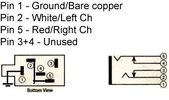
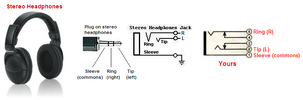
Is this the right way to wire the stereo headphone? (Kindly see attachment)

Secondly, there is whining sound when i am using a headphone (with and without the mic attached). When i touched or moved my hand near the potentiometer, the whining sound became softer or disappeared.  Any idea what is the cause for it? (I am testing it on a breadboard)

Thanks, sparky

1.JPG

 
Last edited by a moderator:

audioguru2

Apr 6, 2004
12,026
Joined
Apr 6, 2004
Messages
12,026
Is this the right way to wire the stereo headphone? (Kindly see attachment)
Yes.
Short the left and right channels together so both ears play in mono.

Secondly, there is whining sound when i am using a headphone (with and without the mic attached). When i touched or moved my hand near the potentiometer, the whining sound became softer or disappeared.  Any idea what is the cause for it? (I am testing it on a breadboard)
The long jumper wires of a breadboard pickup all kinds of interference and might cause the circuit to oscillate.
Use a compact stripboard layout or a compact pcb layout instead.

Thanks, sparky
 

Attachments

  • headphones.PNG
    headphones.PNG
    78 KB · Views: 0
Top