Electronics seems like magic!

Status
Not open for further replies.

Sunnysky

Jul 15, 2016
573
Joined
Jul 15, 2016
Messages
573
Digital has always seemed like magic to me.

Analog intuitively seems like it would be better because you get the full signal.

In converting it to Digital it seems like you’re losing information because you’re sampling the Analog signal, which means you’re only getting pieces of the full signal. And what you end up with is an approximation of the original.

The magic is that it ends up being better.
All digital is still analog when there are binary decimation errors crossing the threshold or the prop delay and risetime delay cause a race condition which is digital.

The result is an extremely high SNR so that the probability of signal crossing the threshold erroneously from random noise is eliminated until a gamma ray zaps it in outer space past the lead Faraday shields.
 
Last edited:

Omega Supreme

Oct 9, 2014
156
Joined
Oct 9, 2014
Messages
156
Digital does throw away information — but it replaces fragile, continuous information with robust, recoverable, controllable information. That’s the entire magic.

1. Analog carries more information… but most of it is useless or harmful

An analog signal contains:

The desired audio/video/data content

Plus noise, hiss, hum, distortion, drift, tape wear, wow/flutter, thermal noise, electromagnetic interference, etc.

Analog can represent infinite detail in theory, but in the real world:

Every amplifier stage adds noise.
Every cable adds noise.
Every copy degrades the signal.
Environmental noise rides along with the signal forever.

So yes, analog has “more information,” but much of it is junk you don’t want.

2. Digital samples & quantizes — but only as much as humans can perceive

A digital system samples just enough to capture the useful information.

Example: human hearing tops out around 20 kHz.

CD audio uses 44.1 kHz sampling → captures everything humans can hear.

Quantization noise is pushed below hearing thresholds.

Digital is designed around perceptual limits:

You keep everything the senses can detect
You discard everything they cannot

This gives you all the meaningful information with none of the accumulating noise.

3. Digital errors don’t accumulate — analog errors do

This is the biggest reason digital wins.

Analog:

Every copy, transmission, and generation adds more distortion and noise.

After a few copies, the recording is mush.

Digital:

As long as the 1s and 0s are recognized:

Noise does not accumulate
Errors can be corrected
The data is restored perfectly

Digital allows you to regenerate perfect copies indefinitely. Even if noise enters the channel, the data stays pure.

4. Digital allows powerful error correction

Digital systems include:

Parity bits
Reed–Solomon codes
CRCs
Forward error correction
Checksums
Block-level redundancy

These can correct damaged bits and reconstruct missing data from partial information — something totally impossible in analog.

5. Digital can represent more dynamic range than analog

Analog media have physical limits:
Tape saturates
Vinyl distorts
FM bandwidth is limited
Analog sensors have thermal noise floors

But digital has mathematical limits, not physical ones:
16-bit audio → ~96 dB of dynamic range
24-bit audio → ~144 dB
Higher bit depth = insanely low noise floor

This exceeds what most analog systems can achieve.

6. Digital allows nonlinear processing that is impossible in analog

Once information is digital, you can:

Compress
Filter with perfect characteristics
Encode
Secure
Send long distances over fiber with no degradation
Edit nondestructively
Apply sophisticated algorithms

Analog systems cannot do these things precisely or reliably.


Digital is “worse than analog” only in theory (where analog is perfect).

In the real world:

Analog is fragile
Digital is robust

So digital wins because:

Digital stores exactly the information we want and protects it from distortion, while analog stores everything — including noise — and cannot protect it.
 

Omega Supreme

Oct 9, 2014
156
Joined
Oct 9, 2014
Messages
156
CRTs are historically superior in areas like contrast, color accuracy, and motion handling.

CRT TVs are still preferred for retro gaming due to lower input lag, direct analog signal handling, and a more authentic viewing experience.

Superior contrast and color: CRTs produce deeper blacks and brighter whites, leading to a higher contrast ratio. They also have a reputation for excellent color and gray-scale representation, making them the reference standard for professional calibration.

The color reproduction can feel more “real” in some ways, because the technology is analog.

Better motion handling: They have a very fast response time, which means there is no motion blur, making fast-paced action appear sharper and smoother.
  • Lower input lag: Because they display the signal directly without processing, CRTs have extremely low input lag, which is crucial for gaming.
Authentic retro experience: CRTs are ideal for retro gaming because they handle older analog signals and resolutions like 480i without scaling, which can cause blur or other distortions on modern TVs.

CRTs look better than any other technology specially for low refresh rates since the analog image looks more fluid.
  • CRT monitors can do low or high-ish resolutions (my 15" monitors do 640x480 through 1280x1024) without issue, all look as good as native. OLEDs like LCD, will look like crap on any non-native resolution.
CRT TVs do not have a native resolution.
They’re analog — the electron beam can draw at many different scan rates, so they naturally fit various resolutions (480i, 480p, 240p) without scaling artifacts.

This is one big reason retro games look so good on CRTs.

Burn-in. CRT burn in with usual use is near impossible, I have decades-old monitors with NO burn-in at all.

Which leads to the last issue, serviceability. It’s not really hard to fix CRT monitors unless they exploded. Big dumb circuits all around, good for training and skills. If not you then a friend or the neighborhood tech.
 

Sunnysky

Jul 15, 2016
573
Joined
Jul 15, 2016
Messages
573
For retro gaming, motion clarity, zero input lag, classic color
CRTs are definitively better.

For modern media, 4K video, productivity, size, power, safety
LED/LCD is better.

For absolute black levels and image quality
OLED > CRT > LED/LCD
 

Omega Supreme

Oct 9, 2014
156
Joined
Oct 9, 2014
Messages
156
The transistor is the most magical device in all of electronics. It replaced large, power-hungry vacuum tubes, making it possible to shrink electronic devices dramatically.

Transistors are microscopic; tubes are bulky glass bottles.

Transistors last decades and aren’t fragile.
Vacuum tubes wear out and can break if dropped.

Transistors use very little power and run cool.
Tubes need heaters and run hot.

Transistor-based circuits are far cheaper to manufacture.

A computer built with vacuum tubes could fill an entire room or even a city block, whereas a vastly more powerful modern smartphone, which uses billions of microscopic transistors, fits in your pocket.
 

Omega Supreme

Oct 9, 2014
156
Joined
Oct 9, 2014
Messages
156
Bardeen, Brattain, Shockley first transistor :

View attachment 69541

William Shockley (one of the transistor’s inventors) left Bell Labs in 1956 to start his own semiconductor company.

He chose to locate in:

Mountain View, California — his hometown.

This was not yet “Silicon Valley.”
It was farmland and fruit orchards.

But Shockley brought something no one else on the West Coast had:
  • Deep semiconductor knowledge
  • Access to transistor tech thanks to Bell Labs’ open licensing
  • The idea that this was the future of electronics
He began recruiting top young engineers.

Eight of his best engineers left in 1957.

They were later called:

The Traitorous Eight

They founded:
Fairchild Semiconductor

This single act is considered the birth of Silicon Valley.

And none of this would have happened if the transistor were locked up by AT&T.

Fairchild could freely build on the tech.

Fairchild became the hot semiconductor company.

Its former engineers founded or influenced:

Intel
AMD
National Semiconductor
LSI Logic
Xilinx
Intersil
Altera
And dozens more

The region transformed from orchards to semiconductor headquarters.

Silicon Valley is a direct descendant of:

Shockley’s move west
The Traitorous Eight rebellion
Fairchild Semiconductor
Intel and the VC ecosystem
And underlying it all: a freely licensed transistor patent
 

Omega Supreme

Oct 9, 2014
156
Joined
Oct 9, 2014
Messages
156
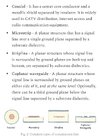
It is magic to me that all these different kinds of transmission lines:
IMG_3235.jpeg

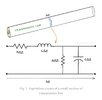
can all be represented electrically by one simple diagram:
IMG_3236.jpeg
 

AnalogKid

Jun 10, 2015
3,045
Joined
Jun 10, 2015
Messages
3,045
It is magic to me that all these different kinds of transmission lines:

can all be represented electrically by one simple diagram:
They are not different kinds, they are variations of the same theme. The only real difference among them is the percentage of coverage of the shield.

ak
 

hevans1944

Hop - AC8NS
Jun 21, 2012
4,968
Joined
Jun 21, 2012
Messages
4,968
Is anyone using a physical system to model electronics in their heads, like visualizing electricity as water, or a circuit as water pipes, resistance as friction, capacitance as a spring, and inductance as inertia?

What are you actually seeing in your heads when dealing with electronics, because I really don’t see anything concrete, just electrical terms, words and formulas?
What an interesting problem... how to "visualize" electronics. I don't visualize electronics. I apply what i have learned. Learning comes in many forms, so your mileage (or kilometers) may be different from mine. I learned to read beyond "Run, Spot, run!" (although I started there) at a very early age because my mom bought Little Golden Books for me to read. Prior to learning to read though, I had to learn my ABCs. All that happened before I reached kindergarten,,, years before. Mother told me I was "reading" by age two. I've been reading (and learning) ever since. But, although "book learning" is the way civilization records and advances technology, it doesn't replace the "hands on" experience this forum supports.

Troubleshooting is a distinct and separate skill from repairing. Ideally, you troubleshoot by forming an opinion of what is wrong and making a list of what is causing the problem, Then you test those opinions (each of which are really just an hypothesis) to see if any can be falsified. If it CAN be falsified, cross that opinion off the list and test the next one. Wash, rinse, repeat.

If you go through the entire list and nothing results, you need to come up with a better opinion of what could be wrong. Here's an example: I once built a bread-board prototype of a complex analog circuit requiring several op-amps (operational amplifiers). In testing the circuit's operation I would inject signals and try to trace the signal throughout the circuit. Problem: the signal that i measured was nowhere near resembling a function of the signal I injected.

I spent the better part of an afternoon injecting signals and wondering why the signal that I measured didn't agree with what I thought it should be. The circuit did not appear to be "dead" but the measurements were wrong. Late in the day, a fellow technician came over to my bench, curious to know why I was spending so much time "troubleshooting" my breadboard circuit. Then he dropped a bombshell: "Why is your plus and minus fifteen volt bench power supply turned off?"

In troubleshooting you have to always keep an open mind. And make sure the flaky equipment is actually receiving the power it needs to operate. This "process of elimination" method of troubleshooting becomes second-nature if you practice it long enough. It has only failed me when the problem is intermittent. Troubleshooting intermittent problems is a whole different can of worms. But that's where chart recorders and data acquisition systems shine. It can take a very long time to discover why an intermittent problem occurs.

And just when you think you have solved the problem, it appears in a slightly different form and you have to start all over again. If this happens too often to you, it might make sense to seek another career. Since I am now retired, I can "move on" to doing something else if an intermittent problem occurs. For example, I have outdoor lighting that is turned on at night by a passive infrared detector that senses motion. Yet, sometimes the lights come on and there is no sign of what triggered that response. I suspect it is a small nocturnal animal running across the yard, but have never seen one for confirmation. Do I troubleshoot this "problem" or do I ignore it? After all, the motion sensors DO work as advertised. Is it worth spending an hour or so adjusting the sensitivity so small animals don't create "false positives"? NO, not as long as the next-door neighbors don't complain about my lights coming on during the wee hours of the morning.

I used to work with a fellow who had retired from the Navy as an electronics technician. I was not impressed with his lack of skills. But I was the one who got fired when the company that hired me removed the reason for hiring me. The ex-Navy guy followed soon afterward because I am "pretty sure" he was hired to replace me and since they no longer needed me, they no longer needed him either. C'est la vie.
 

Omega Supreme

Oct 9, 2014
156
Joined
Oct 9, 2014
Messages
156
People who can design electronics are magicians because as far as I know there is no book, class, or method that directly teaches this.

They must be trade secrets.

The closest I’ve seen to anything teaching design are those electronics cookbooks containing a library of commonly used circuits.

Does designing electronics involve picking out circuits from these recipe books and blending them together in creative ways?

I think this is what is referred to in electronics as “home brewing” because you’re “brewing” your own circuits, computers, or hardware.
 

AnalogKid

Jun 10, 2015
3,045
Joined
Jun 10, 2015
Messages
3,045
There are hundreds of books on electronic circuit design. If you include applications notes, design notes, technical papers, etc., then thousands.

Aside from real textbook-type-books, chip vendors have huge online libraries. Analog Devices now includes Linear Technology, and Texas Instruments now includes National Semiconductor.

As an example of what is available in one narrow niche of electronics, Douglas Self has a series of large books on audio circuit design. Besides the (very detailed) basic circuit design stuff, these get way down into the weeds, covering things like how the internal construction of capacitors and resistors affect signal quality.

There is a long thread on AAC about the design "bibles" we were raised on, books from National Semiconductor and Texas Instruments. Here is a shorter one.


ak
 

Omega Supreme

Oct 9, 2014
156
Joined
Oct 9, 2014
Messages
156
I haven’t seen this work in practice but I heard people used to mail-order a kit for something called a Crystal Radio:

IMG_3255.png

This circuit is a working radio that does not require a battery.

It is powered by the strength of the signal received by the antenna alone.

I remember hearing that those who built this radio would go outside and use a barbed-wire fence for a fantastic antenna and water pipes for ground.

You don’t hear about this anymore. I suspect because strong AM stations in the 1920s–1930s were extremely powerful (often 50,000–500,000 watts before regulations), so even a mediocre antenna + ground could pull in local broadcast stations.

I don’t think this is the case today, so a Crystal Radio would probably not have sufficient power to work in our current environment.
 

Delta Prime

Jul 29, 2020
2,987
Joined
Jul 29, 2020
Messages
2,987
I haven’t seen this work in practice but I heard people used to mail-order a kit for something called a Crystal Radio:
You really like talking out of your ass don’t you? Instead of pretending why don’t you try building one with a true cats whisker maybe you’ll learn something and believe it or not we would help you.
 

Omega Supreme

Oct 9, 2014
156
Joined
Oct 9, 2014
Messages
156
You really like talking out of your ass don’t you? Instead of pretending why don’t you try building one with a true cats whisker maybe you’ll learn something and believe it or not we would help you.
Yet you won’t help me get a job at your company. If you really want to help me, that’s what I really need.
 

AnalogKid

Jun 10, 2015
3,045
Joined
Jun 10, 2015
Messages
3,045
The diode is a demodulator, not a modulator.

These worked well long ago because there were so few sources of RFI.

Cold water pipe as a GND - yes. Barbed wire fence as an antenna - maybe, but not very well; too many parallel paths to GND (fence posts).

You don't hear about it because you don't listen. There are many websites dedicated to crystal radio engineering.

1920 stations were not that strong.

The Federal Radio Commission began regulating transmitters in 1927.

The crystal radio I built in 1960 works just fine.

ak

 
Status
Not open for further replies.
Top