Electro132
- Feb 12, 2013
- 261
- Joined
- Feb 12, 2013
- Messages
- 261
Hi,
Its been a long while i've been on here since i was busy with my projects. However, I'm trying to understand this idea where the current input (I) is different to the voltage input (V). Because my multimeter is damaged from when i opened it up to repair it, i am pretty much using I = V / R to find out the current. I am using a 9v battery and either 10,100 or 1K ohm resistors for this.
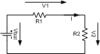
What i'm trying to get my head around is whether i could use a resistor to limit the amount of current going into my circuit and whether i could use a different resistor to limit the amount of voltage going in. So it goes like this:
I = V / R = 9V / 100 = 0.09 A going into the circuit
and
V = I x R = 0.09 x 10 = 0.9 V going into the circuit
So i'm just wondering is this possible? The reason why i ask this is because if i put in a different current amount to the voltage input then doesn't that place the voltage amount in line with the current amount and not on 2 different values?
Its been a long while i've been on here since i was busy with my projects. However, I'm trying to understand this idea where the current input (I) is different to the voltage input (V). Because my multimeter is damaged from when i opened it up to repair it, i am pretty much using I = V / R to find out the current. I am using a 9v battery and either 10,100 or 1K ohm resistors for this.
What i'm trying to get my head around is whether i could use a resistor to limit the amount of current going into my circuit and whether i could use a different resistor to limit the amount of voltage going in. So it goes like this:
I = V / R = 9V / 100 = 0.09 A going into the circuit
and
V = I x R = 0.09 x 10 = 0.9 V going into the circuit
So i'm just wondering is this possible? The reason why i ask this is because if i put in a different current amount to the voltage input then doesn't that place the voltage amount in line with the current amount and not on 2 different values?