How can i power a USB device from two Sources

Bdman32

May 13, 2015
7
Joined
May 13, 2015
Messages
7
Im new here to if i am in the wrong forum move me

I have an old phone that i am connecting to my car to play music. the head unit however doesn't always power the USB port to keep the phone alive and charged, i have run power from the battery and it charges the phone all the time.

My question is this, how can i get power from the battery and the head unit at the same time.
or switch between the two when the car is on or off. i thought about a relay but i wanted a smaller solution first :)

cheers,
Brendon
 

Harald Kapp

Moderator
Moderator
Nov 17, 2011
14,271
Joined
Nov 17, 2011
Messages
14,271
Welcome two electronicspoint (note my correction in the title of your post) :D

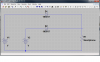
You can try two diodes, one for each source as shown in teh following diagram:
untitled-png.20118

The type of diode is not critical as long as it is suitable for the current and voltages used.
The 1N5817 is suitable for 1A and 20V, other possibilities are 1N5818 or 1N5819, each good for 1A and higher voltages.

I beg to excuse the missing connection above R1, here the wires are connected, only I missed to draw the dot.

Harald
 

Attachments

  • Untitled.png
    Untitled.png
    55.8 KB · Views: 414

BGB

Nov 30, 2014
154
Joined
Nov 30, 2014
Messages
154
though, if it is powering a USB device (namely, the phone), I think you will need a 5v regulator in addition to the diodes.

basically, USB devices are designed for 5 volts. if you give them 12 to 15 volts or so (what one may get from a car, *), this could be bad.

diodes could be used either to merge the output (more likely in this case), or merge the inputs (provided all inputs are at least about 7 volts). also, it may be a good idea to put capacitors on the input and output of the regulator (helps improve stability).

*: voltage will vary depending on the state of the battery and the car's charging system and similar.


I have a similar board which runs off either a 12v to 15v input (from a lead-acid battery), or a 9 volt battery pack (some AAs wired in series, *2), and provides 5v output (for running a Raspberry Pi and a few other things, such as some USB cameras and similar).

*2: a normal 9 volt battery wont supply enough amperage in this case. it is near the upper limit for AAs as well, but it works. it was mostly intended to deal with an issue where the motors kicking on would briefly disrupt the power coming from the main battery.
 

Harald Kapp

Moderator
Moderator
Nov 17, 2011
14,271
Joined
Nov 17, 2011
Messages
14,271
though, if it is powering a USB device (namely, the phone), I think you will need a 5v regulator in addition to the diodes.
Right. From the original post I assumed that the input voltages both are already regulated to 5V. That's why I suggested Schotky diodes with less voltage drop than normal silicon diodes.
 

BGB

Nov 30, 2014
154
Joined
Nov 30, 2014
Messages
154
Right. From the original post I assumed that the input voltages both are already regulated to 5V. That's why I suggested Schotky diodes with less voltage drop than normal silicon diodes.

yes, ok.

it seems I failed to read it well enough to realize the input was probably already regulated...
 
Top