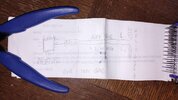
Concerning your helical dipole antenna,, what are your size constraints?
4Nec2 is a free downloadable tool that I use.
Optenni Lab is the leading circuit synthesis software for antenna and RF optimization aiming at efficient assessment and optimization of antenna and RF systems at any design phase.

optenni.com
In the absence of information!
I can only give you important concepts you need to know…
Propagation Delay( time it takes for a signal to travel down a transmission line).
Wave Time (or Signal Rise Time) time it takes for the signal to transition from one voltage level to another.
Propagation delay is a small fraction (typically less than λ /10 or 10%) of the wave time, I ignore the effects of the transmission line & treat it as a simple wire. However, as the propagation delay increases relative to the wave time, the behavior of the transmission line becomes more critical.
you must make sure the impedance of the transmission line matches the impedance of the source & load. This prevents signal reflections.
signal encounters an impedance mismatch, part of the signal is reflected back toward the source. These reflections can distort the signal & cause signal integrity problems.
When the propagation delay is significant, impedance mismatches become much more problematic. The reflected signals can arrive back at the source while the original signal is still transitioning, leading to signal distortion, overshoot, undershoot, & ringing.
The impedance of transmission
line is not constant but varies with frequency.
In the presence of reflections, the transfer function (H(s)) of the transmission line becomes more complicated & 4.25% of wavelength.
There is a special case where the propagation delay is 25% of the wavelength (λ/4). In this situation, if the transmission line is…
open-circuited at the load, this phenomenon will appear as a short circuit at the source, & vice versa; this is because the reflected signal arrives back at the source 180 degrees out of phase with the incident signal.