NRF24L01

foTONICS

Sep 30, 2011
332
Joined
Sep 30, 2011
Messages
332
Hey everyone,

I've got this NRF24L01 RF wireless transceiver. datasheet

-The pin in question is the IRQ which is an active low interrupt pin.
-I'm interfacing it with a PIC16f627a uController
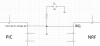
-The IRQ pin will connect to the PIC's interrupt on change pin (PORTB), when the NRF receives any data the IRQ will go low, notifying the PIC, which will them proceed to shift out the data
-My question is this: The NRF output for the IRQ is 3.6V when it's not in use, so could I just pull up the pin to 5V to make the PIC happy, or will I damage something?
 

Attachments

  • pic.png
    pic.png
    13.8 KB · Views: 265

(*steve*)

¡sǝpodᴉʇuɐ ǝɥʇ ɹɐǝɥd
Moderator
Jan 21, 2010
25,510
Joined
Jan 21, 2010
Messages
25,510
I believe the inputs of the NRF24L01 are 5V compatible (see near the bottom of page 8)

Check out the absolute maximum ratings (page 12). For inputs you can go to 5.25V, so they are 5V compatible (just).

Also note that the maximum supply voltage is 3.3V if the input signals are > 3.6V (page 13)

The IRQ is an output. 3.3V should be sufficient for the microcontroller to see this as a high level logic input. I'd be very cautious about trying to pull it higher as you may end up forcing current through the body diode of the output transistor.

I need to check if the output is open drain or bopolar, and I'm having some trouble locating that trivially simple piece of information. OK, considering it doesn't say, I'll go with it NOT being open drain/collector, so that would mead it's NOT OK to pull it up.

You could always get it to drive a transistor and have an inverted open collector output.
 

foTONICS

Sep 30, 2011
332
Joined
Sep 30, 2011
Messages
332
ya Steve that was an issue I came across also, I couldn't find any information regarding the IRQ pin itself, only it's function.

Also, on my picture I drew I made a mistake adding that ground connection in there between the PIC and NRF
 

(*steve*)

¡sǝpodᴉʇuɐ ǝɥʇ ɹɐǝɥd
Moderator
Jan 21, 2010
25,510
Joined
Jan 21, 2010
Messages
25,510
The easiest way to test the function of this pin is to pull it up very gently (say with a 10k to 100k resistor.

If the voltage on the pin rises above Vcc + 0.7 for that chip this is a very good indication that the output is not clamped to the supply rail.

Using the lowest Vcc for the device (1.8V?) will make this far more obvious and also test with a voltage difference greater than you'll us in practice which will give you more confidence about banging up against some limit.

In the worst case, 50uA to 500uA through the protection diodes is probably not going to cause them any trauma.
 
Top