
Ohms Law defines the relationship between Voltage, Current and Resistance - as described in detail by this article. The tool on this page allows you to enter two known vaules and then calculate the third.

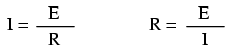
Which therefore means the following conditions are also true:
[ohmslawcalc][/ohmslawcalc]
In electric circuits, power is a function of both voltage and current:

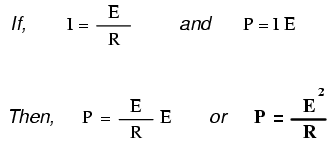
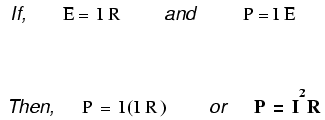
Using algebra again to manipulate the formulae, we can take our original power formula and modify it for applications where we don't know both voltage and current:
If we only know voltage (E) and resistance (R):
If we only know current (I) and resistance (R):
[ohmslawpowercalc][/ohmslawpowercalc]
- E (or V) = Voltage
- I = Current
- R = Resistance
Which therefore means the following conditions are also true:
[ohmslawcalc][/ohmslawcalc]
In electric circuits, power is a function of both voltage and current:
Using algebra again to manipulate the formulae, we can take our original power formula and modify it for applications where we don't know both voltage and current:
If we only know voltage (E) and resistance (R):
If we only know current (I) and resistance (R):
[ohmslawpowercalc][/ohmslawpowercalc]

