Chengjun Li
- Oct 21, 2014
- 84
- Joined
- Oct 21, 2014
- Messages
- 84
Hi,
In the Whetstone bridge circuit:
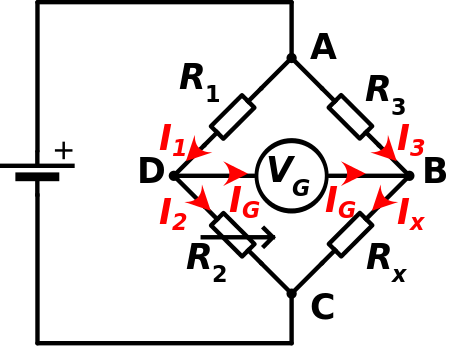
If the circuit is balanced (and all resistances known), and we measure Vg as a function of time, then the fluctuations correspond to
4KbTR
the well-known thermal fluctuations. My question:1.what should be used for R here? 2.And if the Rx is function as a resistance temperature detector, its temperature is different from the three other dummy resistor, then what should be used for T here?
We can directly measure a resistance using the votlage divider circuit and a dummy resistor. 3. I wonder which method has a low noise level?

In the Whetstone bridge circuit:
If the circuit is balanced (and all resistances known), and we measure Vg as a function of time, then the fluctuations correspond to
4KbTR
the well-known thermal fluctuations. My question:1.what should be used for R here? 2.And if the Rx is function as a resistance temperature detector, its temperature is different from the three other dummy resistor, then what should be used for T here?
We can directly measure a resistance using the votlage divider circuit and a dummy resistor. 3. I wonder which method has a low noise level?


