You are using an out of date browser. It may not display this or other websites correctly.
You should upgrade or use an alternative browser.
You should upgrade or use an alternative browser.

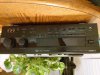
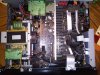
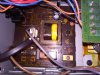
Scroll to continue with content

Depends on the type of click you hear. It could be the relay you hear, or it could be the button itself.When pushing the power button, all i hear is a click. Would that be a bad relay switch? The fuse is good.
With a power on issue, the first thing to look at is the power supply.
You snapped a pic of it already, but you are going to need to get some better pictures for us to help.
Please let us know your experience with electronics, and if you have any test equipment.
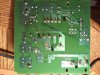
Check the fuses if you haven't already, and remove the power board and snap a picture of the top and bottom, without the flash, and with the least amount of obstructions... ie move or remove any wires that may get in the way. We need to clearly see the part numbers if they are stamped, and the traces on the board to determine what is connected to what.
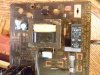
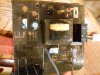
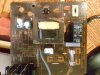 Its night time right now so i cant get it that clear. I dont have too much experience in repairing electronics, but i do have a multimeter and a soldering iron.
There is actually a double click sound when i push the power button , not one. I placed my finger over the relay that is on that power board and the double clicking can be felt. The fuse tested good.
Attachments
It's hard to give you advice with this problem because we don't have a schematic, and we can't pin-point the exact issue.
You're concentrating on a possible bad relay. That may or may not be your problem. The mere fact that you can feel/hear the relay clicking, tells us that whether or not it's switching, it IS activating.
It is entirely possible you have a failure somewhere else, and that the board you pictured is functioning properly (It may, or may not be. We don't know).
You may not have the capability, but the way to check the relay, is to read continuity across the contacts when the relay is energized. To determine if it's switching or not.
Again. It is very possible you have a failure elsewhere. The issue may be the relay, and it might not be. With limited troubleshooting knowledge, it's hard to give you advice.
We're not ignoring you. We just don't know which direction to point you in without a schematic.
You're concentrating on a possible bad relay. That may or may not be your problem. The mere fact that you can feel/hear the relay clicking, tells us that whether or not it's switching, it IS activating.
It is entirely possible you have a failure somewhere else, and that the board you pictured is functioning properly (It may, or may not be. We don't know).
You may not have the capability, but the way to check the relay, is to read continuity across the contacts when the relay is energized. To determine if it's switching or not.
Again. It is very possible you have a failure elsewhere. The issue may be the relay, and it might not be. With limited troubleshooting knowledge, it's hard to give you advice.
We're not ignoring you. We just don't know which direction to point you in without a schematic.
I got a link to download the service manual, but i cant find any apps to read it on my phone. Could you please download it and see if you have the same problem viewing it?It's hard to give you advice with this problem because we don't have a schematic, and we can't pin-point the exact issue.
You're concentrating on a possible bad relay. That may or may not be your problem. The mere fact that you can feel/hear the relay clicking, tells us that whether or not it's switching, it IS activating.
It is entirely possible you have a failure somewhere else, and that the board you pictured is functioning properly (It may, or may not be. We don't know).
You may not have the capability, but the way to check the relay, is to read continuity across the contacts when the relay is energized. To determine if it's switching or not.
Again. It is very possible you have a failure elsewhere. The issue may be the relay, and it might not be. With limited troubleshooting knowledge, it's hard to give you advice.
We're not ignoring you. We just don't know which direction to point you in without a schematic.
http://elektrotanya.com/yamaha_rx-v795a_rds_htr-5170.pdf/download.html
I just checked my email before leaving town for the weekend. Maybe somebody else here can help you with this(?) I'll be off-line until next week.
 Alright
You said you have a multi-meter. Were you able to check the contacts on that relay you'r wondering about?
You have to be careful about line voltages, but you should be able to plug in the relay board (without allowing it to short itself out against anything else),
and check to see if you get continuity across the relay contacts when you turn on the power switch and hear the relay clicking. I don't know your circuit, but the
contacts will switch. Either you'll have continuity with the power to the relay off, and then an open-circuit when you turn the power switch on. Or visa-sersa.
If the relay contact state changes, the relay is working, and you'll know that the problem is elsewhere in the reciever.
I'm making the assumption, that you know thre will be a powered 12VDC across the relay coil. And you should be looking at the switching contacts that open the circuit the relay operates.
Have you looked at the rest of the receiver circutry for any obvious damage or visible heat-relatd damage to any other components?
It's aways good to do a thorough visual inspection of the components, just to see if there's obvious damage in the receiver.
You have to be careful about line voltages, but you should be able to plug in the relay board (without allowing it to short itself out against anything else),
and check to see if you get continuity across the relay contacts when you turn on the power switch and hear the relay clicking. I don't know your circuit, but the
contacts will switch. Either you'll have continuity with the power to the relay off, and then an open-circuit when you turn the power switch on. Or visa-sersa.
If the relay contact state changes, the relay is working, and you'll know that the problem is elsewhere in the reciever.
I'm making the assumption, that you know thre will be a powered 12VDC across the relay coil. And you should be looking at the switching contacts that open the circuit the relay operates.
Have you looked at the rest of the receiver circutry for any obvious damage or visible heat-relatd damage to any other components?
It's aways good to do a thorough visual inspection of the components, just to see if there's obvious damage in the receiver.
Make sure the reciever is unplugged if you go poking around in there. The reason to inspect he components is to look for anything obviously damaged.
It's not always the case, but sometimes we get lucky and can isolate a problem because we can visually see heat or physical damage to components.
You obviously have picture-taking/posting ability. Show us anythig that you think is questionable. If the problem is not visually observable, this could
get extremely difficult to isolate the problem.
It's not always the case, but sometimes we get lucky and can isolate a problem because we can visually see heat or physical damage to components.
You obviously have picture-taking/posting ability. Show us anythig that you think is questionable. If the problem is not visually observable, this could
get extremely difficult to isolate the problem.
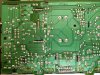
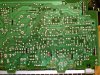
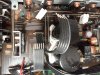
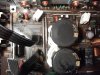
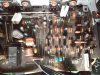
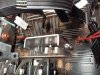
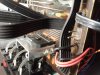
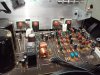
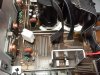
Ok, I don't see any physical damage to any of the components. I don't see any burnt marks on the bottom or top of the board or any cracks in the solder.
I posted more photos of the board top and bottom, and some side views so you can see.
I posted more photos of the board top and bottom, and some side views so you can see.
Attachments
-
 20150126_201730.jpg225.5 KB · Views: 491
 -
 20150126_201848.jpg252.4 KB · Views: 482
 -
 20150126_202201.jpg208.3 KB · Views: 461
 -
 20150126_202305.jpg175.2 KB · Views: 448
 -
 20150126_202351.jpg193.7 KB · Views: 472
 -
 20150126_202417.jpg180 KB · Views: 431
 -
 20150126_202546.jpg165.8 KB · Views: 494
 -
 20150126_202633.jpg202.9 KB · Views: 452
 -
 20150126_202804.jpg184.7 KB · Views: 571
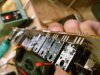
'Loose' doesn't sound good. Was the receiver dropped?
All the components are in there for a reason. They all do something.
I've been surprised a few times by finding more than one fuse in some receivers. You apparently found the one for the power line input. Some receivers have other fuses for the outputs to the speakers. But I sometimes find
an additionl power fuse elsewhere in the receiver. Not saying you have other fuses, just something to be on the lookout for.
This is the way I start with on unknown (no schematic) device that won't power-on: (WITH NO POWER TO THE EQUIPMENT)
1), Run continuity check on the power on-off switch, just to make sure the switch is alright.
2)) Visually inspect the boards for obvious physical damage, especially in the power supply.
3) Check the age of the big electrolytic capacitors in the power supply (How old is this receiver anyway?).
4) Run a continuity check on the large power semiconductors. (This is just a quick, easy to do check that's helpful to me in catastrophic (no power) failures.)
Semiconductors have some resistance between pins. Some resistances are so high that some ohmeters read it as a virtual 'open' circuit: but what you're looking for is an obvious semiconductor failure in the high-power
(and therefore high stress) semiconductors, primarily in the power sections of the equipment. You should read some resistance between the pins on these devices. If you read a direct short between any of the pins, you
have bad component. If you read an open circuit between any of the pins on a device, it should be considered suspect, until proven otherwise. Because you have no power-up: I'd start troubleshooting with the assumption
that you have an open-circuit someplace. And you need to find it.
Everybody has their own opinion on how to troubleshsoot. With no other opinions available right now, you'r getting my opinion.
Because we have no schematic, we don't know and therefore can't trace specific points in the circuits to determine where you're losing your expected voltages.
This method is a quick, static-type check I use, to attempt to quickly locate a damaged power component, in a circuit that I don't have any specific information about.
It may not help you here, but it's where I'd start.
All the components are in there for a reason. They all do something.
I've been surprised a few times by finding more than one fuse in some receivers. You apparently found the one for the power line input. Some receivers have other fuses for the outputs to the speakers. But I sometimes find
an additionl power fuse elsewhere in the receiver. Not saying you have other fuses, just something to be on the lookout for.
This is the way I start with on unknown (no schematic) device that won't power-on: (WITH NO POWER TO THE EQUIPMENT)
1), Run continuity check on the power on-off switch, just to make sure the switch is alright.
2)) Visually inspect the boards for obvious physical damage, especially in the power supply.
3) Check the age of the big electrolytic capacitors in the power supply (How old is this receiver anyway?).
4) Run a continuity check on the large power semiconductors. (This is just a quick, easy to do check that's helpful to me in catastrophic (no power) failures.)
Semiconductors have some resistance between pins. Some resistances are so high that some ohmeters read it as a virtual 'open' circuit: but what you're looking for is an obvious semiconductor failure in the high-power
(and therefore high stress) semiconductors, primarily in the power sections of the equipment. You should read some resistance between the pins on these devices. If you read a direct short between any of the pins, you
have bad component. If you read an open circuit between any of the pins on a device, it should be considered suspect, until proven otherwise. Because you have no power-up: I'd start troubleshooting with the assumption
that you have an open-circuit someplace. And you need to find it.
Everybody has their own opinion on how to troubleshsoot. With no other opinions available right now, you'r getting my opinion.
Because we have no schematic, we don't know and therefore can't trace specific points in the circuits to determine where you're losing your expected voltages.
This method is a quick, static-type check I use, to attempt to quickly locate a damaged power component, in a circuit that I don't have any specific information about.
It may not help you here, but it's where I'd start.
I'm checking this thread once in a while between my own work here.
I wanted to make you aware of one other thing while you're troubleshooting:
I can see that you're not shy about disconnectng the power semiconductors from heat sinks.
Be aware that the white goo, is thermally conductive silicone grease. It's there to transfer heat, so the semiconductor doesn't burn itself out during operation.
You NEED to buy some of it to replace it when you reconnect the devices to their heat sinks.
Also, depending on the deviice, some may be directly bolted to the heat sink, and some may have thin mica insulators, to electrically isolate the semiconductor from the heat sink, with or without nylon spaces between the
tabs on the devices from the bolts to the heat sinks. Pay attention if you see any of the nylon isolators or mica isolators on individual semiconductors between the heat sinks. If the device has isolation and you do not
replace the isolation, the semiconductor will directly short to the heat sink, and you'll blow the semiconductor. (and the receiver won't ever work becasue you won't know which devices need to be isolated, and which don't).
Watch what you're doing when you disassemble things inside your receiver.
I wanted to make you aware of one other thing while you're troubleshooting:
I can see that you're not shy about disconnectng the power semiconductors from heat sinks.
Be aware that the white goo, is thermally conductive silicone grease. It's there to transfer heat, so the semiconductor doesn't burn itself out during operation.
You NEED to buy some of it to replace it when you reconnect the devices to their heat sinks.
Also, depending on the deviice, some may be directly bolted to the heat sink, and some may have thin mica insulators, to electrically isolate the semiconductor from the heat sink, with or without nylon spaces between the
tabs on the devices from the bolts to the heat sinks. Pay attention if you see any of the nylon isolators or mica isolators on individual semiconductors between the heat sinks. If the device has isolation and you do not
replace the isolation, the semiconductor will directly short to the heat sink, and you'll blow the semiconductor. (and the receiver won't ever work becasue you won't know which devices need to be isolated, and which don't).
Watch what you're doing when you disassemble things inside your receiver.
It doesn't look as if someone dropped it. I bought it from a thrift store though, so maybe it was mishandled.
I thought maybe there were more fuses in this receiver also, but so far i only found that one on that small power board that is next to the relay that i thought was bad.
I dont see any other damages on the boards or see anything else that may need soldering. Do any of the semiconductors need to be removed in order for me to test them?
Yeah, when KrisBlueNZ was helping me fix another receiver, He taught me how to install the semiconductors with the mica insulators and i had bought me some extra thermal grease just incase.
The power switch has continuity, so thats working.
The receiver says 1996 on the back. The two large capacitors say 9611T on the top, Is.that the date?
I thought maybe there were more fuses in this receiver also, but so far i only found that one on that small power board that is next to the relay that i thought was bad.
I dont see any other damages on the boards or see anything else that may need soldering. Do any of the semiconductors need to be removed in order for me to test them?
Yeah, when KrisBlueNZ was helping me fix another receiver, He taught me how to install the semiconductors with the mica insulators and i had bought me some extra thermal grease just incase.
The power switch has continuity, so thats working.
The receiver says 1996 on the back. The two large capacitors say 9611T on the top, Is.that the date?
Yes, on the capacitors. 9611 is made in the year 1996, 11th week of manufacture. They're probably still good.
A more thorough check of the semiconductors would be made out of circuit. But I wouldn't do that unless I found an obvious bad one.
What I'm trying to do here, is give you a quick and dirty way to check for obvious failures that would account for no power to the receiver.
This isn't the best method, but without a schematic I was hoping you might be able to zero-in on an obvious component failure in the power-supply section. Specifically, a shorted/open component.
Truthfully. If you don't find anything obvious, troubleshooting the circuits to find the failure requires basic troubleshooting experience that it doesn't sound like you have.
It's tougher still for us out here to suggest things, because we can't see what you see. For instance: how did you determine that the receiver doesn't turn-on? Unless you have a light-up display or something that you
know is working. The receiver could be turning-on, and the output to the speakers could be blown. Without basic skills in knowing obvious things to look for, we're blind out here.
When you concentrated on the relay clicking, you could be missing other basic tell-tale signs that someone here would see, that you weren't aware you should be looking for.
I'm not trying to complain or discourage you. ALL of us started at some point where you're starting from now. What is causing us problems, is the lack of a schematic, to point you to for specific circuit/component checks.
We'll help whee we can here. But I want you to know the problems we have in trying to help.
A more thorough check of the semiconductors would be made out of circuit. But I wouldn't do that unless I found an obvious bad one.
What I'm trying to do here, is give you a quick and dirty way to check for obvious failures that would account for no power to the receiver.
This isn't the best method, but without a schematic I was hoping you might be able to zero-in on an obvious component failure in the power-supply section. Specifically, a shorted/open component.
Truthfully. If you don't find anything obvious, troubleshooting the circuits to find the failure requires basic troubleshooting experience that it doesn't sound like you have.
It's tougher still for us out here to suggest things, because we can't see what you see. For instance: how did you determine that the receiver doesn't turn-on? Unless you have a light-up display or something that you
know is working. The receiver could be turning-on, and the output to the speakers could be blown. Without basic skills in knowing obvious things to look for, we're blind out here.
When you concentrated on the relay clicking, you could be missing other basic tell-tale signs that someone here would see, that you weren't aware you should be looking for.
I'm not trying to complain or discourage you. ALL of us started at some point where you're starting from now. What is causing us problems, is the lack of a schematic, to point you to for specific circuit/component checks.
We'll help whee we can here. But I want you to know the problems we have in trying to help.
Well, none of the semiconductors tested bad or looked suspicious on the boards, no burnt marks either.
The receiver does not stay on, not even for a second. I even tried connecting a lamp to one of the switched outlets in back of the receiver to see if the lamp stays on when i power up the receiver, the receiver doesnt even stay on long enough to light it up, thats how quick it turns back off.
I checked the speaker outlets for any pieces of wire stuck that might be shorting it out and i made sure the volume is all the way down.
There is a service manual available to download online, but i cant find any apps to read it on my phone, i get an error saying its not a valid pdf file. Do you get the same error?
http://elektrotanya.com/yamaha_rx-v795a_rds_htr-5170.pdf/download.html
The receiver does not stay on, not even for a second. I even tried connecting a lamp to one of the switched outlets in back of the receiver to see if the lamp stays on when i power up the receiver, the receiver doesnt even stay on long enough to light it up, thats how quick it turns back off.
I checked the speaker outlets for any pieces of wire stuck that might be shorting it out and i made sure the volume is all the way down.
There is a service manual available to download online, but i cant find any apps to read it on my phone, i get an error saying its not a valid pdf file. Do you get the same error?
http://elektrotanya.com/yamaha_rx-v795a_rds_htr-5170.pdf/download.html
Similar threads
- Replies
- 1
- Views
- 297

- Replies
- 8
- Views
- 2K
- Replies
- 2
- Views
- 589

- Replies
- 9
- Views
- 2K
- Replies
- 11
- Views
- 2K