I thought it would be helpful to show some examples of components and circuits, along with their V-I graphs, so I simulated four of them using LTSpice. Here is the schematic:
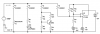
The "RAMP" generator at the left generates a linear voltage ramp from 0V to +10V over the simulation period of 10 seconds. This voltage is applied to four separate circuits through current shunts I1~4, and the currents through these shunts are graphed below.
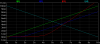
These traces show the V-I (voltage vs. current) behaviour for the four circuits.
The green trace shows the current through I1, which feeds the resistor named "RESISTOR". It has a resistance of 1 kΩ so as the voltage rises from 0V to +10V, the current rises from 0 mA to +10 mA.
The green trace indicates an ohmic component, because the V-I (voltage vs. current) graph trace (a) is perfectly straight for its entire length, (b) is angled between 0° and 90°, and (c) intersects the origin (the (0,0) point) of the graph, i.e. when V=0, I=0.
The green trace is the only example here that can be said to have a simple resistance.
The blue trace shows the current through an LED with a 1 kΩ series resistor. As you can see, the current doesn't really start taking off until the voltage reaches about 1.7V, when the LED's forward voltage is reached and it starts to conduct. Beyond that, the trace appears to be straight.
The blue trace is not straight for its whole length, so the circuit (LED plus series resistor) is not a simple resistance. The main angled part is close enough to straight that it's meaningful to take a section of it and calculate the
incremental resistance. This is calculated as the
change in voltage divided by the
change in current for a section of the graph.
For example, take the rightmost division of the graph, where the voltage increases from +9V to +10V. The change in voltage is 1V. The current increases from 7.183 mA to 8.1721 mA, which is a change of 0.9891 mA. Therefore the incremental resistance at that point in the graph is 1011Ω. 1000Ω comes from the series resistor and 11Ω is the incremental resistance of the LED at an operating current of around 7~8 mA.
The red trace shows the V-I relationship for a simple circuit using a transistor as a common emitter amplifier. This curve is typical of a more complicated circuit: very little current flows until the voltage reaches a certain point, then the current starts to increase. In many circuits the increase will not be nice and linear like it is here.
The red trace's incremental resistance can also be calculated. In the 9~10V section of the graph, the current changes from 9.774 mA to 11.861 mA, an increase of 2.087 mA, so the incremental resistance of the circuit is 479Ω in that portion of the graph. It comes from the base circuit (about 11,660Ω) in parallel with the collector circuit (about 500Ω, mostly in R5, 470Ω).
The light blue trace shows the V-I relationship for a negative resistance circuit built with an op-amp, U1. This circuit is specifically designed to provide a voltage vs. current relationship that "goes the other way" - increasing the voltage at the circuit's connection point actually decreases the current it draws!
That circuit provides a carefully controlled, well-defined, linear negative resistance over a useful range of voltages. Negative resistance also occurs over certain parts of the V-I curve in other components such as gas-filled tubes, but in those cases it is not as clean, linear and predictable.
These traces only show part of the big picture. They show the circuits' behaviour for positive voltages only, and they don't show how the V-I relationship can be time-dependent, which is an important characteristic of capacitors and inductors, and dependent on other factors, such as the state of the component or circuit. The test setup simply runs a ramp voltage into each circuit and graphs how the current varies as a result.


