This should be easy, replace a switch on a bike headlight

Artmakersworlds

Jul 9, 2024
10
Joined
Jul 9, 2024
Messages
10
Hi all,
So I have a motorized bike, and a real cool retro looking headlight on it. This year put in new batteries, turned it on and in a nano second it went out and will NOT go back on. No clue why, only guessing, it's got 7 leds, my daughter tells me led lights have a chip and maybe that went bad. Designed to fail sort of thing. So put this aside.

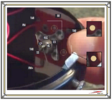
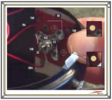
Went to ebay found one JUST like it only with what I thought was a better switch. Well it came and this switch is crap. It's darn near impossible to budge, had to fiddle with it from the inside with the light open and I can get it on but it is way too easy to flick back off. NO good on a bike. Crappy switch. I'll see if I can upload a shot. Also for the seller's use I did put together a youtube video. Since this is my very first time here don't want to link that until someone tells me it's ok. But I do have a screenshot off that video showing the switch.
The seller refunded my price so... maybe? I can fix this blasted thing???

So.... question here, can I get that dead switch out, just buy a toggle switch, I do have a soldering gun and electric solder so that's not a problem. But this is not my thing, best to ask the pros for tips first.
 

Attachments

  • Screen Shot 2024-07-01 at 12.46.30 PM.png
    Screen Shot 2024-07-01 at 12.46.30 PM.png
    207.6 KB · Views: 8

Harald Kapp

Moderator
Moderator
Nov 17, 2011
14,271
Joined
Nov 17, 2011
Messages
14,271
can I get that dead switch out,
Depends on your mechanical skills.
just buy a toggle switch,
Is this really a switch or a momentary pushbutton of sorts?
A switch will have two different static positions: on and off. Easy to replace by a toggle switch.
A momentary pushbutton will bo on only as long as you press it. The on/off action would be in a chip on the board. But also these are redily available.

In any case you need to consider that most (inexpensive) switches or pushbuttons are made for indoor use, not outdoor use. They are not waterproof and will corrode rather quckly in an outdoor environment when the get wet. So look for waterproof switches, often sold as marine equipment at fantasy prizes...
 

73's de Edd

Aug 21, 2015
3,730
Joined
Aug 21, 2015
Messages
3,730
Sir Artmakersworld . . . . . . . .Esssssssssssssssssss

Lets analyze the situation initially like Sir Harald suggested, as per the possibility that the complexity of the unknown electronics that is being powered might be dependent on the use of a momentary contact push button switch. Whereupon, it shorts out just for the instant of its being pressed upon and then the electronics it feeds into . . . then responds by electronically switching on . . . . .until such time the switch is pressed again , whereupon the circuit power stops.
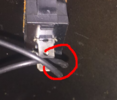
By virtue of your supplying the photo of the original unit we are now actually able to observe its manner of operation.

BLOW UP AND THE USE OF SOME DIGITAL ENHANCEMENT UPON THAT SUPPLIED IMAGE . . . . . WITH ADJUNCT MARK-UPS . . . .

1720625559631.png


What is seen here is the mechanical design and technical acumen that I initially encountered back in the 1920-30's . . . . .in Amerikanski production with the Japonie and the other far easterners then replicating it in the 40's, all the way up to ?. WHAT ! It's STILL here !

Let's initially examine that blowup, with its initial focus / definition limitations, now having been improved upon a byte.
What will help is a little preparation . . .

PREPARATION . . .

Move on in to about a foot from your monitor . . . . directing central attention to the photo proper.
Tilt your head back about 25 degrees and start closing your eyelids to the point where vision is being just possible between inter meshed eyelid hairs.
Start on a transcendental mantra / chant of OOOMMMMMMMMMMMMMMMMMMMMMMMMMMMM and initially starting downscale in frequency and gradually work upscale in frequency, and take mental note of points of resonance peaks . . . . . end up in using the one of maximum cranial resonance, and lock on it .
Meanwhile, start wildly flailing both arms overhead to get maximum blood flow coming down and into your upper torsal locus.
At this point, your intensity of concentration and visual acuity should be super enhanced to the state of making out more finite detail of the, two brass button contacts of the switch.
Failing that . . . . . ¡ not to worry ! . . . . . as I have ALSO placed minimally . . . content invasive . . . circles around them and further enhanced them in two corresponding inserts !

BREAKDOWN OF SWITCH CONSTRUCTION . . . . .

The basic switch proper blank seems to be using red phenolic or bakelite sheet with its front half of it being contoured to the arc of the light case metal shell.
4 mounting tabs are being associated with that metal shell, of which you can see 3 of them visible as TABs that get folded into slot insets formed into the red p/or/b sheet.

THE CONNECTING RED WIRES . . . . .

I have assigned them as . . .what else . . . RW . . . . Red Wire and RW+ Red Wire Plus . . . .because you can see 1/2 of a brass connector associated with it . . . but only the wire can be seen on the other RW one.
I suspicion the RW has a like connector just at the bend around the phenolic edge and goes to the right to an oxidized hollow brass rivet and it then travels across and connects to the closest brass button contact at the top.
I suspicion that the RW+ also goes to another un viewable, like hollow brass rivet and it then angles up diagonally to connect to the lower brass button switch contact.
So . . .that defines the two switch contacts.

PUSH BUTTON SWITCH MECHANICS . . . . .

Did 'ja ever see a Yankee brand push drill or screwdriver, whereupon a pushing action is converted to a rotary action ?

VOILA !

1720627876991.png

Well, switch wise utilization, that's where a rectangular sheet metal blank is twisted and formed into a spiral and mates into and travels within a just fitting rectangular slot to create a rotary action.

HEREWITH IS A MECHANICAL TEAR DOWN OF THE TOP PHOTOS ELECTRO-MECHANICS. . . . . . photo repeat below

Parts defined . . .
S
piral Shaft passes all the way to the front where the push action originates . . .only you can see that . . .we mere mortals are clueless on those more exacting finite details.
Unfolded C
otter Pin holds all of this strung together mechanical mass from flying all apart.
Next is End Cap which has frontal 1/2 of Compression Spring hidden and seated within it.
Lastly is being Rotary Contact Cups

Electro-mechanical Action . . . . .Walk Thru

As it is now viewed, the RCC has its closest two contacts just resting atop the insulated phenolic sheet.
When a pushing action of the switch is initiated RCC starts rotating . . . and lets figuratively assume to the left . . . . and the travel rotation end is such that the two closest cup contacts are then resting atop the two brass button switch contacts at push switch end travel. They have shorted together those two brass button contacts and the switch is ON.
The next switch pressing has the RCC contacts rotating to the left to another non contacting position and the switch is OFF again.
Keep that up and you will have eventually had all of the contact cups rotating thru all positions along with a rotating lateral rubbing action, which is creating self cleaning of contact surfaces . . .that's good !.

That's being the mechanical operationality . . . . .
NOW the one thing that you want to inspect, is if that RCC portion is sequentially rotating and making all those mini partial rotations as you push each time . . and fully check for 3 total cycles to be sure of no erratic intermittencies.
If the rotational mechanics proves to be good and reliable, that switch should now easily be repairable.


1720628483756.png

Thaaaaaaasssit . . . .

I now wait to hear about your testing and will pass on to you, further tutelage on connectivity integrity and repair procedure

Now . . . . . .wheres my pops corns and cole drank . . . . . . I'ms . . . . . HONGRY !

EatingPopcorn.jpg


73's de Edd . . . . .

.
 

Attachments

  • 1720628443005.png
    1720628443005.png
    77.3 KB · Views: 2
Last edited:

Artmakersworlds

Jul 9, 2024
10
Joined
Jul 9, 2024
Messages
10
OMG... you are cracking me up dude! lol. Dang, first I thought you gave me a crash course in electronics, then I started reading... hahahaha.

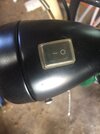
So... lets try this. I am posting photos of my original light. It has a push button on top, push once for on, twice gives you a flashing light, third time (on and off each time) is off. Odd but it's worked fine for a few years now. BUT maybe this one is easier to fix? Then again I'm not sure it's the switch in this case. Could be that led chip thing. Then, since no one said I couldn't I will post the video of the light I KNOW will at least turn on but the switch is crap. Mind you this movie was designed to get my money back, but it should be good enough to see the switch in action.

light in action. In the video I say I have to open it and fiddle with it. My husband worked it and got the switch to move, BUT it is so loose that just shaking the light in my hand it goes out. NOT good on a vibrating bike. BTW only about the first minute is about the light, the rest is my rant about ebay, just ignore it. I keep thinking I only see two wires. Buy a toggle switch, solder the wires in place. Yea it won't be "water proof." Not like I do much riding in the rain. I can always wipe it dry afterwords. Not worried about how "waterproof" it is.
 

Attachments

  • IMG_2183.JPG
    IMG_2183.JPG
    197.1 KB · Views: 6
  • IMG_2184.JPG
    IMG_2184.JPG
    204.5 KB · Views: 6

Harald Kapp

Moderator
Moderator
Nov 17, 2011
14,271
Joined
Nov 17, 2011
Messages
14,271
This looks like a pretty standard "rocker switch". Easy to get in various sizes and formats, see e.g. here. Just get one that fits the opening in your lamp's case.
Not worried about how "waterproof" it is.
Waterproofing is obviously achieved by the elastic plastic cover on top of the switch.
 

Artmakersworlds

Jul 9, 2024
10
Joined
Jul 9, 2024
Messages
10
Ok, I think I'll grab one of these, ONE of my two lights this might fit on. I can always cut the hole bigger if need be, or even fill it if need be with some of that liquid metal glue. For a few bucks it's worth a shot.

This thing. toggle switch
 

Harald Kapp

Moderator
Moderator
Nov 17, 2011
14,271
Joined
Nov 17, 2011
Messages
14,271
That one is definitely not waterproof and the sealing dome that is present on your lamp won't fit over this switch. I recommend a rocker switch like e.g. one of these.
 

Artmakersworlds

Jul 9, 2024
10
Joined
Jul 9, 2024
Messages
10
I'm not too concerned about the waterproof thing. Already ordered the one I posted, I'm thinking about testing it on the light on my bike, the one that flicked on then out and won't start again. At least rule out if it's a chip or just the switch. If that one is NG then I'll try the one I just got. Go from there. I'll post an update once the thing comes.
 

Artmakersworlds

Jul 9, 2024
10
Joined
Jul 9, 2024
Messages
10
OOOOHHHHH? Ok, I'll try that. Gonna wait until my switch comes and fix the light I have on the table, and if that works I'll swap them out and see about fixing the old one. Be nice to have a back up.
 

73's de Edd

Aug 21, 2015
3,730
Joined
Aug 21, 2015
Messages
3,730
Sir Artmakersworld . . . . . . . .Esssssssssssssssssss

My revelation attempts are being only as good as your initial supplications content and feedback.
This time around . . . in relating to the original headlamp . . . initially.
The top down headlamp shot does reveal a nice, thick clear molded vinyl cover.
That switch initially appears to be a common ROCKER SWITCH and is having its two halves marked with the on-off symbols and using the second photo, it only has two connections, so that would define it as a Single Pole Single Throw electrical category. Pressing down on the high side rocks it down and transitions between its on /off states, each time.
THEN . . . I look at your unit again . . . .HEY! . . . . . . both sides of YOUR switch are being up equally level.
So o o o o o o o . . . .it looks like your level bar just pushes straight down and has compression spring return to bring it back up as it is released. The symbolization is now relating to its dual on and off functionality.
In actuality, its momentary contact action connects to related digital/logic/power switching circuitry to engage sequential multi functions/effects.
On that testing of the existing switch . . . . . MY mindset . . . . . would NOT be tracking down , cutting and baring the ends a length of hook up wire !
Instead, I'd be reaching for the closest chromed or nickel plated nail clippers, envelope opener, pocket knife blade, tweezers, etc. and jumper across that switches exposed terminals. There should then be light emanating in its sequenced different modes at each shorting.
Should this not work . . . . move to the battery holder to analyze.

HERE ARE MY FINDINGS . . . . .

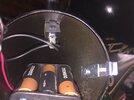
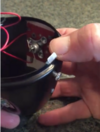
Photo 2 reveals the holder and its installed 3 cells of the batt pack.The far right cell reveals that the "copper" top stripes are on the + end of the cell.
The mid cell confirms that these are AA size vice . . .possibly . . . AAA. . . . and its dating also tells us that these are FRESH!
BARELY visible . . . at left front corner of the holder is a splayed out hollow rivet which is associated with connecting into the red wire of the red and black pair shown at the left.
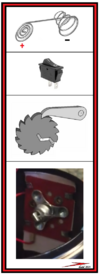
Refer to the top photo reference and see the formed springed contact jumper which I am expecting to be installed down at the - end of the left cell . It will be using its compression spring end under it, while the spring jumping wire is spanning over to its flat spiral contact which will mate with the + end of the center cell.
Come to the front to the center cell + contact and another like spring jumper connects to the far right cells + connection.
3rd rear cell uses another splayed hollow rivet to connect into the black wire.
Confirm if this checks out on the batt holder.
Caveat . . . . .
Watch out for that right half tapered compression spring in the top illustration . . . as its right cone can make a sloped diagonal positional transition and mess wit' 'cher MIND ! Its being an opti-ca-ful collusion !

EUREKA . . . . . AN OBSERVATION
Observe photo 2 of the battery holder, at its absolute lower left frontal corner.
This unit has been in HOT environs and had this prior installed cell . . . or more of them . . . rupture and let its alkaline electrolyte fill " weep and creep " .
As can be seen, it was being long and severe acting enough to have had the alkali react with the nickel plated brass and eat away and leave blobs of blue green CuSo4 .
Confirm if a clear hardened layer of insulative alkalinic crud has formed on the other sides connections. Check all the other cells connections for the same probability

Let's now switch to the . . . . other

OLDE TIMEY SWITCH . . . . . THAT YOU FOUND ON THE "GIFTED" BIKE HEADLAMP

How in the wurld dids you 'spects me to knose that switch had a lever knob on its ?
Untils I gots yer noo pick-choors !
I captured the best to images from your video and that now reveals that no spiral
shaft is needed as you have a lever knob and that directly produces rotary action.
But it DOES look like that whole stacked cluster is loose and not being tight enough.
When you pressed in on the end cap, some degree of functionality was then possible.
The better photo did reveal that a slanted parallax error made the first photo appear to have 4 rotary contact cups. My new photo is confirming only 3 contact cups, being rotationally distributed at 120 degrees.
PLUS you can see the 2 mating brass "super rivets" contacts mounted on the phenolic blank, in a bit different positions, than originally perceived. You can now also see that they have large holes in their center, that the cup contacts fall into. As well, there are being additional intermediate spaced out holes drilled around the phenolic disc as stop divots. As you rotate the cup contact triage, the cups consecutively fall down into 3 divot sets, thus giving a definite indexing and feel as to where they stop and fall down into holes..
Since your lever knob is producing shaft rotation, I'm sort of expecting there to be a ratcheting gear under that knob to move a defined distance as you rotate the knob. See the illustration of the ratcheting gear and figure the crank as being your lever knob And the the gear slant distance determines the degree of rotation until a cup rotates, stops and falls down into indexing divots. With 3 contact cups (on) and 3 dead spaces (offs) a 6 tooth ratcheting gear would be needed.
Should you take out that cotter pin and let the compressed parts come apart, you likely will see the problem section being associated with the knob and any now unviewable parts inwards to the rear viewable parts that we can view, of which, all of that back section, seems in order.
I think that you should pull that cotter pin and slip all apart and investigate.

PICK-CHOORS . . . . .

1720806266143.png
Thaaaaaasssssit . . . . .

73's de Edd . . . . . . . . . .

.
 
Last edited:

Artmakersworlds

Jul 9, 2024
10
Joined
Jul 9, 2024
Messages
10
Sir Artmakersworld . . . . . . . .Esssssssssssssssssss

My revelation attempts are being only as good as your initial supplications content and feedback.
This time around . . . in relating to the original headlamp . . . initially.
The top down headlamp shot does reveal a nice, thick clear molded vinyl cover.
That switch initially appears to be a common ROCKER SWITCH and is having its two halves marked with the on-off symbols and using the second photo, it only has two connections, so that would define it as a Single Pole Single Throw electrical category. Pressing down on the high side rocks it down and transitions between its on /off states, each time.
THEN . . . I look at your unit again . . . .HEY! . . . . . . both sides of YOUR switch are being up equally level.
So o o o o o o o . . . .it looks like your level bar just pushes straight down and has compression spring return to bring it back up as it is released. The symbolization is now relating to its dual on and off functionality.
In actuality, its momentary contact action connects to related digital/logic/power switching circuitry to engage sequential multi functions/effects.
On that testing of the existing switch . . . . . MY mindset . . . . . would NOT be tracking down , cutting and baring the ends a length of hook up wire !
Instead, I'd be reaching for the closest chromed or nickel plated nail clippers, envelope opener, pocket knife blade, tweezers, etc. and jumper across that switches exposed terminals. There should then be light emanating in its sequenced different modes at each shorting.
Should this not work . . . . move to the battery holder to analyze.

HERE ARE MY FINDINGS . . . . .

Photo 2 reveals the holder and its installed 3 cells of the batt pack.The far right cell reveals that the "copper" top stripes are on the + end of the cell.
The mid cell confirms that these are AA size vice . . .possibly . . . AAA. . . . and its dating also tells us that these are FRESH!
BARELY visible . . . at left front corner of the holder is a splayed out hollow rivet which is associated with connecting into the red wire of the red and black pair shown at the left.
Refer to the top photo reference and see the formed springed contact jumper which I am expecting to be installed down at the - end of the left cell . It will be using its compression spring end under it, while the spring jumping wire is spanning over to its flat spiral contact which will mate with the + end of the center cell.
Come to the front to the center cell + contact and another like spring jumper connects to the far right cells + connection.
3rd rear cell uses another splayed hollow rivet to connect into the black wire.
Confirm if this checks out on the batt holder.
Caveat . . . . .
Watch out for that right half tapered compression spring in the top illustration . . . as its right cone can make a sloped diagonal positional transition and mess wit' 'cher MIND ! Its being an opti-ca-ful collusion !

EUREKA . . . . . AN OBSERVATION
Observe photo 2 of the battery holder, at its absolute lower left frontal corner.
This unit has been in HOT environs and had this prior installed cell . . . or more of them . . . rupture and let its alkaline electrolyte fill " weep and creep " .
As can be seen, it was being long and severe acting enough to have had the alkali react with the nickel plated brass and eat away and leave blobs of blue green CuSo4 .
Confirm if a clear hardened layer of insulative alkalinic crud has formed on the other sides connections. Check all the other cells connections for the same probability

Let's now switch to the . . . . other

OLDE TIMEY SWITCH . . . . . THAT YOU FOUND ON THE "GIFTED" BIKE HEADLAMP

How in the wurld dids you 'spects me to knose that switch had a lever knob on its ?
Untils I gots yer noo pick-choors !
I captured the best to images from your video and that now reveals that no spiral
shaft is needed as you have a lever knob and that directly produces rotary action.
But it DOES look like that whole stacked cluster is loose and not being tight enough.
When you pressed in on the end cap, some degree of functionality was then possible.
The better photo did reveal that a slanted parallax error made the first photo appear to have 4 rotary contact cups. My new photo is confirming only 3 contact cups, being rotationally distributed at 120 degrees.
PLUS you can see the 2 mating brass "super rivets" contacts mounted on the phenolic blank, in a bit different positions, than originally perceived. You can now also see that they have large holes in their center, that the cup contacts fall into. As well, there are being additional intermediate spaced out holes drilled around the phenolic disc as stop divots. As you rotate the cup contact triage, the cups consecutively fall down into 3 divot sets, thus giving a definite indexing and feel as to where they stop and fall down into holes..
Since your lever knob is producing shaft rotation, I'm sort of expecting there to be a ratcheting gear under that knob to move a defined distance as you rotate the knob. See the illustration of the ratcheting gear and figure the crank as being your lever knob And the the gear slant distance determines the degree of rotation until a cup rotates, stops and falls down into indexing divots. With 3 contact cups (on) and 3 dead spaces (offs) a 6 tooth ratcheting gear would be needed.
Should you take out that cotter pin and let the compressed parts come apart, you likely will see the problem section being associated with the knob and any now unviewable parts inwards to the rear viewable parts that we can view, of which, all of that back section, seems in order.
I think that you should pull that cotter pin and slip all apart and investigate.

PICK-CHOORS . . . . .

View attachment 64146
Thaaaaaasssssit . . . . .

73's de Edd . . . . . . . . . .

.
Sir Artmakersworld . . . . . . . .Esssssssssssssssssss

Lets analyze the situation initially like Sir Harald suggested, as per the possibility that the complexity of the unknown electronics that is being powered might be dependent on the use of a momentary contact push button switch. Whereupon, it shorts out just for the instant of its being pressed upon and then the electronics it feeds into . . . then responds by electronically switching on . . . . .until such time the switch is pressed again , whereupon the circuit power stops.
By virtue of your supplying the photo of the original unit we are now actually able to observe its manner of operation.

BLOW UP AND THE USE OF SOME DIGITAL ENHANCEMENT UPON THAT SUPPLIED IMAGE . . . . . WITH ADJUNCT MARK-UPS . . . .

View attachment 64131


What is seen here is the mechanical design and technical acumen that I initially encountered back in the 1920-30's . . . . .in Amerikanski production with the Japonie and the other far easterners then replicating it in the 40's, all the way up to ?. WHAT ! It's STILL here !

Let's initially examine that blowup, with its initial focus / definition limitations, now having been improved upon a byte.
What will help is a little preparation . . .

PREPARATION . . .

Move on in to about a foot from your monitor . . . . directing central attention to the photo proper.
Tilt your head back about 25 degrees and start closing your eyelids to the point where vision is being just possible between inter meshed eyelid hairs.
Start on a transcendental mantra / chant of OOOMMMMMMMMMMMMMMMMMMMMMMMMMMMM and initially starting downscale in frequency and gradually work upscale in frequency, and take mental note of points of resonance peaks . . . . . end up in using the one of maximum cranial resonance, and lock on it .
Meanwhile, start wildly flailing both arms overhead to get maximum blood flow coming down and into your upper torsal locus.
At this point, your intensity of concentration and visual acuity should be super enhanced to the state of making out more finite detail of the, two brass button contacts of the switch.
Failing that . . . . . ¡ not to worry ! . . . . . as I have ALSO placed minimally . . . content invasive . . . circles around them and further enhanced them in two corresponding inserts !

BREAKDOWN OF SWITCH CONSTRUCTION . . . . .

The basic switch proper blank seems to be using red phenolic or bakelite sheet with its front half of it being contoured to the arc of the light case metal shell.
4 mounting tabs are being associated with that metal shell, of which you can see 3 of them visible as TABs that get folded into slot insets formed into the red p/or/b sheet.

THE CONNECTING RED WIRES . . . . .

I have assigned them as . . .what else . . . RW . . . . Red Wire and RW+ Red Wire Plus . . . .because you can see 1/2 of a brass connector associated with it . . . but only the wire can be seen on the other RW one.
I suspicion the RW has a like connector just at the bend around the phenolic edge and goes to the right to an oxidized hollow brass rivet and it then travels across and connects to the closest brass button contact at the top.
I suspicion that the RW+ also goes to another un viewable, like hollow brass rivet and it then angles up diagonally to connect to the lower brass button switch contact.
So . . .that defines the two switch contacts.

PUSH BUTTON SWITCH MECHANICS . . . . .

Did 'ja ever see a Yankee brand push drill or screwdriver, whereupon a pushing action is converted to a rotary action ?

VOILA !

View attachment 64132

Well, switch wise utilization, that's where a rectangular sheet metal blank is twisted and formed into a spiral and mates into and travels within a just fitting rectangular slot to create a rotary action.

HEREWITH IS A MECHANICAL TEAR DOWN OF THE TOP PHOTOS ELECTRO-MECHANICS. . . . . . photo repeat below

Parts defined . . .
S
piral Shaft passes all the way to the front where the push action originates . . .only you can see that . . .we mere mortals are clueless on those more exacting finite details.
Unfolded C
otter Pin holds all of this strung together mechanical mass from flying all apart.
Next is End Cap which has frontal 1/2 of Compression Spring hidden and seated within it.
Lastly is being Rotary Contact Cups

Electro-mechanical Action . . . . .Walk Thru

As it is now viewed, the RCC has its closest two contacts just resting atop the insulated phenolic sheet.
When a pushing action of the switch is initiated RCC starts rotating . . . and lets figuratively assume to the left . . . . and the travel rotation end is such that the two closest cup contacts are then resting atop the two brass button switch contacts at push switch end travel. They have shorted together those two brass button contacts and the switch is ON.
The next switch pressing has the RCC contacts rotating to the left to another non contacting position and the switch is OFF again.
Keep that up and you will have eventually had all of the contact cups rotating thru all positions along with a rotating lateral rubbing action, which is creating self cleaning of contact surfaces . . .that's good !.

That's being the mechanical operationality . . . . .
NOW the one thing that you want to inspect, is if that RCC portion is sequentially rotating and making all those mini partial rotations as you push each time . . and fully check for 3 total cycles to be sure of no erratic intermittencies.
If the rotational mechanics proves to be good and reliable, that switch should now easily be repairable.


View attachment 64134

Thaaaaaaasssit . . . .

I now wait to hear about your testing and will pass on to you, further tutelage on connectivity integrity and repair procedure

Now . . . . . .wheres my pops corns and cole drank . . . . . . I'ms . . . . . HONGRY !

EatingPopcorn.jpg


73's de Edd . . . . .

.
OH WOW...... My friend you do write a long winded and someone incomprehensible at times post.
BUT...... haha... That light that was on my bike? IT IS FIXED!!!!!!!!!!!!! So simple too. All ya had to say was check close for crud. Sure enough, just a tiny bit of blue crud was on one of the battery spots. Impossible to really see until I took the thing off and looked under a good light but yup, crud. De crudified and it works GREAT!

Here is a short video just for you as a
THANK YOU

Next, I still want to fix the new one, calling that from now on light 2, thought a better video might help. Mind you all I am NOT going to try and "fix" the switch on it now. That is pure crap. Waiting on the simple toggle switch which I'm sure will be fine, I'll let you all know when that switch comes, be nice to have a back up light I know works in storage. These made in China things won't last forever. (or even a decade.) So it will be nice to have a back up ready.
Anyway here, better view of this darn switch. (And WHY didn't THEY just put on a simple on off toggle? Who knows.)
Light 2

One last silly question, BOTH of these seem to have the same style bulbs. 7 LED's. WHY does the older one take 3 aa batteries, but the new one only needs 2?
 

Delta Prime

Jul 29, 2020
2,987
Joined
Jul 29, 2020
Messages
2,987
One last silly question, BOTH of these seem to have the same style bulbs. 7 LED's. WHY does the older one take 3 aa batteries, but the new one only needs 2?

Model number or link to the older one, the same with the new one.
With that information I can answer your question.
 

73's de Edd

Aug 21, 2015
3,730
Joined
Aug 21, 2015
Messages
3,730
Model number or link to the older one, the same with the new one.
With that information I can answer your question.

WHUT ? ? ? . . . . . . WHUT ? . . . . .WHUT ! ! !
I'll just bet that you are just going to get OOOOODLES and OOOOODLES of critical /useful technical information, IF EVER, even offered from those "MARKETEERS"
I'm seeing a custom designed IC being used in your older light unit and back in that design era time frame 5V or the supplied nearby 4.5 or 3.3VDC was a workable supply for operating of that chip.
As for both of the headlamps . . . with some question of "ARTS" earlier statement of . . . .
WHY does the older one take 3 aa batteries, but the new one only needs 2?

Now am I not seeing 3 cells in the NEW headlamp and ? number of cells (2 ?) in the OLD unit ? ( Since I have never seen a photo of its IINSIDES .)
Relating to the actual WHITE LED's power, I also suspect there being a supplemental voltage boost circuit involved . . . . . since white light LEDs require up in the 3.0~3.3V starting/run threshold.
I would just be pulling out metering, that has,DC mid range milliampere to full amps current measuring capability.
And then, opening connection to be able to insert current metering in series with the supply line right at the LED cluster for ascertaining its current consumption.
 
Last edited:

Delta Prime

Jul 29, 2020
2,987
Joined
Jul 29, 2020
Messages
2,987
I'm seeing a custom designed IC being used in your older light unit
are any alpha numeric characters etched upon the IC .That would be the only way.
I have come across plenty of datasheets for designer IC
WHUT ? ? ? . . . . . . WHUT ? . . . . .WHUT ! ! !
Gesundheit ! ! !
I was trying to be helpful by requesting additional information about his query.
You see English is my third language so something must have got lost in translation.
 

Artmakersworlds

Jul 9, 2024
10
Joined
Jul 9, 2024
Messages
10
You guys are cracking me up here. Just so you know there are NO numbers of any kind to be found. Now possibly the chip itself MIGHT have something on it? I doubt it and honestly, these glorified cheap made in china flashlights are not worth that much time. And I may have mixed up which has what, light 1, (the old one on my bike I thought I needed to replace) has 3 batteries. Light 2 only uses 2. I did notice the round chip that is sandwiched between the battery pack and bulbs is also a different diameter in both lights. So MAYBE it just takes more power on one chip than the other??? I don't know, clearly I'm not an electronics person. (I paint darn fine images though.)

OR perhaps one will simply have power longer. And that won't be tested anytime soon.
 

Artmakersworlds

Jul 9, 2024
10
Joined
Jul 9, 2024
Messages
10
That's what was meant when I mentioned alphanumeric etching on the chip itself.

Me too... I'm using watercolors now...
Goodbye crayons.
View attachment 64148
Chip is real hard to get at. Battery pack is on with TEENY TINY little screws.... I MIGHT have a tiny screwdriver kit somewhere but no clue what happened to that. (Daughter might have it actually.) It's just not worth it. 17 buck light I actually got refunded because of this switch, so a 4.00 toggle switch might fix it? Cool.

Don't knock crayons. My art teacher in college showed me some AMAZING work all done with black crayon. Said he had a teacher tell him crayons are not true artistic tools. So he bought a box of fat black crayons and went to work. Boy he proved that teacher wrong.
 
Top