Math Severity as applied to Serious Electronics

Status
Not open for further replies.

Delta Prime

Jul 29, 2020
2,987
Joined
Jul 29, 2020
Messages
2,987
Still I continue on into the unknown future.
You as a wink in your father‘s eye, you were born,you were the only one in 500 trillion sperm to fertilize an egg and you were born. you beat everyone else. I’m sure you possess the resiliency to accomplish your goals. you’re giving me the blues. Enough with the negative alpha waves. Get to it. We’re here to help…. :cool:
 

John R Retired

Mar 13, 2022
155
Joined
Mar 13, 2022
Messages
155
You as a wink in your father‘s eye, you were born,you were the only one in 500 trillion sperm to fertilize an egg and you were born. you beat everyone else. I’m sure you possess the resiliency to accomplish your goals. you’re giving me the blues. Enough with the negative alpha waves. Get to it. We’re here to help…. :cool:
Isn't the future unknown?

What does that have to do with having the blues?

It's just an objective fact.

You sure are obsessed about sperm given some of your graphical posts like resistors as sperms going to an IC.
 

Delta Prime

Jul 29, 2020
2,987
Joined
Jul 29, 2020
Messages
2,987
You sure are obsessed about sperm given some of your graphical posts like resistors as sperms going to an IC.
I apologize if I offended you and your point has merit, I assure you that was purely a coincidence; but if you think about it, you have to start somewhere as I have done.
The road of life is paved with dead squirrels who could not make a decision.
It's just an objective fact
I’m on the fence with that one!
;)
1752213061410.png
 

John R Retired

Mar 13, 2022
155
Joined
Mar 13, 2022
Messages
155
Yes, yes and yes, and this community can help you with your homework! :)
What is the hierarchy of electronics jobs in a typical manf. company?
Let me guess---assembler, technician, engineer... Is that correct or are there more categories other than those 3 ?
Howabout NON-Manufacturing electronics companies?
What about "Research" maybe government funded? Is that what you do now?
What was your responsibities when you worked that job on mountain tops at age 16?
I'm just trying to get an overview picture of the electronics job landscape out there now.

I worked at an electro-mechanical company in the 80s-90s and did some electronics testing, (nothing difficult)
but was designated as the mechanical technician there working with mechanical engineers on plastic parts, sheet
metal and machined parts for QC compliance. Most of the jobs I had were with aircraft parts, all mechanical.

If it still existed, I would probably aim for starting a TV-Consumer electronics repair private business
but that's all gone now. I remember as a 19-20 something, going to the local TV repairman shop to see
if he had a particular component I needed for some project I was working on. Good memories there.

I've worked as an assembler and also set calibration in late 70s on super precision pots used in aerospace which only
required a screwdriver and monitoring a readout on a freq-voltage divider / wheatstone bridge unit while doing the adjustment.
That is about as far as I got with a Job in electronics. Later changed to mechanical aerospace because it was more $$$
and that is where I made a living.

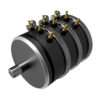
Precision Potentiometer. Some had 5 or more sections. Some were used on the Viking Mars probe. There was even
a Mars atmosphere chamber used to simulate the Mars environment in testing.

1752449799683.png
 
Last edited:

hevans1944

Hop - AC8NS
Jun 21, 2012
4,968
Joined
Jun 21, 2012
Messages
4,968
@John R Retired: I just "celebrated" my 81st birthday on June 25, 2025. I was forced to retire in December 2014 when the company that hired me to maintain and operate their particle accelerator decided they needed the floor space for office cubby-holes. This was after we had completed some very nice tasks for Homeland Security's Defense Threat Reduction Agency (DTRA). By then I was seventy years old, collecting social security income, and working part-time. I had been working full-time for this company since 1996, but that didn't make any difference. Ohio is one of those states where employees are hired and fired at will, no reason necessary. I got a nice letter saying it wasn't my fault, that I could apply for unemployment compensation while I sought new employment. Riiiight!

There would probably be a line around the block at Wally World for retired engineers who want to work as greeters, if only WalMart paid greeters the same pay as they would pay engineers. That's not gonna happen. So, I cashed out my company stock, converted my TIAA-CREF contributions from a previous job to a life annuity with a guaranteed term and right of survivorship for me and my wife, and settled into retirement. A few years later my wife and I moved to Venice FL. Well, she moved; I was allowed to follow. Three months after we got here I had another massive heart attack followed by several hours of open-heart surgery while doctors placed two coronary artery bypass grafts around my "widowmaker" heart artery.

After surviving that, I had to give up a part-time job at Staples, where I worked as a cashier for minimum wages, in order to recover from the surgery. That job eventually was too much for me, so I quit. The additional income was supposed to fund my amateur radio hobby, which I had resumed in 2013 after a forty-six year "off-the-air" hiatus because my non-renewable Novice license had expired. My wife also collects social security income, as does her mother who is living with us now. Among the three of us we manage to "get by" every month, but sooner or later one (or more) of us will die and Uncle Sam will quit sending automatic deposits. Life's a bitch. And then you die.

I don't know how old you are, John, but it sounds like you are not the type of person who sits on the front porch in a rocking chair waiting for the Grim Reaper to stop by. There is a wonderful institution that you should look into to keep abreast of things: public libraries. Get a library card and visit a local branch. Check out some self-help books. Join an amateur radio club and get a Technician license. Make friends with fellow hams. You may find one or two who you can go into business with, making niche market items that you can sell for profit. And, yes, learn as much as you can about microprocessors (µPs). The Arduino is a good place to start, but it is just a start. I like to use Microchip PIC processors in projects, and one version of these is available with a BASIC interpreter already built in. You will need to learn about "glue" logic that surrounds the µP as well as learning about all sorts of peripherals that allow the µP to interact with the real world. None of this requires any advanced math, but it does require some (a LOT) of study. I more or less abandoned discrete logic late in the 20th century in favor of doing logic in software instead of with hardware. This is not always possible, and it appears things have come full circle again: you can now purchase PICs that have programmable logic elements for fast, real-time, operations that exceed the computational speed of the µP.

Electronics will continue to advance and become more "integrated" as technology improves. You have to learn to "go with the flow" to keep up. The Internet is a huge help for those who know how to use it. But nothing beats a rainy Saturday, spent in a large public library, for the depth of knowledge that you can choose to explore.

I would not worry too much about the math right now. And I would not be looking to work for someone else either. You might have noticed that successful companies employ people who work for the owners. The owners may have started out working for others, but somewhere along the way they discovered that hiring other people to do the work is more profitable than doing it themselves. You need to discover this yourself. It helps to surround yourself with like-minded people, entrepreneurs and go-getters who are not willing to accept the status quo but who always seek something better. While at the library, look into some "self help" books for ideas. And don't be afraid to "work for free" to gain experience.

The employee who is satisfied to work a "nine to five" job is never going to rise above being just an employee. Spend some time, even if it's unpaid time, to learn more about the job. Then take that knowledge to your next gig. Maybe decide to become an entrepreneur and start your own company. Find something you enjoy doing and become an expert at it. Expect to fail. Expect to get up and try again. Wash, rinse, repeat until you succeed or die trying. Good luck.
 

John R Retired

Mar 13, 2022
155
Joined
Mar 13, 2022
Messages
155
@John R Retired: I just "celebrated" my 81st birthday on June 25, 2025. I was forced to retire in December 2014 when the company that hired me to maintain and operate their particle accelerator decided they needed the floor space for office cubby-holes. This was after we had completed some very nice tasks for Homeland Security's Defense Threat Reduction Agency (DTRA). By then I was seventy years old, collecting social security income, and working part-time. I had been working full-time for this company since 1996, but that didn't make any difference. Ohio is one of those states where employees are hired and fired at will, no reason necessary. I got a nice letter saying it wasn't my fault, that I could apply for unemployment compensation while I sought new employment. Riiiight!

There would probably be a line around the block at Wally World for retired engineers who want to work as greeters, if only WalMart paid greeters the same pay as they would pay engineers. That's not gonna happen. So, I cashed out my company stock, converted my TIAA-CREF contributions from a previous job to a life annuity with a guaranteed term and right of survivorship for me and my wife, and settled into retirement. A few years later my wife and I moved to Venice FL. Well, she moved; I was allowed to follow. Three months after we got here I had another massive heart attack followed by several hours of open-heart surgery while doctors placed two coronary artery bypass grafts around my "widowmaker" heart artery.

After surviving that, I had to give up a part-time job at Staples, where I worked as a cashier for minimum wages, in order to recover from the surgery. That job eventually was too much for me, so I quit. The additional income was supposed to fund my amateur radio hobby, which I had resumed in 2013 after a forty-six year "off-the-air" hiatus because my non-renewable Novice license had expired. My wife also collects social security income, as does her mother who is living with us now. Among the three of us we manage to "get by" every month, but sooner or later one (or more) of us will die and Uncle Sam will quit sending automatic deposits. Life's a bitch. And then you die.

I don't know how old you are, John, but it sounds like you are not the type of person who sits on the front porch in a rocking chair waiting for the Grim Reaper to stop by. There is a wonderful institution that you should look into to keep abreast of things: public libraries. Get a library card and visit a local branch. Check out some self-help books. Join an amateur radio club and get a Technician license. Make friends with fellow hams. You may find one or two who you can go into business with, making niche market items that you can sell for profit. And, yes, learn as much as you can about microprocessors (µPs). The Arduino is a good place to start, but it is just a start. I like to use Microchip PIC processors in projects, and one version of these is available with a BASIC interpreter already built in. You will need to learn about "glue" logic that surrounds the µP as well as learning about all sorts of peripherals that allow the µP to interact with the real world. None of this requires any advanced math, but it does require some (a LOT) of study. I more or less abandoned discrete logic late in the 20th century in favor of doing logic in software instead of with hardware. This is not always possible, and it appears things have come full circle again: you can now purchase PICs that have programmable logic elements for fast, real-time, operations that exceed the computational speed of the µP.

Electronics will continue to advance and become more "integrated" as technology improves. You have to learn to "go with the flow" to keep up. The Internet is a huge help for those who know how to use it. But nothing beats a rainy Saturday, spent in a large public library, for the depth of knowledge that you can choose to explore.

I would not worry too much about the math right now. And I would not be looking to work for someone else either. You might have noticed that successful companies employ people who work for the owners. The owners may have started out working for others, but somewhere along the way they discovered that hiring other people to do the work is more profitable than doing it themselves. You need to discover this yourself. It helps to surround yourself with like-minded people, entrepreneurs and go-getters who are not willing to accept the status quo but who always seek something better. While at the library, look into some "self help" books for ideas. And don't be afraid to "work for free" to gain experience.

The employee who is satisfied to work a "nine to five" job is never going to rise above being just an employee. Spend some time, even if it's unpaid time, to learn more about the job. Then take that knowledge to your next gig. Maybe decide to become an entrepreneur and start your own company. Find something you enjoy doing and become an expert at it. Expect to fail. Expect to get up and try again. Wash, rinse, repeat until you succeed or die trying. Good luck.
I keep reading the same story from other engineers that they are being treated like 2nd class workers who are a dime a dozen.
That does not make me interested in wanting to work for a company. Could it be that electronics has become too much of a generic proven "black box" "Integrated" (as you said) off the shelf technology, maybe with AI, where the necessary circuit patterns are already figured out, and engineers are a redundant and unncecessary cog in the creative-inventive wheel of industry? Throwaway circuit boards certainly have cut down the need for technicians.

That being said,"Programming Code" is a different job skill compared to electronics.
Ultimately I suppose, "electronics manufacturing" may be taken over by robots and programming left to humans.
With AI though, even programming could be taken out of the hands of humans. All that would be remaining is "Hobbyists"
and nostalgia electronics technicians working on vintage gear.
 

hevans1944

Hop - AC8NS
Jun 21, 2012
4,968
Joined
Jun 21, 2012
Messages
4,968
@John R Retired:

As a hobbyist, I used to find and repair "vintage" electronics beginning in the 1950s... as in radios and televisions with genuine vacuum tubes instead of impregnable solid-state electronics. I gave that up, shortly before graduating high school in 1963, because no one wanted to pay me to repair obsolete electronics when they could purchase "brand new" electronics for less than the cost to repair old and obsolete electronics. This is a paradigm that has existed forever: out with the old, in with the new. It doesn't have to make sense, except (maybe) economically.

I am not at all sure where this thread is going. You have received a lot of responses to your query, John, and I know that many have offered advice. Free advice is often worth less than you pay for it, so choose wisely your next steps, Grasshopper! And may you have Good Luck in your retirement!
 

hevans1944

Hop - AC8NS
Jun 21, 2012
4,968
Joined
Jun 21, 2012
Messages
4,968
All he did was "ONE PART" over and over again. He was happy & making decent money.
This "job" will soon be performed by the likes of Elon's Optimus humanoid robot.

I think the key to short-term (next ten years) employment is versatility. Specialization is for ants and bees. If you want to stay with electronics, I would consider making a "niche" item you can make inexpensively (maybe use foreign parts and labor) and rather quickly. The hard part is promoting it so potential buyers are aware of what you offer. Then, finally, you need to anticipate the possible need to manufacture at scale. This is where you bail, sell your "company" to someone who can manufacture, and move on to doing something else. After all, this is retirement joy not a nine-to-five drag. You are in charge of the rest of your life, whether you acknowledge that or not. Recommend that you become acquainted with Grok, xAI's version of artificial intelligence, and then you can ignore the the rest. You might even get involved with "training" Grok-N, where N = 4.1 today but is growing by leaps and bounds (exponential increase in capability) and it may be Grok-99 44/100 pure intellect by the time you grok this message. If that happens, Imma gonna rename Grok's nickname from Grokamole to Ivory and see if it floats on water. :cool:
 

Zakholland441

Dec 17, 2025
3
Joined
Dec 17, 2025
Messages
3
I'm not holding my breath for a job even with any kind of a degree. Did you see my name? Have your heard of age discrimination?
Companies don't want a liability to deal with. Maybe a small company would deal with me, I doubt a large company would.
I don't even have the job experience in electronics except for Pro industry assembly and that was a few decades ago before
SMDs came into use. It was ICs then and solder machines mostly. Also as it has been said here, "ad Nauseum" most electronics
tech is replacing modules or boards and toss the malfunctioning board in the scrap barrel for gold plated parts to sell to the junkman.
I'm not 30 yrs old like you. Still sometimes am opportunity might come along out of the blue. Having an AS degree might be good
for my ego though. Making money in electronics at my age is a long shot with the technology & hardware in its current state.
Still I continue on into the unknown future.
Last year, I experienced something similar. Even though I possessed a valid old H-1B visa stamp and an I-797B, I still needed to leave the country and return in order to activate the new I-94. I took a quick vacation to Canada and returned the same day. A new I-94 based on the I-797B was issued by CBP. Just make sure you have all the documents and a clean status history. However, experiences do differ.
 

danadak

Feb 19, 2021
1,063
Joined
Feb 19, 2021
Messages
1,063
I more or less abandoned discrete logic late in the 20th century in favor of doing logic in software instead of with hardware. This is not always possible, and it appears things have come full circle again: you can now purchase PICs that have programmable logic elements for fast, real-time, operations that exceed the computational speed of the µP.

@hevans1944

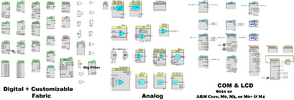
I left discrete logic as well as fast as I could. If you want parts that handle both analog and digital, and further have fabric
you can easily create your own components, take a look at these. Multiple copies of these components (a component in PSOC
land is an on chip resource).

1765970310873.png

Folks have done single chip oscilloscopes with them as an example of capability.


Each onchip component comes with a rich lib of f() calls to manipulate it, one generally does not
have to write drivers for them. The above multiple copies of each component in standard lib catalog
that is on each chip. Routable onchip between components and out to pins. Think a breadboard on
a chip complete with a pile of analog and digital components.

CY8CKIT-059, ~ $ 22, excellent starting board. Families, 5LP upper end and 6 (dual core) high end, 4 low end.

Another example of capability : https://www.edaboard.com/threads/test-bed-dds-and-wavedac-burst-tool.393572/

Users have done additional component onchip component design, like DDS, Cordic, 74HC.... that can be added to standard
lib of components shown above. One uses schematic capture and/or Verilog to create additional components.

Compiler and IDE (PSOC Creator) free.
 
Last edited:
Status
Not open for further replies.
Top