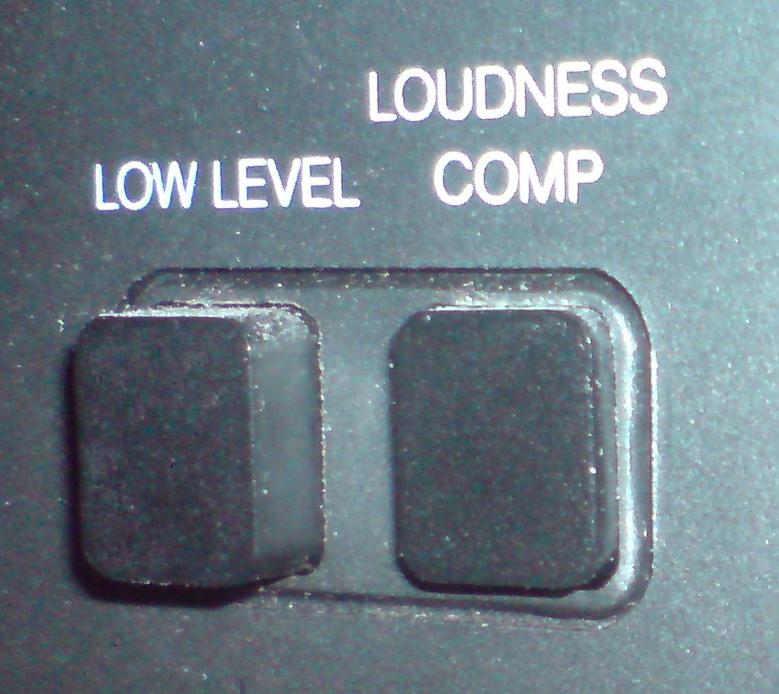
Can I use a digital potentiometer/remote volume kit in a vintage Pioneer LX-424 receiver?

bundyboy

Aug 6, 2025
17
Joined
Aug 6, 2025
Messages
17
Hello everyone,

I'm hoping to get some advice on a modification for my vintage Pioneer LX-424 receiver. I'd like to add a remote volume control, and I've found a kit on AliExpress that seems promising. It's described as a "Double 100K/50K remote volume digital potentiometer" and includes tone controls and an IR remote.

link: https://s.click.aliexpress.com/e/_opV1b0R

Before I buy it, I want to make sure it's compatible with my Pioneer LX-424 and to understand what the installation might involve. My main concern is whether this digital board can directly replace the original mechanical volume potentiometer in the receiver.

Here are my main questions:
  1. Does anyone know the specifications of the original volume pot in the Pioneer LX-424? Is it 50K or 100K, and does it have a loudness tap? How would I wire this new board if the original pot has a loudness function?

  2. Are there any other potential issues I should be aware of when integrating a modern digital controller into a vintage receiver like this? For example, could it introduce noise into the audio signal?
I have some experience with basic electronics and soldering, but I'm not an expert, so any guidance or advice would be greatly appreciated.

Thank you in advance for your help
 

poor mystic

Apr 8, 2011
1,106
Joined
Apr 8, 2011
Messages
1,106
Hi Bundyboy
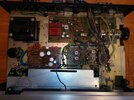
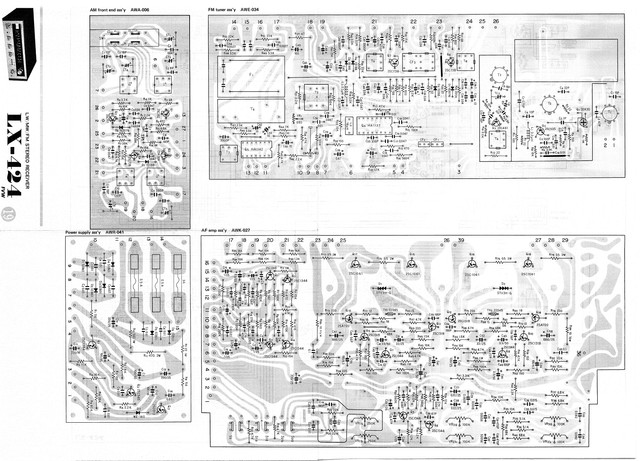
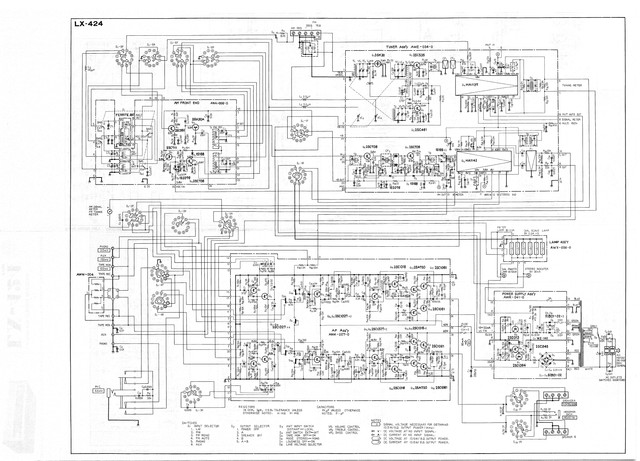
I'm sure we'll want to see any circuit diagrams you have for the amp. Also please post a good, clear photograph of the inner workings of the amp, showing the part you want to replace.
Would you please post those things for us.

(edited 10 minutes later)
... I just spent 5 minutes looking at the product you want to use and I don't see why not. A bit of a shame to make a mess though. Will the board fit, with room to breathe, in the available space?

... later edit
You need to disconnect 2 of the 3 wires going into the existing potentiometer. Then you can use a multimeter to measure the full resistance of the potentiometer. Can you do that please?
The circuit diagram is still desirable, and the good photo is still essential for us please. Unless it's the same as this:

:)
1755863217353.jpeg

umm, there's no such thing as a "loudness tap". Please explain what you mean!
 
Last edited:

poor mystic

Apr 8, 2011
1,106
Joined
Apr 8, 2011
Messages
1,106
:) thanks for the "like" Bundyboy
dot dot dot ... please post a photo of the part you need to replace.
 

Alec_t

Jul 7, 2015
3,817
Joined
Jul 7, 2015
Messages
3,817
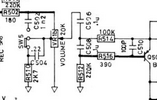
I'm not familiar with the Pioneer receiver, but my NAD 3020 amp's volume control (VR1) has a tapping which leads to the Loudness control switch (SW5). If your receiver's volume control similarly has a tapping then I doubt the linked digital volume/tone control module would be compatible as a direct replacement for the just the analogue pot.
However, if the digital module has in-built volume and tone controls then it should be possible to use it to bypass the existing volume and tone controls altogether. Unless that module specifies a loudness control function you would have to forego that feature.

1755869436829.png

Edit:
1) Looking at the pic of that digital module, it has one manual control. It is not clear how both tone and volume can be individually controlled.
2) Are you aware it would need a 12-15V supply?
3) Would that module fit in the receiver?
 
Last edited:

bundyboy

Aug 6, 2025
17
Joined
Aug 6, 2025
Messages
17
I'm not familiar with the Pioneer receiver, but my NAD 3020 amp's volume control (VR1) has a tapping which leads to the Loudness control switch (SW5). If your receiver's volume control similarly has a tapping then I doubt the linked digital volume/tone control module would be compatible as a direct replacement for the just the analogue pot.
However, if the digital module has in-built volume and tone controls then it should be possible to use it to bypass the existing volume and tone controls altogether. Unless that module specifies a loudness control function you would have to forego that feature.

View attachment 69257

Edit:
1) Looking at the pic of that digital module, it has one manual control. It is not clear how both tone and volume can be individually controlled.
2) Are you aware it would need a 12-15V supply?
3) Would that module fit in the receiver?
Hi,

thanks for the reply. hmm... I really dont know
 

Alec_t

Jul 7, 2015
3,817
Joined
Jul 7, 2015
Messages
3,817
According to your posted schematic (if I'm reading the fuzzy text correctly), each half of your volume control (VR1a,b) is 250k and has a tapping for the loudness control switch (S7a,b). Nothing in the write-up of your digital module suggests it has (or emulates) such tappings.
 

poor mystic

Apr 8, 2011
1,106
Joined
Apr 8, 2011
Messages
1,106
:) from what these experienced people are saying it sounds like you might need another approach.
So:
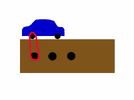
For the sake of cheek ;) what about an external robot arm - a re-purposed aero actuator - a semi-mechanical solution.
You can buy remote control toy cars very cheaply...srhdfgdfgh.png
 
Last edited:

bundyboy

Aug 6, 2025
17
Joined
Aug 6, 2025
Messages
17
:) from what these experienced people are saying it sounds like you might need another approach.
So:
For the sake of cheek ;) what about an external robot arm - a re-purposed aero actuator - a semi-mechanical solution.
You can buy remote control toy cars very cheaply...View attachment 69258
I honestly don't like that option, I was thinking of putting everything in the receiver housing :cool:
 

poor mystic

Apr 8, 2011
1,106
Joined
Apr 8, 2011
Messages
1,106
:) from what these experienced people are saying it sounds like you might need another approach.
So
For the sake of cheek ;) what about an external robot arm - a re-purposed aero actuator - a semi-mechanical solution.
You can buy remote control toy cars very cheaply...
 

poor mystic

Apr 8, 2011
1,106
Joined
Apr 8, 2011
Messages
1,106
Yeh that was tongue-in-cheek, but I personally do like the idea of a remote-controlled Button Pushing Machine. For me, BPM control has many obvious, real advantages over modifying good equipment that might be damaged in the modification process.
 
Top