It could be your charger has current limit, if decently designed.
If you use R you rely on charger design for safety and to prevent LED burnout.
And if charger puts out more V than you have LED current changing as well,
eg. not regulated.
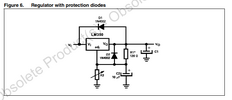
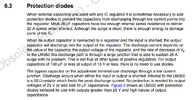
If you use LM317 definitely need a heatsink on it. There is more protection
overall. But unlike a R it can have ESD concerns as pretty much all integrated
components have.
Do you have a datasheet for charger ? Or is it just a el-cheapo made in outer
Mongolia by sheep herders (they are good people by the way) ? With a datasheet
that can be written on a match head.......
As an aside I bought a benchtop power supply many years ago, and started burning
out parts/designs. When turned off it generated 50+ volt transients which fried any
LV circuits I had attached to it. Who knew ....? Point of this is what does your charger
do when turned on and off with a load attached....? A scope, a DSO, with single shot
triggering for excess V can quickly reveal this.
Don't get discouraged, good design requires a lot of investigation, you are a detective,
and its a constant learning process until you drop dead. Design life would be boring
if uncertainty were not a part of design.....
When confronted by a mish mash of conflicting pros and cons I employ a decision
matrix, with a column for pro, one for con, one for a 1 to 5 rating, and sum up each column.
Often can be an eye opener.
Lastly you can always throw in the towel, just use a R and keep your fingers crossed
the house does not burn down
Regards, Dana.
If you use R you rely on charger design for safety and to prevent LED burnout.
And if charger puts out more V than you have LED current changing as well,
eg. not regulated.
If you use LM317 definitely need a heatsink on it. There is more protection
overall. But unlike a R it can have ESD concerns as pretty much all integrated
components have.
Do you have a datasheet for charger ? Or is it just a el-cheapo made in outer
Mongolia by sheep herders (they are good people by the way) ? With a datasheet
that can be written on a match head.......
As an aside I bought a benchtop power supply many years ago, and started burning
out parts/designs. When turned off it generated 50+ volt transients which fried any
LV circuits I had attached to it. Who knew ....? Point of this is what does your charger
do when turned on and off with a load attached....? A scope, a DSO, with single shot
triggering for excess V can quickly reveal this.
Don't get discouraged, good design requires a lot of investigation, you are a detective,
and its a constant learning process until you drop dead. Design life would be boring
if uncertainty were not a part of design.....
When confronted by a mish mash of conflicting pros and cons I employ a decision
matrix, with a column for pro, one for con, one for a 1 to 5 rating, and sum up each column.
Often can be an eye opener.
Lastly you can always throw in the towel, just use a R and keep your fingers crossed
the house does not burn down
Regards, Dana.
Last edited: