
Hello everyone,
I recently completed a weather monitoring project using the ESP32-S3 Smart Display and thought it might be useful for others interested in embedded systems, IoT, and graphical user interfaces.
The project combines multiple environmental sensors to provide real-time monitoring of:
- Temperature
- Humidity
- Atmospheric Pressure
- Altitude
- Rain Detection
- Ambient Light (Day/Night Status)
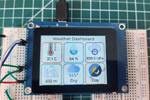
One of the most interesting aspects of this project is the use of the LVGL (Light and Versatile Graphics Library). Instead of displaying plain text on a traditional LCD, the ESP32-S3 renders a modern weather dashboard with real-time updates, status indicators, and graphical widgets, making the interface much more intuitive and visually appealing.
The project demonstrates several concepts that may be useful for beginners and intermediate developers:
Potential applications include smart home monitoring, greenhouse automation, educational demonstrations, and cloud-connected weather stations.
Future enhancements could include Wi-Fi-based data logging, MQTT integration, Home Assistant support, and mobile notifications.
I documented the hardware setup, circuit connections, working principle, and implementation details at Play with Circuit. I would be happy to hear your suggestions on additional features or improvements that could be incorporated into the project.
Thanks for reading, and I look forward to your feedback!
