Ok, some preliminary stuff:
/*
* Dust Collector Delay Circuit
* Chopnhack
* 2015
*
* Purpose: This circuit has been designed to automatically turn on a dust collector when another tool is running. The criteria for turning on the DC (dust collector)
* will be at least 5 amps at 120v or 4 amps at 240v AC. This should allow the DC to run when large dust producing tools are being used without triggering
* on smaller tools. This should save time in the shop and allow for cleaner air and floor as the DC will turn on at the time its needed. The DC will have a
* delay, to run for ~10 seconds after the triggering tool has ended operation to clear out the ductwork.
*
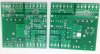
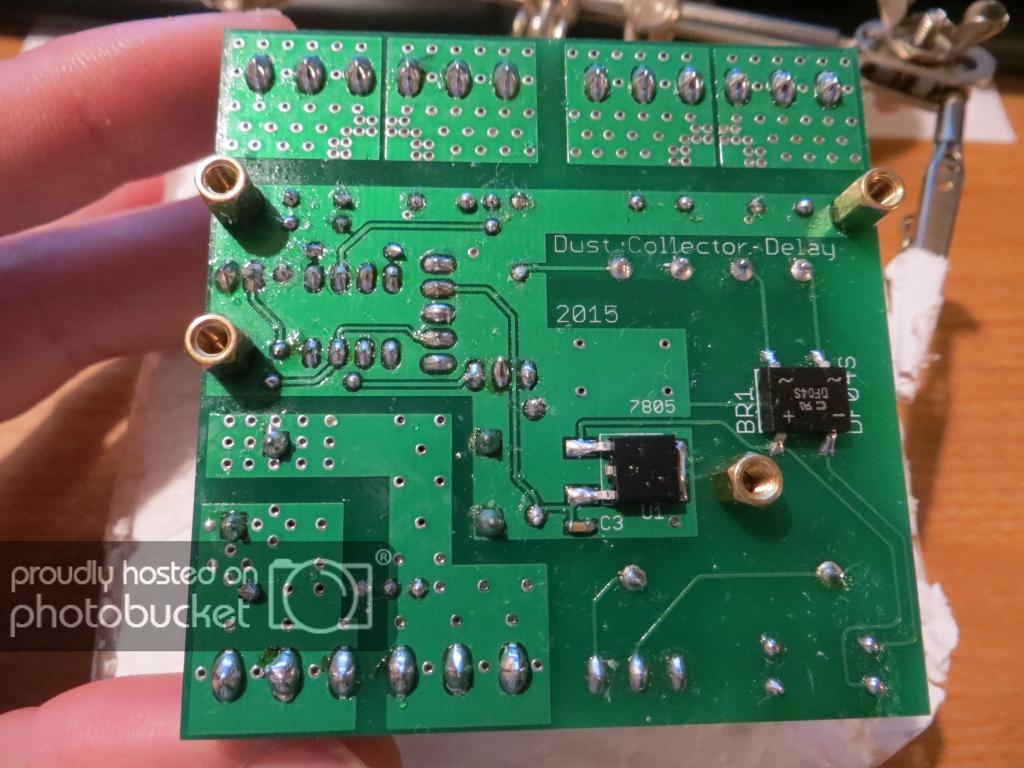
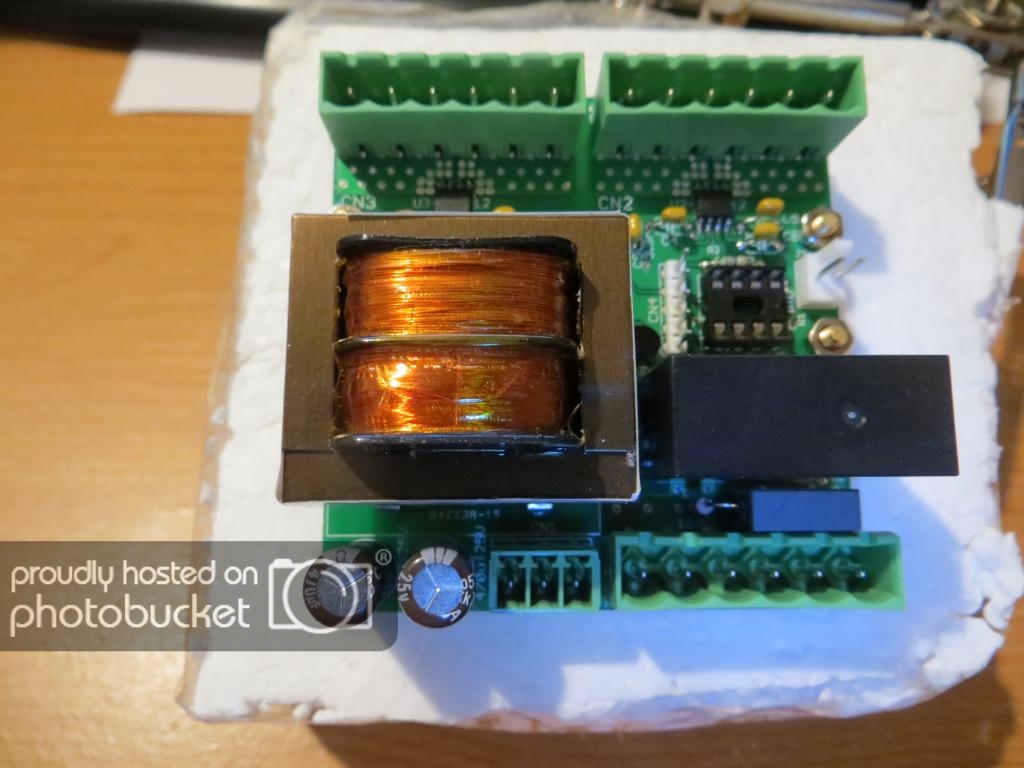
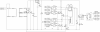
* Hardware: Refer to schematic or board. Power will come into the circuit via a rocker switch mounted through the 4" steel electrical box wall (not shown in
* schematic). The circuit is protected by an inline, 160mA slow blow fuse and comes on-board at connector CN1. From there, AC power travels through
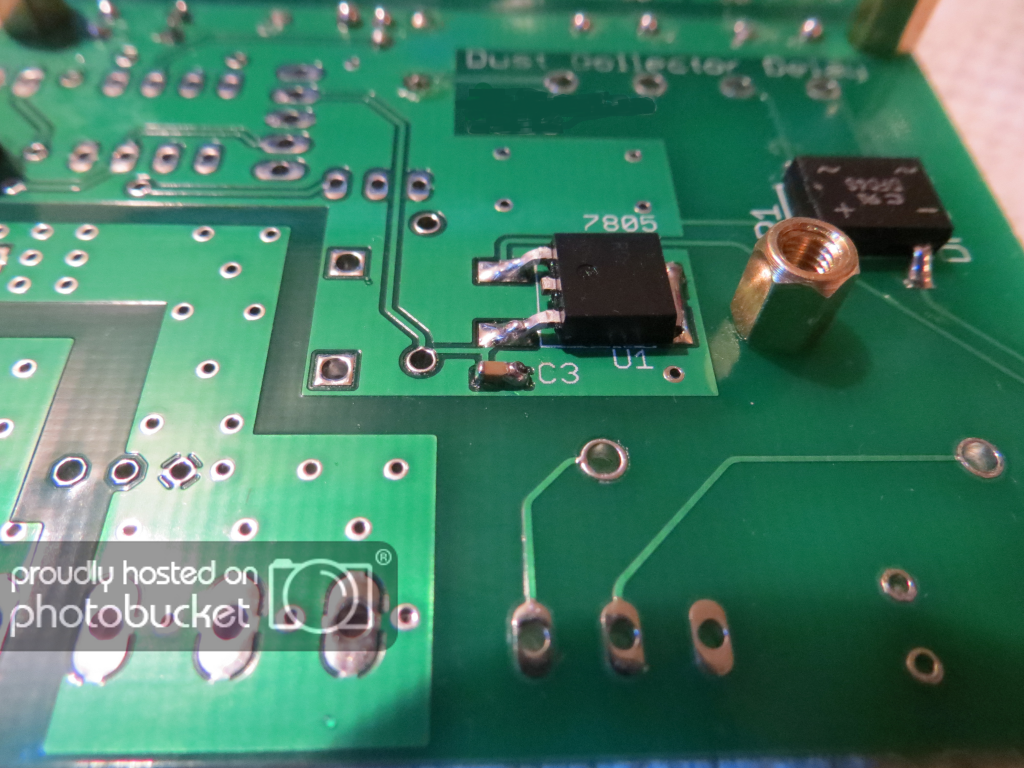
* a transformer, providing isolation from mains as well as a secondary fuse (transformer is self limiting). The stepped down power gets rectified via
* BR1, full wave bridge rectifier. This is then filtered via C1 and C2 electrolytic caps before entering U1, a 7805 LDO voltage regulator and exiting,
* filtered by C3 at +5V DC. R1 provides a constant current for a power-on LED indicator via jumper J1.
*
* The +5V output continues and feeds 4 more areas: the PIC microcontroller (PIC12F675), Allegro Hall Effect ACS712 chips, Q1 2n3904 power amplifier
* and the coil K1.
*
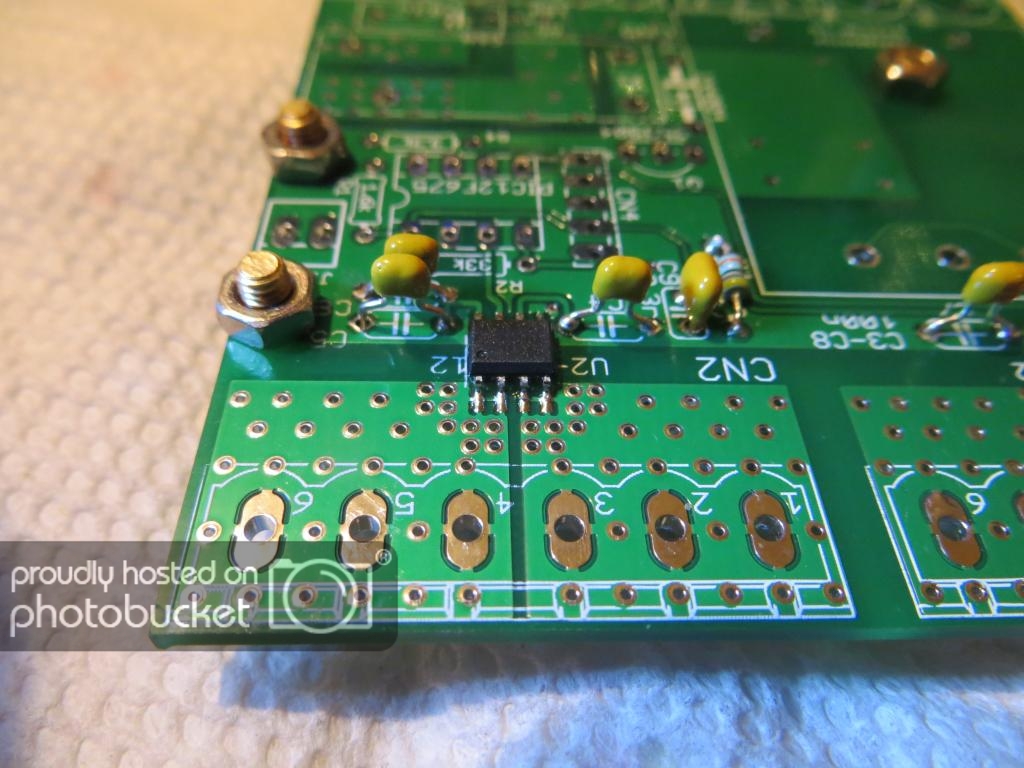
* When current is sensed in either Allegro chip, (this would be from an outlet in series with the chip via connectors CN2 or CN3, one for 120v and
* one for 240v) pin 7 will send out an analog signal (amplitude varies with current). This signal enters the PIC at pins 3 and 5 - one for each sensor chip.
* C4 and C6 are filter & C5 and C7 are bypass caps for the Allegro chips. I believe R2 pulls down the master clear (MCLR) Pin 4 so it's not left floating
* (R2 allows for 0.15mA of current to pass). R3 limits current, but allows mains frequency to to reach pin 2 of the PIC (CKLIN), while C9 filters the signal.
* Pins 1 & 8 are V+ and V- or ground with C8 filtering between. Pin 7 is the output, which will trigger the coil via R4 and Q1. D1 prevents backfeeding the
* circuit when the magnetic field collapses. R5 and C10 help to dissipate power as the field collapses. K1 will the relay separating power from our switched
* device.
*/