Is it safe to use a 12V battery for a 9V device ?

Status
Not open for further replies.

flabbergasted

Oct 3, 2011
11
Joined
Oct 3, 2011
Messages
11
Hi, I need to power a 9V, 500mA guitar effect device (Boss loop pedal), it takes a regular 9V battery but doesn't last very long so i was using a 9V, 2.5A, 66Wh li-ion battery pack without a problem but i accidently fried the PCB on the battery pack so until i can get that repaired i'm wondering if i can use the battery that i power my amp with which is a 12V, 7A sealed lead acid motorcycle battery.

Is it safe to use a 12V, 7A battery to power a 9V, 500mA device (Boss loop pedal) ?

thanks for your advice,
r
 

Digital_Angel_316

Oct 1, 2011
41
Joined
Oct 1, 2011
Messages
41
Check the input voltage spec to be sure. The only 'specs' I see look sort of like this:

Power Supply: DC 9V: Dry battery (R6/LR6 (AA) type) x 6, AC Adaptor (PSA-series)
Current Draw: 120 mA (9 V max.)
Accessories: Owner’s Manual, Dry battery (AA type) x 6, Sound Library for RC-20XL (Sample Phrase CD)
Options: AC Adaptor (PSA-series), Foot Switch (FS-5U)

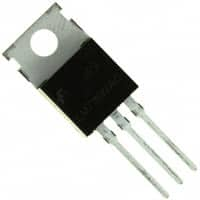
Alternatively you could add a simple 3-terminal linear regulator such as the 7809 9V, 1A regulator detailed below. Since it is rated at 1A and you are asking for 500mA you are 50 percent derated and probably safe to operate. For additional protection you could add a heat sink or mount the tab to a metal plate/case.

These are common devices and there is a chance that any local radio or hobby shop may have one in stock.

A greater concern is - how did you 'fry' the batter pack? Is there some operational issue or scenario to be concerned with or other root cause that you want to address?

LM7809ACT-ND

Price ea. $0.70

Manufacturer Fairchild Semiconductor
Manufacturer Part Number LM7809ACT
Description IC REG 1A POS VOLT 3TERM TO-220

Family PMIC - Voltage Regulators - Linear (LDO)
Series -
Regulator Topology Positive Fixed
Voltage - Output 9V
Voltage - Input Up to 35V
Voltage - Dropout (Typical) 2V @ 1A
Number of Regulators 1
Current - Output 1A
Current - Limit (Min) -
Operating Temperature 0°C ~ 125°C
Mounting Type Through Hole

Data Sheet - http://www.fairchildsemi.com/ds/LM/LM7805.pdf
LM7809ACT_sml.jpg
 

flabbergasted

Oct 3, 2011
11
Joined
Oct 3, 2011
Messages
11
thank you very much for the info Digital_Angel_316 :)

I am using the Boss loop pedal RC-3 (not the RC-20XL), the power supply they recommend is 9V, 500mA but Roland/Boss recommend that same power supply for many of their devices so it's not necessarily the exact specs of the device in question (Boss RC-3 loop pedal) which has a Current Draw 70 mA (DC 9 V)

"Alternatively you could add a simple 3-terminal linear regulator such as the 7809 9V, 1A regulator detailed below. Since it is rated at 1A and you are asking for 500mA you are 50 percent derated and probably safe to operate. For additional protection you could add a heat sink or mount the tab to a metal plate/case."

Do i just splice this regulator into the lead wire ? Now that i know the draw is only 70mA will 1A still be safe ?

"A greater concern is - how did you 'fry' the batter pack? Is there some operational issue or scenario to be concerned with or other root cause that you want to address?"

I shorted the PCB by trying to solder a loose wire back on, there is a thread about that here:
https://www.electronicspoint.com/12v-lithium-ion-battery-pack-circuit-board-problem-t239600.html

thanks,
r
 

Digital_Angel_316

Oct 1, 2011
41
Joined
Oct 1, 2011
Messages
41
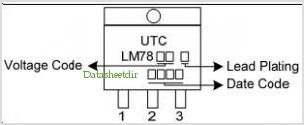
The three terminal device pins are for:
Input (your +12V),
Ground (circuit/battery ground) and
Output (regulated +9V).
The device data (below) sheet shows the pinout.

As to output load and regulation (a good question) - The data sheet shows:
http://www.fairchildsemi.com/ds/LM/LM7809.pdf

Regload - Load Regulation (test conditions) -- (IO == Output Current)

IO = 5mA to 1.5A (looks like min output current for regulation is 5mA, so 70mA is OK)
Regulation - Typical
12, Max 180 mV

(when the output current is between 5mA and 1.5A the device regulates to within 180mV)

Simple answer -- YES it looks like it will be ok IF you can accept 8.820V (2% max error) or 8.988V (typical)

IO= 250mA to 750mA
Regulation - Typical 4.0 Max 90.0mV (ie, regulates best between 250 - 750mA)

UTC-LM7805-pinout.jpg
 

flabbergasted

Oct 3, 2011
11
Joined
Oct 3, 2011
Messages
11
Thanks again for great info !

I will try this but just one more question; what do i do with the ground pin when i will be using a 2 terminal battery, how do i ground it or is it necessary ?

r
 

Digital_Angel_316

Oct 1, 2011
41
Joined
Oct 1, 2011
Messages
41
Thanks again for great info !

I will try this but just one more question; what do i do with the ground pin when i will be using a 2 terminal battery, how do i ground it or is it necessary ?

r

* The +12V battery is connected to the input terminal (pin 1),
* The Battery Ground is tied to device ground (pin 2) AND to the load (Boss Pedal Gnd) and
* The Output (pin 3) is tied to the 9V input of the Boss pedal.

In essence then, you connect pins 1 and 2 across the battery (+12V to pin 1, GND to
pin 2). You carry the ground to the Boss Pedal and you now take the device output
(7809 Pin 3) to the Boss Pedal +9V. A capacitor at the input and output may help
provide voltage stability.

You can bend the leads to provide access/ prevent shorting connections. You can slip
a straw or other insulative sleeve over the wire before you connect to the pins, then slip
them up over the pin /connection when complete (heat shrink is the tech approach).
Tape them in place to hold (keep the metal tab exposed however as it acts as a heat
sink).

AS AN ASIDE:
This question is internet buzz.

You should discuss this with colleagues at http://www.guitargeek.com and etc. online -
My understanding is that Boss pedals that specify the PSA adapter operate at 9V like
most other pedals. Boss pedals that require the ACA adapter operate at 12V.

P.S. -- some consider 4 to 9V variable operation to be a 'feature' (sag control??).
Enjoy the sounds!

images
 

Resqueline

Jul 31, 2009
2,848
Joined
Jul 31, 2009
Messages
2,848
what do i do with the ground pin when i will be using a 2 terminal battery, how do i ground it or is it necessary?

Here the term ground is just used as a pseudonym for Common Negative. It's not neccessary to connect it to an earth rod or mains ground.
Most devices made to run on 9V have plenty of margins so they will work just as well on 12V, but better safe than sorry.
 

daddles

Jun 10, 2011
443
Joined
Jun 10, 2011
Messages
443
Most devices made to run on 9V have plenty of margins so they will work just as well on 12V, but better safe than sorry.
Murphy's Law dictates that if you do plug your 9 V device into a 12 V source, it will be sensitive to the voltage difference and self-destruct, just like the old Mission Impossible tape drive. Of course, if you take the prudent route and go to the trouble of building an adapter, the device would have worked fine at 12 V and, internally, is quietly thumbing its nose at you. See, I did learn something in my career... :p
 

Digital_Angel_316

Oct 1, 2011
41
Joined
Oct 1, 2011
Messages
41
Here the term ground is just used as a pseudonym for Common Negative. It's not neccessary to connect it to an earth rod or mains ground.
Most devices made to run on 9V have plenty of margins so they will work just as well on 12V, but better safe than sorry.

T/Y -- Language barrier -- My bad -- Michael Faraday would connect it to an 8 foot copper rod driven into the 'earth'. For practical matters, it is 'common negative'. Flabbergasted - You are good to go. I really need to think more culturally sensitive before speaking:

dre0376l.jpg
images
 

(*steve*)

¡sǝpodᴉʇuɐ ǝɥʇ ɹɐǝɥd
Moderator
Jan 21, 2010
25,510
Joined
Jan 21, 2010
Messages
25,510
It certainly has that potential.
 

chuckination

Dec 5, 2019
1
Joined
Dec 5, 2019
Messages
1
I know this thread has been up a while, but I wanted to follow up on it for others like me that find this thread. Those 9v wall wart power supplies are only a transformer with a rectifier diode bridge inside, typically not even having any filter capacitors or chokes beyond parasitic capacitance and the inductance of the transformer core. It's an unregulated voltage source and actually reads much higher than 9v if you test the output with a multimeter, but their voltage is noisy and fluctuates depending upon their load due to internal circuit resistances interacting with the driven load in a voltage divider network. This is why voltage sources need a regulator to provide a constant voltage source to upstream circuitry of a device that's agnostic to the upstream load's DC resistances.

If it says to use an AC power supply, the device will have its own internal linear voltage regulator (usually the modern low drop out variants if it's newer) and you won't need to wire up an inline 7809 one to safely use it on a 12v battery since a battery is also an unregulated voltage source in the same way as the wall wart.
 
Last edited:
Status
Not open for further replies.
Top