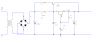
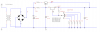
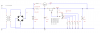
Pass transistor
Hello jackorocko.
Ok first off ive never used a pass transistor on a variable voltage regulator, thats not to say it wont work, from what ive read the problem seems to be the voltage differential from volts in to volts out, and the heat generated by the big power being dumped on the regulator or transistor at low voltage use, IE when you use a lower voltage there is a huge differential between the volts not being used it still enters the circuit and on the VR and or the transistor.
There is always a trade off between power in to power out and what the transistor and voltage regulator does with it, as you know it going to retain that power and try to handle it, but this is a max threshold problem in terms of heat the bottom line, you could switch in power resistors for the lower voltages to soak up this wasted power while on the lower voltages, but current is bound to be affected.
I use the regulators and transistors with in there parameters, if i wont 12 volts 5 amps i dont use 30 volts in and hope the voltage regulator can cope, its all to do with the volts in to volts out, keeping this close IE a few volts higher than you want out gives you reliable current at the voltage you wont, if you want a differential between 3.3 volts and 24 volts any circuit will struggle with the volts your not using, its a kind of cant have your cake and eat it in terms of a very wide voltage and power range, i am a hobbyist and can handle the normal maths in a circuit, but my maths knowledge is not my strong point, so in very complex equations i struggle.
As for isolation to the heat sink with regard to case polarity, you use steel machine screws about 3mm 1/8 of an inch, but there is a mica or silicone pad or washer you use and a plastic bush that fits either the TO220 / TO3 case, yes there is a slight thermal issue so i use thermal paste between the surfaces, non conductive, then your voltage regulator and transistor are electrically isolated from each other.
I try not to get bogged down in the maths if i can help it as its a lot more complex, being ill my head wont do it, but i observe data sheet info and circuit values in terms of resistors semiconductors, and understand there are limits i cant go beyond, so the circuits value in basic maths for me is ok. I dont or wont get wrapped up in complex equations and scientific data of a components characteristics, it spoils it for me, thats for the maths boffins, and a good job they do, as i would be rubbish at it.
My only advise is a variable supply is better with linearity, and selective switching while easily achievable, can be a head ache for big differentials in voltage, so can none switching and continuous voltage travel. If you want multiple voltages at high current, either use power resistors to soak up and dissipate the excess heat, or use different regulators, a single variable voltage regulator supply is fine with or with out a pass transistor the latter offers more power, but the higher you go in voltage the lower you go in current or you end up with excess heat. its best to keep input volts no more than a few volts higher than the final output voltage, and when you use low voltage there is a problem with what the circuit does with the excess, forced air cooling offers some benefit as to just passive cooling.
I cant match Steve's and Resqueline's experience, some times you have to try it and see, beyond the theory, i hope you find the solution your looking for. Dave.

PS ive used a fair few regulators, the 78SXX series at 2 amps are more versatile for fixed, and the LM338K offers better performance in terms of heat it can withstand, but ive used the LM338T as well, i know the LM338K is more expensive but its a better option than the LM338T.