73's de Edd
- Aug 21, 2015
- 3,730
- Joined
- Aug 21, 2015
- Messages
- 3,730
.
Sir . . . . . . . Raz-a-ma-tazz *****
HOUSTON WE HAVE LIFT OFF . . . . . . .and we are now getting good telemetry buzz . . . . .errrrr . . . good instrument readings from *****
You say . . . . .
The multi meter i am now using is a digital meter and its called ISO-TECH.
The prior one that you were using must have been an "ISOLATED" TECH . . .with all of its erroneous readings.
This new meter only balked on you, at the plate of he EL84, and using its 3200 max display format , that blinking might have merely indicated an overange.
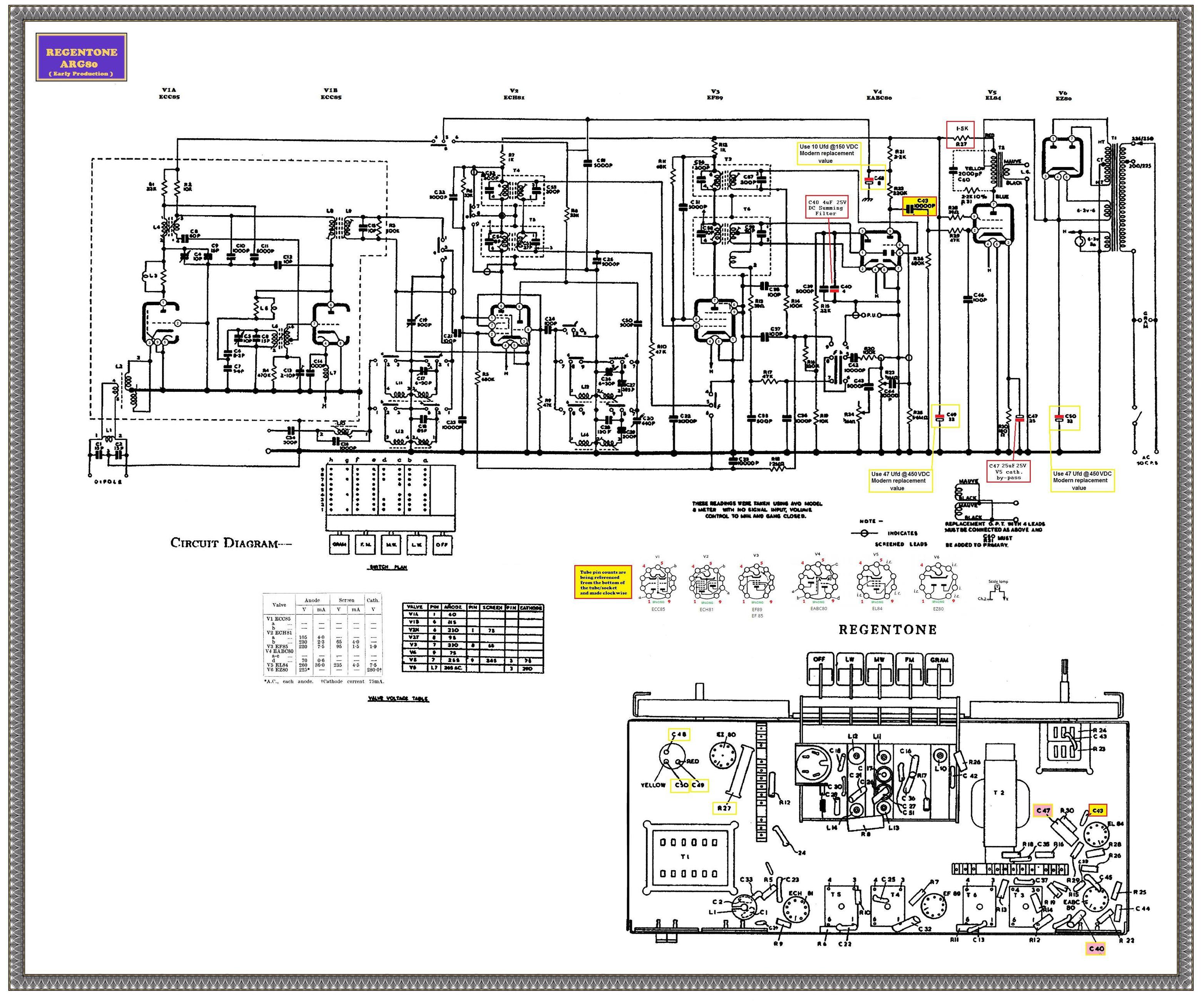
If you look at my first entry on the scene and consult that schematic, you will see the most dominant marking on the schematic is a yellow square.
Which I intended to remind you of as the LAST thing after having analyzed the sets problem.
Looks like its importance has NOW transitioned to number one.
Failure Analysis:
Your readings now seem tell us that the onset of failure for your set was the development of leakage in the .01 ufd cap that couples audio from the plate of the EABC80 to the firstus gridamus of the EL84 auio output tube.
The design of the EL84 audio output stage is such that they are lifting the cathode of the EL84 above ground by the resistance (180 ohms) of its cathode resistor.
If you were then to place the DVM + probe on its cathode and use the - probe to measure the voltage at the 1st grid it would be ~negative 7-8V DC 1st grid bias..
That biasing level would then produce a clean sounding class A operation of the stage.
Now if there is even the very slightest DC voltage that might leak through that .01 capacitor from the plate voltage of the EABC80 into that EL84 1st grid circuit it would then start offsetting that tubes proper bias level.
When it offsets and decreases from the negative voltage state and then transitions into creating a positive voltage , that EL84 starts an upward spiral in conduction and starts pulling a fierce current thru the EL84.
(You have confirmed that . . . a . . .la . . .HOT Fingers ! )
Simultaneously, that progressively higher current/power drain is taxing the capabilities of your EZ80, the audio output transformer and the main power transformer.
Since you are pulling down the voltage on the plate of the EL84 . . . . .remember, that you noted the gradual decrease of its B+ volage.
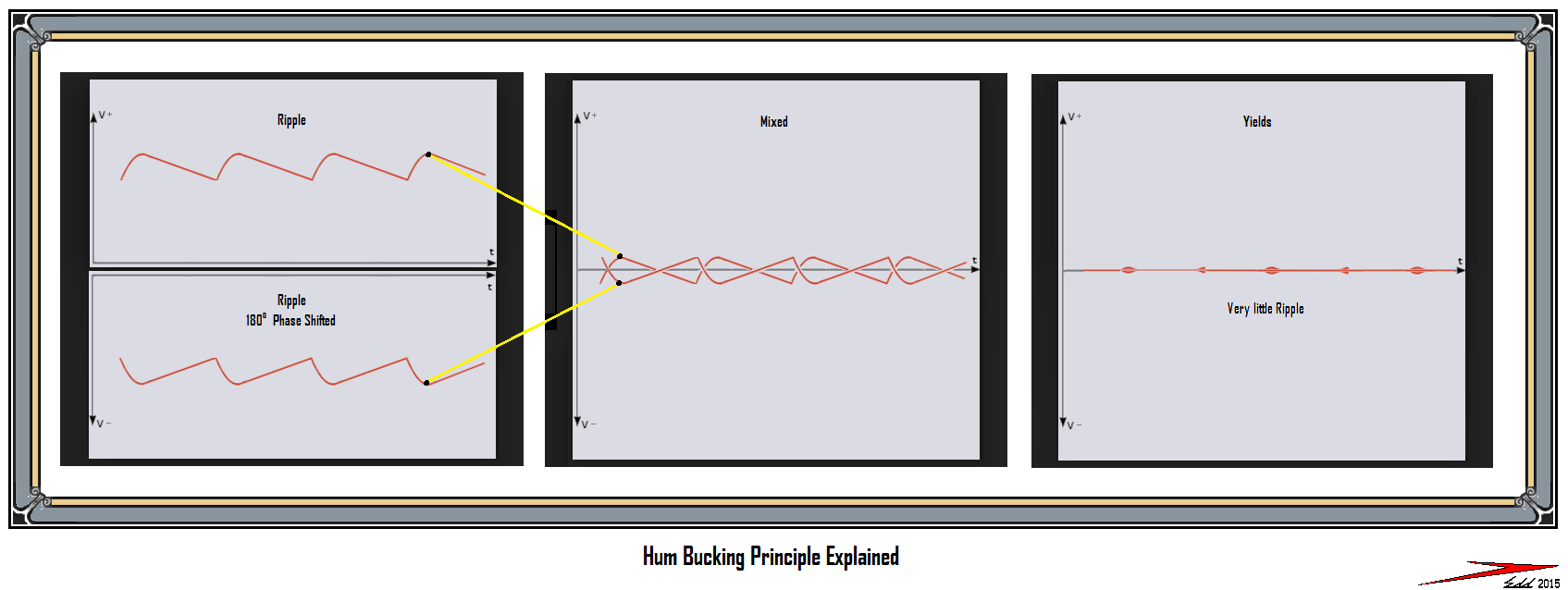
The sets electrolytic filter capacitors of C48-C49 and C50 are no longer able to produce a pure DC B+ level at this degree of power drain, so sawtooth ripples of AC are starting to develop , superimposed with the DC and that is the HUMMMMMM that you were hearing, being produced by that quasi AC waveform. .
Had you watched the plate of the EL84, in that dark room test, its plate should have eventually taken on a slight cherry red color.
Next Step . . . . . . .initiating . . . . . . .The Fix :
You need to clip the lead of the C43--.01 ufd cap free at its / the lead that connects to the R29 / 47K and the R24 / 680K resistor junction.
( Do duly note that on some olde ray-dee-oo skee-matics, you just have to grin and bear it on their clarity of labeling parts with your main assist of being able to read the label or color coding of a part itself.
That then only leaves the clarity of the R or C of a part designator and its number, but fortunately, they usually assign them sequentially, as they travel across the schematic page.)
Sometimes, even being able to GET a copy of an old schematic, ends up in your having to make the best read of it, as is possible.
(Archaeologists poking around and finding Dead Sea Scrolls, best make the best of them, and not keep poking around in hoping to find a tablets REVISED editions.)
Fire up the set again and after warm up, DC voltage meter the plate (P9) of the EABC80 to see what it is . . .expecting approx 75 VDC.
Then move + probe over to the now free end of the .01 cap and see how much voltage was leaking thru to upset the EL84's specified negative 7-8 VDC.
To positively confirm, take a clip lead that has one end grounded and bring its free lead up to short out your metered junction and see the voltage drop to ZERO.
Then after removing that clip lead, see what DC voltage level rises up.
A good modern replacement cap with the now typical polyethylene , polystyrene or mylar dielectrics usually only show less than a volt of static DC voltage bleed thru.
You should now know just how BAD the situation was, with that old paper capacitor.
Get a new replacement capacitor and if you want a service / reliability benchmark on into the next millennium, get a 400 or 600 VDC rated one.
Replace that capacitor.
With the bias shifted on the EL84 and having the resultant weight of an "elephant on its back", before,the EL84 was not even aware of some pip squeak little audio signal trying to come in from the EABC80.
NOW, your phono input or even the radio proper might operate, if you have that suspected one bad IF stage tube (with its open filament) having been replaced now.
Standing by . . . .
ADDENDA:
I now see that our honorable and esteemed colleague . . . GPG . . . .had come on the scene while I was poking this info up earlier .
I was thinking of the eventual need of clipping out that capacitor, for its replacement.
His tube sockets pin measurement method lets you initiate a leakage voltage check with AND without the loading effect of having the EL84 being in circuit.
73's de Edd
.
Sir . . . . . . . Raz-a-ma-tazz *****
HOUSTON WE HAVE LIFT OFF . . . . . . .and we are now getting good telemetry buzz . . . . .errrrr . . . good instrument readings from *****
You say . . . . .
The multi meter i am now using is a digital meter and its called ISO-TECH.
The prior one that you were using must have been an "ISOLATED" TECH . . .with all of its erroneous readings.
This new meter only balked on you, at the plate of he EL84, and using its 3200 max display format , that blinking might have merely indicated an overange.
If you look at my first entry on the scene and consult that schematic, you will see the most dominant marking on the schematic is a yellow square.
Which I intended to remind you of as the LAST thing after having analyzed the sets problem.
Looks like its importance has NOW transitioned to number one.
Failure Analysis:
Your readings now seem tell us that the onset of failure for your set was the development of leakage in the .01 ufd cap that couples audio from the plate of the EABC80 to the firstus gridamus of the EL84 auio output tube.
The design of the EL84 audio output stage is such that they are lifting the cathode of the EL84 above ground by the resistance (180 ohms) of its cathode resistor.
If you were then to place the DVM + probe on its cathode and use the - probe to measure the voltage at the 1st grid it would be ~negative 7-8V DC 1st grid bias..
That biasing level would then produce a clean sounding class A operation of the stage.
Now if there is even the very slightest DC voltage that might leak through that .01 capacitor from the plate voltage of the EABC80 into that EL84 1st grid circuit it would then start offsetting that tubes proper bias level.
When it offsets and decreases from the negative voltage state and then transitions into creating a positive voltage , that EL84 starts an upward spiral in conduction and starts pulling a fierce current thru the EL84.
(You have confirmed that . . . a . . .la . . .HOT Fingers ! )
Simultaneously, that progressively higher current/power drain is taxing the capabilities of your EZ80, the audio output transformer and the main power transformer.
Since you are pulling down the voltage on the plate of the EL84 . . . . .remember, that you noted the gradual decrease of its B+ volage.
The sets electrolytic filter capacitors of C48-C49 and C50 are no longer able to produce a pure DC B+ level at this degree of power drain, so sawtooth ripples of AC are starting to develop , superimposed with the DC and that is the HUMMMMMM that you were hearing, being produced by that quasi AC waveform. .
Had you watched the plate of the EL84, in that dark room test, its plate should have eventually taken on a slight cherry red color.
Next Step . . . . . . .initiating . . . . . . .The Fix :
You need to clip the lead of the C43--.01 ufd cap free at its / the lead that connects to the R29 / 47K and the R24 / 680K resistor junction.
( Do duly note that on some olde ray-dee-oo skee-matics, you just have to grin and bear it on their clarity of labeling parts with your main assist of being able to read the label or color coding of a part itself.
That then only leaves the clarity of the R or C of a part designator and its number, but fortunately, they usually assign them sequentially, as they travel across the schematic page.)
Sometimes, even being able to GET a copy of an old schematic, ends up in your having to make the best read of it, as is possible.
(Archaeologists poking around and finding Dead Sea Scrolls, best make the best of them, and not keep poking around in hoping to find a tablets REVISED editions.)
Fire up the set again and after warm up, DC voltage meter the plate (P9) of the EABC80 to see what it is . . .expecting approx 75 VDC.
Then move + probe over to the now free end of the .01 cap and see how much voltage was leaking thru to upset the EL84's specified negative 7-8 VDC.
To positively confirm, take a clip lead that has one end grounded and bring its free lead up to short out your metered junction and see the voltage drop to ZERO.
Then after removing that clip lead, see what DC voltage level rises up.
A good modern replacement cap with the now typical polyethylene , polystyrene or mylar dielectrics usually only show less than a volt of static DC voltage bleed thru.
You should now know just how BAD the situation was, with that old paper capacitor.
Get a new replacement capacitor and if you want a service / reliability benchmark on into the next millennium, get a 400 or 600 VDC rated one.
Replace that capacitor.
With the bias shifted on the EL84 and having the resultant weight of an "elephant on its back", before,the EL84 was not even aware of some pip squeak little audio signal trying to come in from the EABC80.
NOW, your phono input or even the radio proper might operate, if you have that suspected one bad IF stage tube (with its open filament) having been replaced now.
Standing by . . . .
ADDENDA:
I now see that our honorable and esteemed colleague . . . GPG . . . .had come on the scene while I was poking this info up earlier .
I was thinking of the eventual need of clipping out that capacitor, for its replacement.
His tube sockets pin measurement method lets you initiate a leakage voltage check with AND without the loading effect of having the EL84 being in circuit.
73's de Edd
.
Last edited: