Voltage from rotation

wdariusw

Nov 10, 2014
149
Joined
Nov 10, 2014
Messages
149
Hi all. I will try to do some experiments, but before it i want to make calculations to estimate the results depending on geometry, coil, airgap, etc. So, the idea is : magnets are spinning around the axis and at the end of coil voltage is induced. Coil is connected to electronic circuit. With which software can i simulate voltage and current at the coil end depending on rotation speed ? I found that maxwell and comsol are probably suitable, but it is first time with electromagnetic simulation, and and don't know how to do that. Please advice, thanks. Here is link to my solidworks animation
.
 

(*steve*)

¡sǝpodᴉʇuɐ ǝɥʇ ɹɐǝɥd
Moderator
Jan 21, 2010
25,510
Joined
Jan 21, 2010
Messages
25,510
There are a lot of unknowns. The voltage you get will depend on the strength of the magnets, the number of turns in your coils, core materials, geometry, load, and speed (and there are probably others). Many of these will be difficult to describe in a way suitable to plug into formulas. It might be easier to try it and see what you get
 

wdariusw

Nov 10, 2014
149
Joined
Nov 10, 2014
Messages
149
How do you think, it is possible to make system, that in one rotation send 4 or more RF signals ?
 

(*steve*)

¡sǝpodᴉʇuɐ ǝɥʇ ɹɐǝɥd
Moderator
Jan 21, 2010
25,510
Joined
Jan 21, 2010
Messages
25,510
To answer you I would need to know what you're actually trying to achieve.
 

wdariusw

Nov 10, 2014
149
Joined
Nov 10, 2014
Messages
149
Ok :) The purpose of that system would be detect rotation of bike pedals, and i need to send minimum 4 signals in one rotation.
 

wdariusw

Nov 10, 2014
149
Joined
Nov 10, 2014
Messages
149
Here is my setup. 22pcs Neodynium N52 6x10mm magnets around PVC 80x10mm circle. Every second magnet is reversed direction. Want to see magnetic field lines. Can anybody help to do that with QiuckField software ? :)
113404d1421838074-setup.jpg
 

Calmore

Jan 19, 2015
28
Joined
Jan 19, 2015
Messages
28
Is knowing the direction of rotation important? What if someone back-pedals?
 

wdariusw

Nov 10, 2014
149
Joined
Nov 10, 2014
Messages
149
This is another problem for the next steps, but now direction is not important .
 

davenn

Moderator
Sep 5, 2009
14,470
Joined
Sep 5, 2009
Messages
14,470
wdariusw

you need to clearly state the purpose and what you are trying to achieve for this project
Something you have so far failed to do and it has caused some heated discussions elsewhere


Dave
 
Last edited:

(*steve*)

¡sǝpodᴉʇuɐ ǝɥʇ ɹɐǝɥd
Moderator
Jan 21, 2010
25,510
Joined
Jan 21, 2010
Messages
25,510
It seems you want a self powered device to detect rotation and direction of rotation of pedals.

The simple solution is to arrange 4 magnets and a single coil (4 coils and a single magnet would be more difficult) such that first the north then the south pole passes the coil.

With the pedals going in one direction you will get a +ve peak followed by a -ve peak. With the pedals going in the reverse direction you will get a -ve peak first.

It would be possible to bridge rectify this signal to provide enough energy to power a small CMOS circuit to detect the pulse order and therefore the direction. I suspect that a microcontroller might be needed to do this robustly though.
 

Gryd3

Jun 25, 2014
4,098
Joined
Jun 25, 2014
Messages
4,098
Please keep in mind that this will never truly be a 'self-powered' device.
The magnet arrangement will produce a voltage in a coil as they pass by. There will be a number of variables that will dictate how much power this will generate.. such as proximity to the coil, the coil size and number of windings, the quantity and strength of the magnets. Hypothetically, it's possible to generate a lot of power this way, but this will also have a negative impact on how freely the wheel will spin. If this is going on a pedal bike, you will need to pedal harder to power your device. The more power hungry the device, the more robust you will need to make your 'generator' and the harder you will need to pedal.
If it's a very small circuit (ie.. not a lot of current) then you will have an easier time building and you most likely won't notice any additional difficulty in pedalling.

When you get back on, give us more details about what functions you want the finished device to have, and what your requirements are.
For example...
-Wheel position or RPM sensor.
-Data logging or display (total distance travelled)
-3 LED brake light for night-time use
-No battery pack. (Will require method to generate power)
 

Calmore

Jan 19, 2015
28
Joined
Jan 19, 2015
Messages
28
Thinking around the problem, would it be possible to fit a dynamo to the front (Or back) wheel to charge a battery. This could power a circuit that uses hall effect sensors or whatever to detect the pedal rotation.

Whilst not powered directly from the pedal, the system would be self powered by rotation, simple and cheap.
 

wdariusw

Nov 10, 2014
149
Joined
Nov 10, 2014
Messages
149
Tomorrow will post whole idea and photo what I have made now for that project ! ;)
 

Merlin3189

Aug 4, 2011
250
Joined
Aug 4, 2011
Messages
250
", but this will also have a negative impact on how freely the wheel will spin. If this is going on a pedal bike, you will need to pedal harder to power your device. "

This question crops up a lot in relation to bike "dynamos" (really alternators as people here will realise.) Several people have done measurements of this and they show that for devices built into or permanently attached to the wheel, when producing about 3W the drag is equivalent to pedalling up a hill of 18" per mile (a gradient of about 0.03%) and when left open circuit a hill of about 6" per mile. Though it has been pointed out that this includes total hub friction which would be there in any case. (*)
See http://www.ctc.org.uk/file/public/feature-hub-dynamos.pdf.

(*) this is in respect of hub dynamos, as raised in the OP. The old-fashioned tyre rim 'bottle' dynamo has very much greater frictional losses.

(Have just removed fcaetious remarks, now that this has become a serious topic again.)
 
Last edited:

wdariusw

Nov 10, 2014
149
Joined
Nov 10, 2014
Messages
149
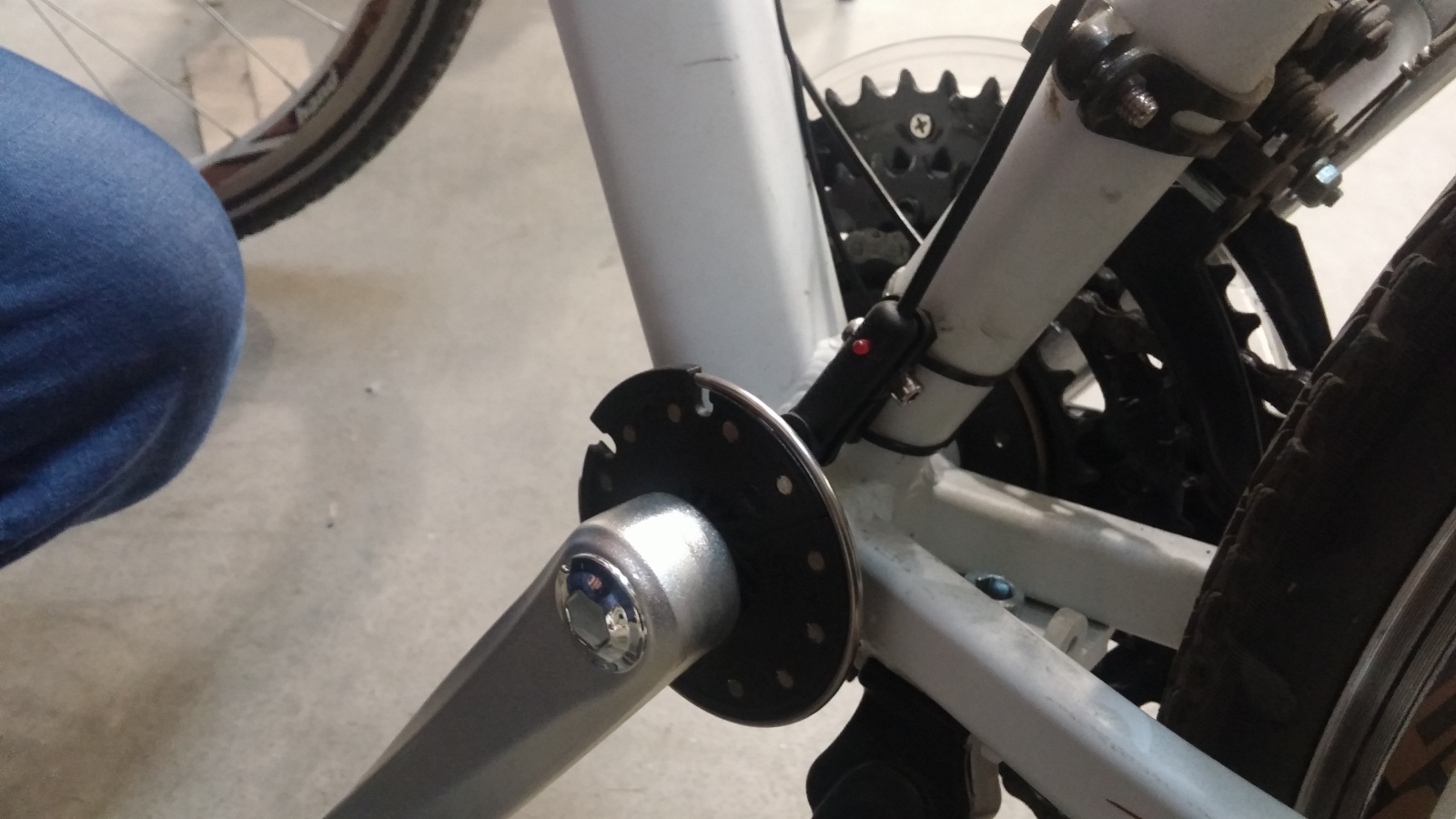
So...Starting from the beggining. I have "thing" which need pulses to work. Now the sensor looks like this:
10ggvhk.jpg

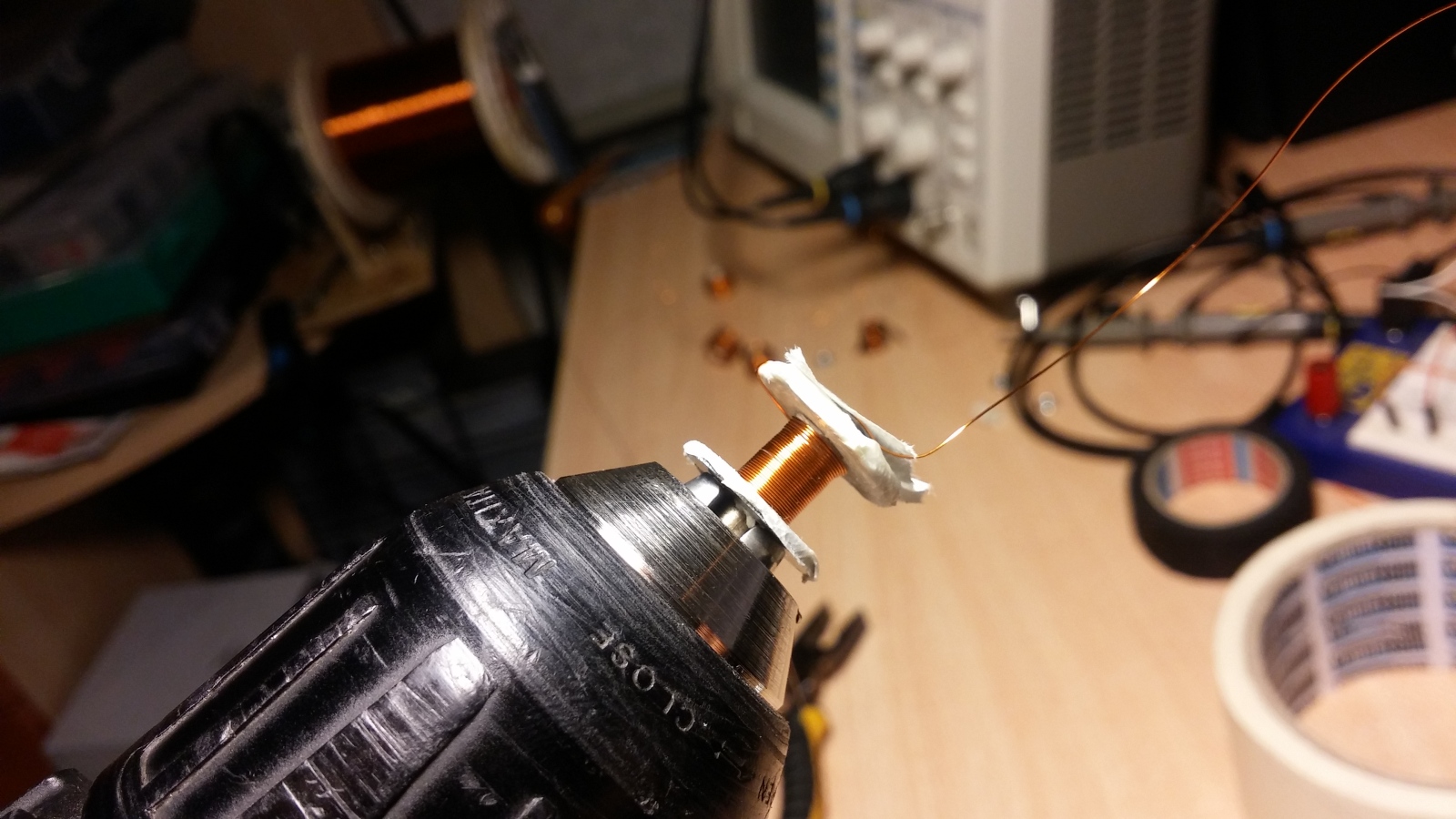
I want to do same thing WITHOUT battery and WIRELESS, or there can be battery, but it must be charged when axis is rotating. My idea is : magnets + coils act as generator for low power MSP430 or Atmega328P, that will send signal using low power RF module. Of course, there power management circuit is needed. Now i'm making some experiments, because lot of things are still unclear. Tried to wind few coils with 0.2mm thick cooper wire:
4tsoqq.jpg

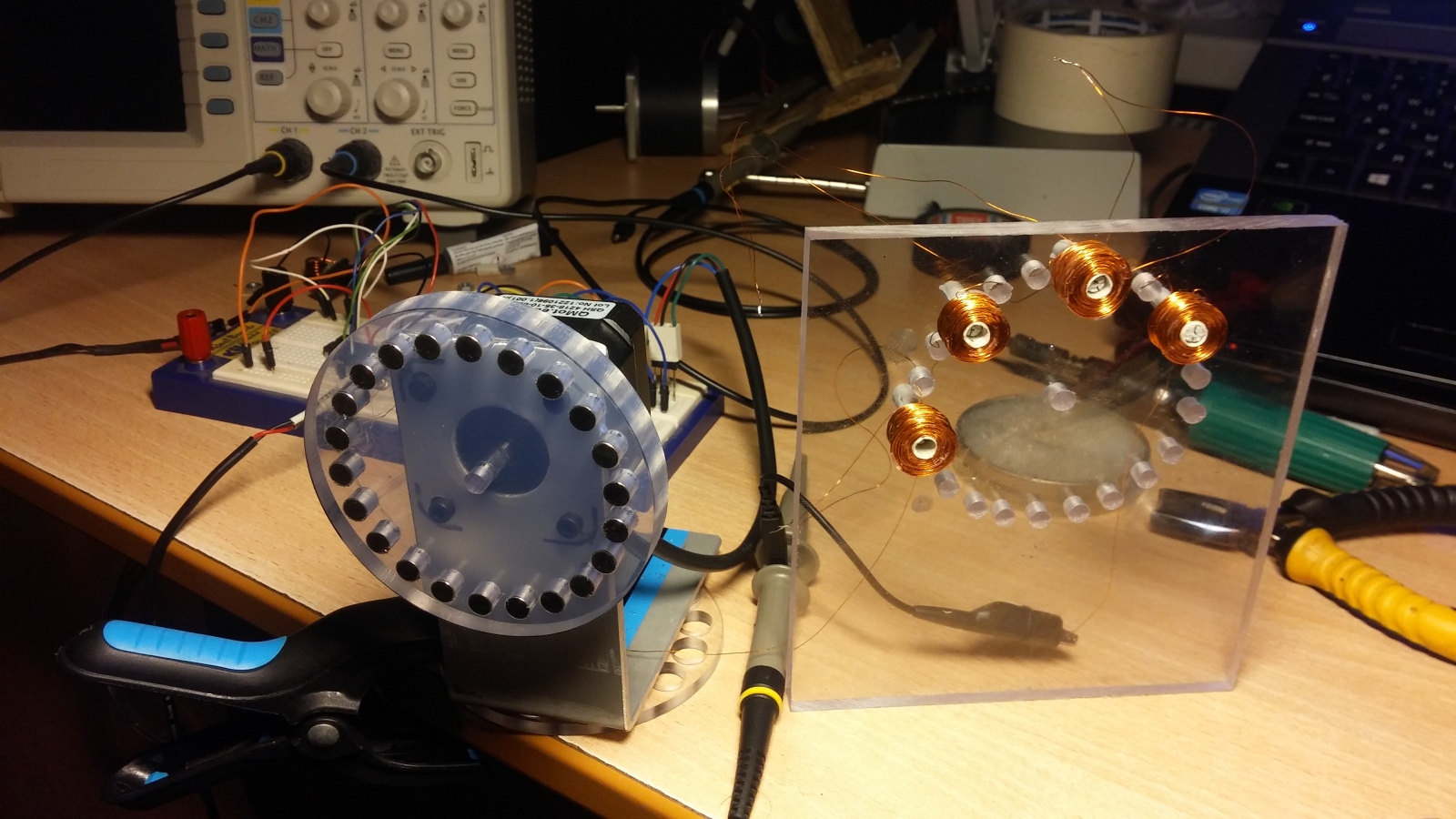
Whole setup consist of stepper motor that rotates about 1 revolution per second, 22pcs N52 neodynium magnets (6x10mm) in plastic round holder (diameter 80mm) and my winded coils. Photo:
jrs313.jpg

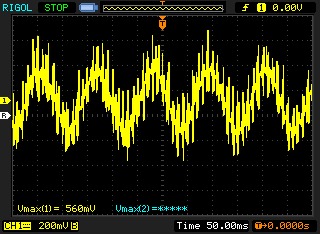
Every second magnet is reversed, so pattern is N P N P N P.... Voltage curve that I got today with 4 coils:
15zsrl.jpg

560mV AC was the maximum voltage. Before tried I extpected to get at least > 1V. The cooper coils should be in a half circle (because of construction on bike).

So...i need help with it. How to get more power from that setup ? How to calculate size of coils for that magnet construction, and what should be position each coil in view of magnets. Sorry for my poor english, hope it can be understanded :)
 

Gryd3

Jun 25, 2014
4,098
Joined
Jun 25, 2014
Messages
4,098
So...Starting from the beggining. I have "thing" which need pulses to work. Now the sensor looks like this:
10ggvhk.jpg

I want to do same thing WITHOUT battery and WIRELESS, or there can be battery, but it must be charged when axis is rotating. My idea is : magnets + coils act as generator for low power MSP430 or Atmega328P, that will send signal using low power RF module. Of course, there power management circuit is needed. Now i'm making some experiments, because lot of things are still unclear. Tried to wind few coils with 0.2mm thick cooper wire:
4tsoqq.jpg

Whole setup consist of stepper motor that rotates about 1 revolution per second, 22pcs N52 neodynium magnets (6x10mm) in plastic round holder (diameter 80mm) and my winded coils. Photo:
jrs313.jpg

Every second magnet is reversed, so pattern is N P N P N P.... Voltage curve that I got today with 4 coils:
15zsrl.jpg

560mV AC was the maximum voltage. Before tried I extpected to get at least > 1V. The cooper coils should be in a half circle (because of construction on bike).

So...i need help with it. How to get more power from that setup ? How to calculate size of coils for that magnet construction, and what should be position each coil in view of magnets. Sorry for my poor english, hope it can be understanded :)

Please explain the 'wireless' portion of the circuit...
The disk can power an rf module.. but what will it communicate with?
You will not be able to 'wirelessly' charge or power something beyond a couple cm. If you plan to pair it to a phone then that would be fine.

To make more power... You need stronger magnets, more turns on the coils, or a faster rotation.
Considering your bench setup (Good job by the way)
You should make a few different pickups with different cores, and different number of windings to see which performs better for your target speed.
Additionally, try getting them closer together.

Edit: Try re-arranging the magnets.
http://en.wikipedia.org/wiki/Halbach_array
Will strengthen the field on one side of the array.
 

Merlin3189

Aug 4, 2011
250
Joined
Aug 4, 2011
Messages
250
1-Looking at pictures there appears to be no core. Putting in an iron or ferrite core should give a big increase.
2- If using more than 1 coil, then
use 2 set exactly the same spacing as the magnets
magnets alternate polarity
join the backs of the coils with more iron or ferrite
if possible join the backs of the magnets with ferrite
3- If you still need more voltage, increase the number of turns (use very fine wire)

My own thoughts for the radio link are much simpler. If you only need pulses, just power an oscillator briefly for each pulse. Detect the bursts of RF in your battery powered receiver/processing unit. Let all the complex processing be done in that main processing unit which already has a large battery , plenty of space and is tucked high up behind the seat. Why put anything you don't need to, down on the dirty and vulnerable bottom bracket, near moving parts, where there is not much space? .
 
Top