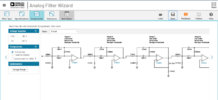
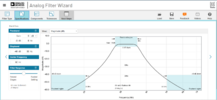
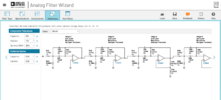
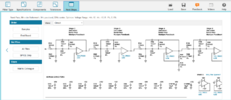
lol
@roughshawd What's this nonsense? Please do not confuse
@Maglatron.
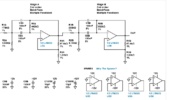
so I've ordered the mic, LED's, LM3914's, more than enough quad op-amps and im going off of the advice below and am going to use this pre-amplifiyer setup because I have the parts, if you point me to a pre-amplifier in chip style and low noise that would be great, but from what I understand the pre-amplifyer suggestion should be fine for my application, not trying to cut corners, I like soldering and making stuff I want it to work as best it can!
Simple microphone preamplifier circuit which you can build easily.
www.epanorama.net
step-by-step approach.
build a signal amplifier that picks up the aufio signal from the source you are going to use (microphone, line-i, ...?) and amplifies it to a level the LM3914 can handle. You'll probably have to learn a lot while building tjis circuit. Opamps are deceptively simple when you look at the standard circuits, but opamps can nevertheless be tricky to handle when it comes to the fine details like e.g. stability of the amplifier without ringing or, worse, self-oscillation due to improper feednack circuits.
Build a single channel VU-meter to display the signal from the amplifier by the LM3914 in a way that pleases your estetics.
If necessary (very probable) debug these circuits and tweak components until it operates as your expect.
Build a first single filter e.g. for the bass range. Insert the filter into your signal chain and check that the response displayed by the LM3914 matches your expectations, which in this case should be a display of the bass tones' volume only.
Once this works go on and build the remaining filters and display circuits for the remaining channels. You may even consider designing a modular PCB with filter and display circuit which is customized to different frequencies by populating the filter with different components. The have 20 or so of these PCBs manufactures (not so expensive nowadays). The simply assemble the PCBs (solder components to them) and combine with power supply and signal amplifier (step 1 from above list) for the full spectrum analyzer.
In my opinion your chances to complete this project to your satisfaction are much better using such (or similar) modular approach.